Cryptocurrency Electricity Use: How Mining Drains Power and What It Means for You
When you think of cryptocurrency electricity use, the total power consumed by blockchain networks, especially from mining operations. Also known as crypto energy consumption, it’s not just a tech footnote—it’s a global energy issue. Bitcoin mining alone uses more electricity than entire countries like Argentina or the Netherlands. That’s not a guess. It’s based on real data from the Cambridge Centre for Alternative Finance. This isn’t about futuristic dreams—it’s about today’s power grids, rising bills, and who’s really footing the energy tab.
Behind every new coin, every transaction, and every mining pool payout is a massive hunger for electricity. Bitcoin mining, the process of validating transactions using powerful computers that solve complex math problems. Also known as proof-of-work mining, it’s the engine driving most major blockchains. But it’s not efficient. Most of that energy turns into heat, not profit. And while some miners chase cheap hydro or solar power, others still rely on coal-fired plants in places like Kazakhstan and Russia. This isn’t just bad for the planet—it’s bad for your wallet. When energy prices spike, mining costs rise, and that pressure flows back into coin prices and exchange fees. You don’t mine? You still feel it.
mining pool selection, how miners group together to share rewards and reduce variance in payouts. Also known as mining pools, they’re where real-world energy decisions are made. Some pools are built near renewable sources. Others sit in regions with lax regulations and dirt-cheap power—often from non-renewable sources. Your choice of exchange or wallet doesn’t change this. But your awareness does. If you care about how crypto impacts energy markets, you need to understand the link between mining, location, and sustainability. That’s why posts here dive into how Blockfinex and MEXC attract miners with low fees, why NovaEx’s zero-slippage model might reduce transaction volume (and thus energy use), and how blockchain energy markets are starting to flip the script by letting households sell excess power back to the grid.
It’s not all doom. Some chains like Solana and Cardano use proof-of-stake—using a fraction of Bitcoin’s power. But Bitcoin still dominates. And until that changes, every trade, every airdrop, every DeFi yield farm is indirectly tied to the same power lines. You can’t ignore the electricity bill just because your crypto is in a cold wallet. The real question isn’t whether crypto uses too much power—it’s whether you’re okay with paying for it. The posts below break down exactly how mining works, which coins are the biggest energy hogs, how governments are responding, and what you can do to make smarter choices—without needing a degree in engineering.
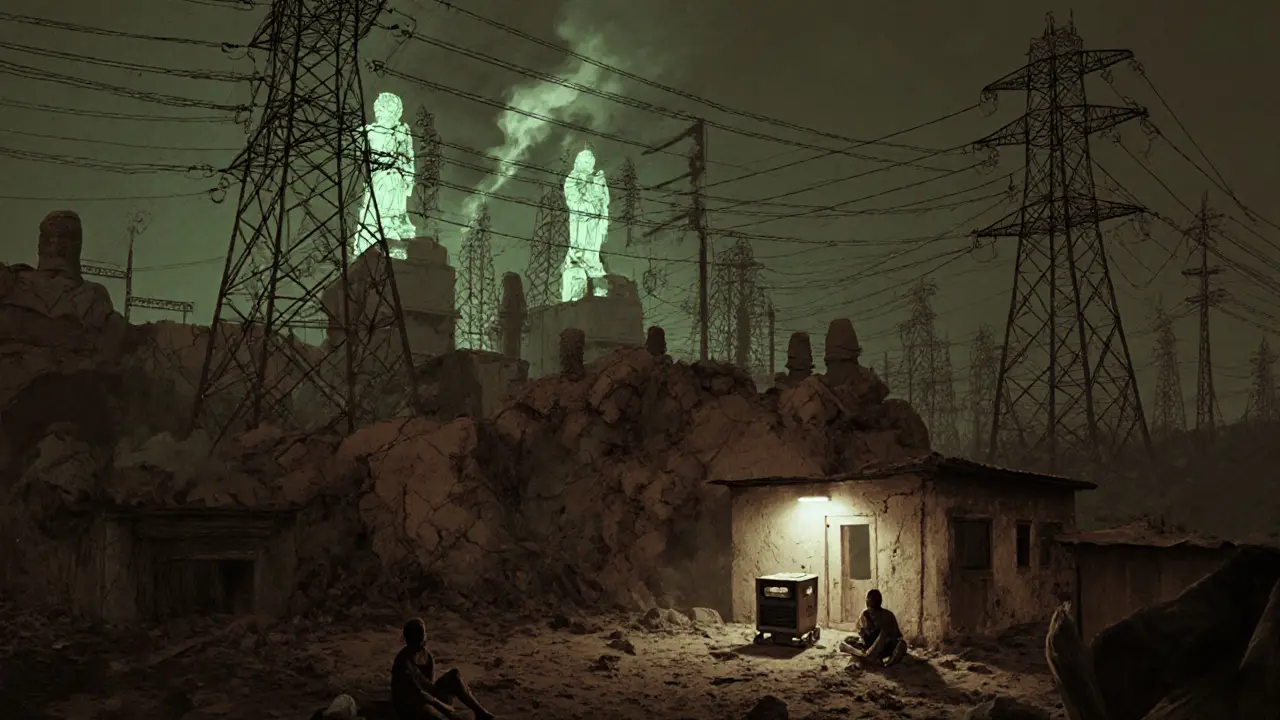
Energy Crisis Forces Angola to Ban Crypto Mining
Angola banned crypto mining in 2024 to stop electricity theft and redirect power to hospitals and homes. With 60% of urban areas facing blackouts, the government seized millions in mining gear and jailed operators. The ban remains strict, with no exceptions-even for solar power.