Cryptocurrency in Syria: Risks, Privacy, and Survival Tools
When governments control banks and inflation eats savings, cryptocurrency, a decentralized digital money system that operates without central banks or government oversight. Also known as digital currency, it becomes more than a speculation tool—it turns into a survival mechanism. In Syria, where traditional banking is broken and foreign currency is scarce, people use crypto to send money home, buy food, and avoid state surveillance. But it’s not simple. Using crypto there isn’t like trading Bitcoin in New York. It’s dangerous, risky, and often hidden.
That’s where privacy coins, cryptocurrencies designed to hide transaction details like sender, receiver, and amount. Also known as anonymous crypto, they are essential for those avoiding tracking by hostile regimes or criminal groups. Monero and Zcash aren’t just tech novelties here—they’re the only way to move value without leaving a trail. Unlike Bitcoin, where every transaction is public, privacy coins make payments untraceable. This matters when your neighbor could be reporting you to authorities for holding foreign digital assets. And it’s not just about privacy. With crypto seizures, government actions that freeze or confiscate digital assets under legal or political pressure. Also known as asset forfeiture, they’re rising globally. The U.S. alone has seized over $17 billion in crypto. In Syria, if you’re caught with unapproved crypto, you could lose everything—and worse. There are no protections. No courts. No appeals.
DeFi platforms like Cream Finance or yield farming aren’t popular in Syria—not because people don’t want them, but because they require stable internet, trusted interfaces, and time to learn. Most users stick to simple peer-to-peer swaps, Telegram-based traders, and cash-in-hand deals using Monero. The real question isn’t how to earn crypto—it’s how to keep it safe, hidden, and usable when your country is under sanctions and your phone could be monitored. The posts below show you exactly what tools work, which exchanges are traps, and how people in conflict zones use blockchain not for profit, but for plain survival. You won’t find hype here. Just facts, risks, and real strategies used by those who have no other choice.
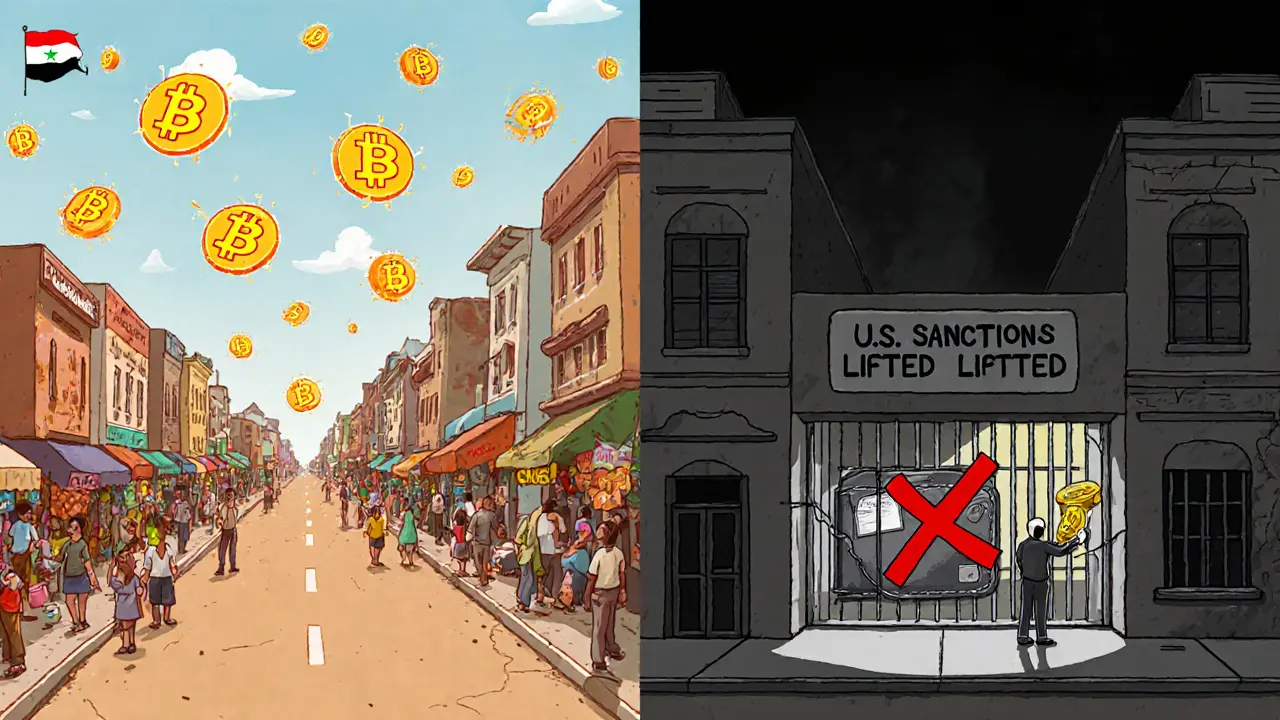
International Sanctions and Crypto Restrictions in Syria and Cuba in 2025
In 2025, the U.S. lifted long-standing sanctions on Syria but tightened them on Cuba, creating wildly different outcomes for cryptocurrency use in both countries. Here’s what it means for traders, businesses, and compliance.