Meta Whale: What It Is, Why It Matters in Crypto Markets
When you hear Meta Whale, a term used for individuals or entities holding massive amounts of cryptocurrency that can sway market prices with a single trade. Also known as crypto whales, these players aren’t just rich—they’re powerful. Their wallets often hold millions in tokens like ETH, SOL, or niche meme coins, and when they move, the whole market feels it. This isn’t speculation. In 2023, a single wallet moved $180 million in SHIB, triggering a 30% price drop in under 10 minutes. That’s the real power of a Meta Whale.
These big holders aren’t just sitting on their coins. They’re often early participants in new projects—like the MetaGear (GEAR), a token with zero circulating supply but a billion-token supply cap, likely waiting for a future distribution—or they’re the first to claim APENFT airdrops, where tens of thousands of winners received billions of tokens in a single event. They know which airdrops are real and which are scams. They’re the ones buying up undistributed tokens before launch, locking in liquidity, and sometimes even creating artificial hype to pump and dump later. That’s why you see so many fake BSC AMP (BAMP), a token rumored to be coming but with no official campaign or team airdrop sites. Scammers target new users who don’t know that real whales don’t ask you to connect your wallet to claim free tokens.
Meta Whales also influence which exchanges list new coins. If a whale holds 5% of a token’s supply, exchanges pay attention. That’s why MEXC, a top exchange for altcoins and high-leverage trading, often lists tokens backed by big holders before bigger platforms like Binance do. And when whales dump, like with Smog (SMOG), a Solana meme coin that crashed 98% after launch, retail traders get left holding the bag. These aren’t random events—they’re calculated moves by players with far more capital, data, and access than you or I.
So what does this mean for you? If you’re chasing airdrops, don’t just follow Twitter trends. Watch where the big wallets are moving. Track on-chain activity. Look at token distribution maps. The Meta Whale isn’t your enemy—but ignoring them is. In crypto, the game isn’t just about finding the next coin. It’s about understanding who controls it. Below, you’ll find real breakdowns of tokens, airdrops, and exchanges shaped by these giants. No fluff. Just what’s happening, who’s behind it, and how to protect yourself.
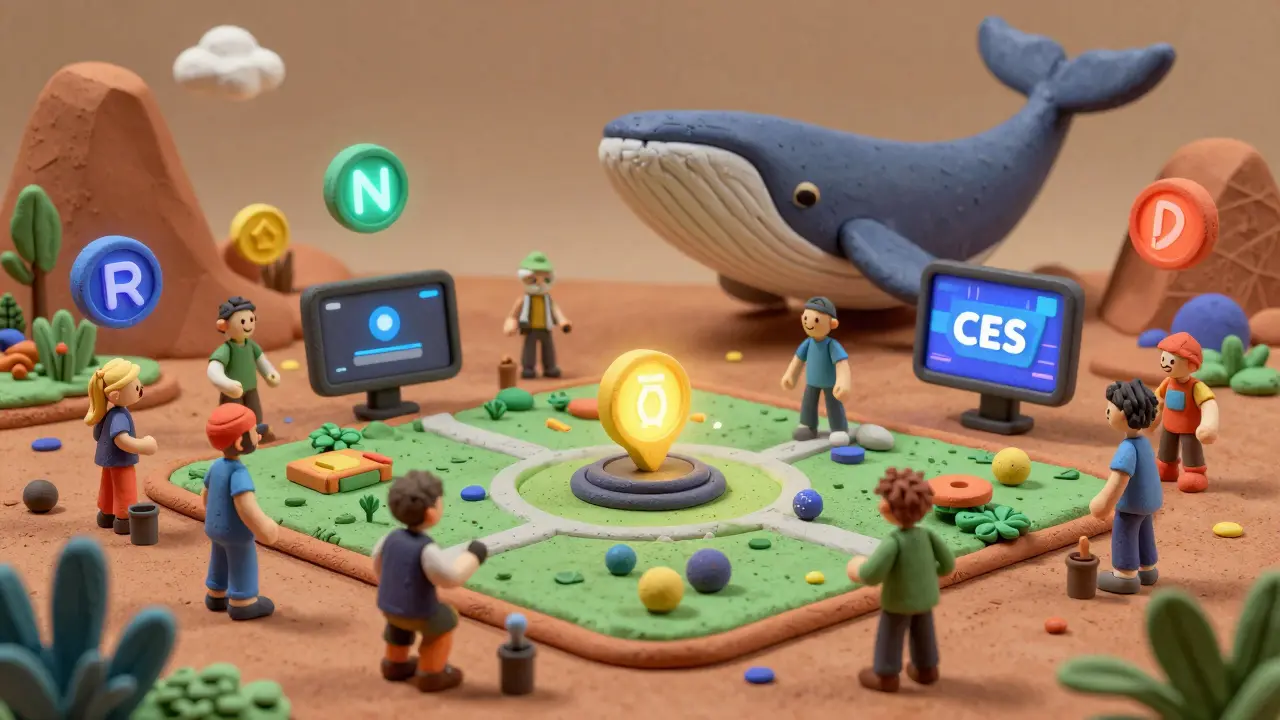
What is Whalebit (CES) crypto coin? Understanding its use, price, and ecosystem
Whalebit (CES) is the utility token behind Meta Whale, a Polygon-based platform combining gaming, DeFi, and NFTs. Learn how it works, where to buy it, its price trends, and whether it's worth your investment.