USDT vs USDC vs DAI: Which Stablecoin Is Right for You in 2025?
 Aug, 15 2025
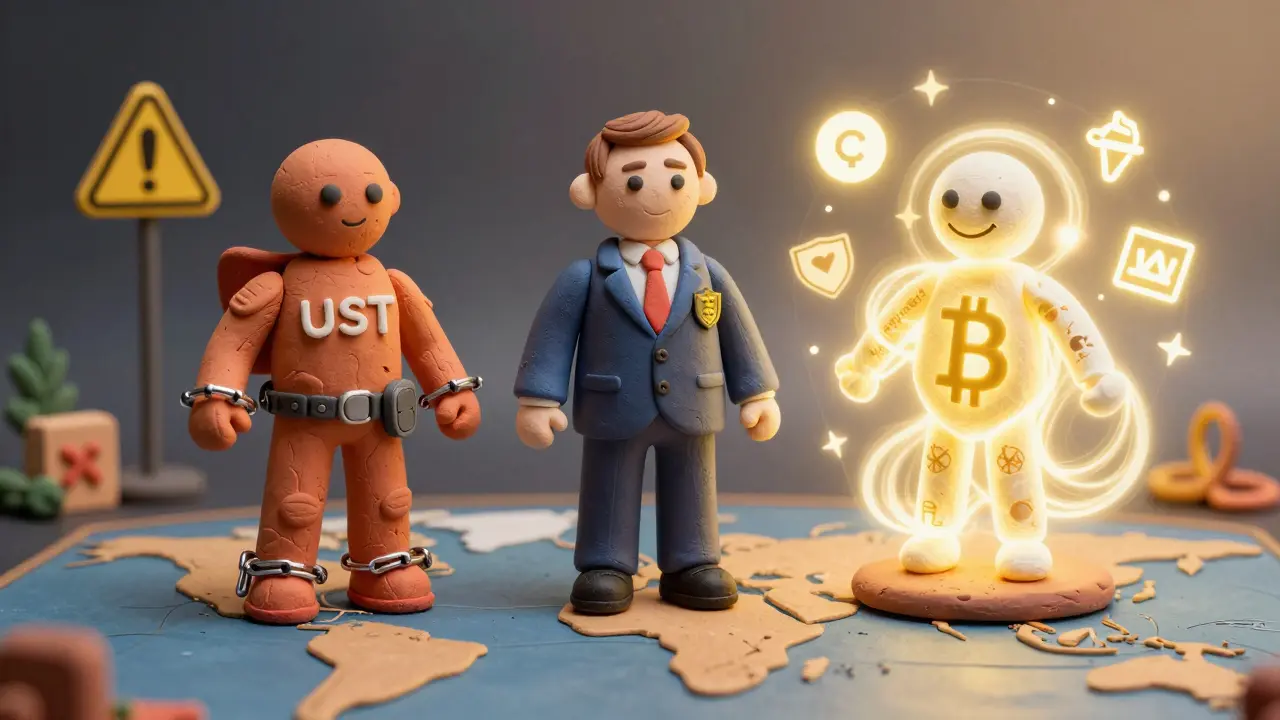
When you send crypto across the world, you don’t want your money to swing up or down by 20% while it’s in transit. That’s why stablecoins exist. They’re designed to hold steady at $1 - no wild swings, no panic sells. But not all stablecoins are created equal. As of 2025, three dominate the market: USDT, USDC, and DAI. Each has a different story, different risks, and different uses. Picking the right one isn’t about popularity. It’s about what you need.
USDT: The OG That Still Dominates
Tether (USDT) came out in 2014, long before most people knew what Bitcoin was. It was the first real attempt to tie crypto to the U.S. dollar. Today, it still controls over half of the entire stablecoin market - $86.8 billion out of $163.4 billion. That’s not luck. It’s liquidity. If you trade on Binance, KuCoin, or OKX, you’re probably trading in USDT. It’s on Tron, Ethereum, Solana, and 11 other chains. Transfers on Tron cost pennies and finish in under two seconds. That’s why peer-to-peer traders in Nigeria, Mexico, and Brazil still rely on it. You can cash out faster with USDT than almost any other stablecoin.
But here’s the catch: no one knows exactly what backs it. Tether’s own reserve report from Q1 2025 shows only 46.3% in U.S. Treasury bills. The rest? Corporate bonds, secured loans, even Bitcoin. That’s not cash in a bank. That’s risk. In March 2023, during the Silicon Valley Bank collapse, USDT dropped to $0.95 for nearly 40 hours. People panicked. Exchanges temporarily suspended withdrawals. It recovered, but the damage to trust lingers.
Transparency? Not great. USDT scores just 6.2 out of 10 in trust ratings. And while it’s accepted on most exchanges, 12 U.S. states have blocked its use due to regulatory concerns. If you’re a business in California or New York, using USDT could mean legal headaches down the line.
USDC: The Regulated Choice
USDC was built by Circle and Coinbase with one goal: be the bank-grade stablecoin. Launched in 2018, it’s fully backed - 100% of every USDC is supposed to equal one U.S. dollar. And unlike USDT, they prove it. Every month, independent auditor Grant Thornton checks their reserves. As of 2025, 62.4% is cash and cash equivalents. The rest? Short-term U.S. Treasuries - the safest assets in the world. All held in segregated accounts at regulated banks. No crypto. No loans. No surprises.
That’s why 78% of institutional investors - hedge funds, asset managers, fintechs - prefer USDC. It’s compliant with the GENIUS Act, approved for use by 37 U.S. state-regulated institutions, and even accepted by Visa and BlackRock for tokenized money markets. Companies like Kueski in Mexico saved $1.2 million a year switching from USDT to USDC for supplier payments. Why? Fewer compliance delays. Fewer frozen transactions.
But there’s a trade-off: control. USDC can freeze addresses. In 2024, 98.7% of all frozen USDC transactions were tied to OFAC-sanctioned wallets. That’s a win for regulators. A nightmare for privacy. If you’re sending money to someone in a sanctioned country, USDC might vanish. And it’s not cheap. On Ethereum, sending USDC costs $0.45 to $1.20 per transaction - five to 10 times more than USDT on Tron.
DAI: The Decentralized Wildcard
DAI doesn’t use dollars. It uses crypto. Created by MakerDAO in 2017, DAI is minted by locking up other crypto assets - mostly ETH and USDC - as collateral in smart contracts. To get $100 in DAI, you have to lock up $142.70 worth of crypto. That’s over-collateralization. It’s not perfect, but it’s designed to survive market crashes.
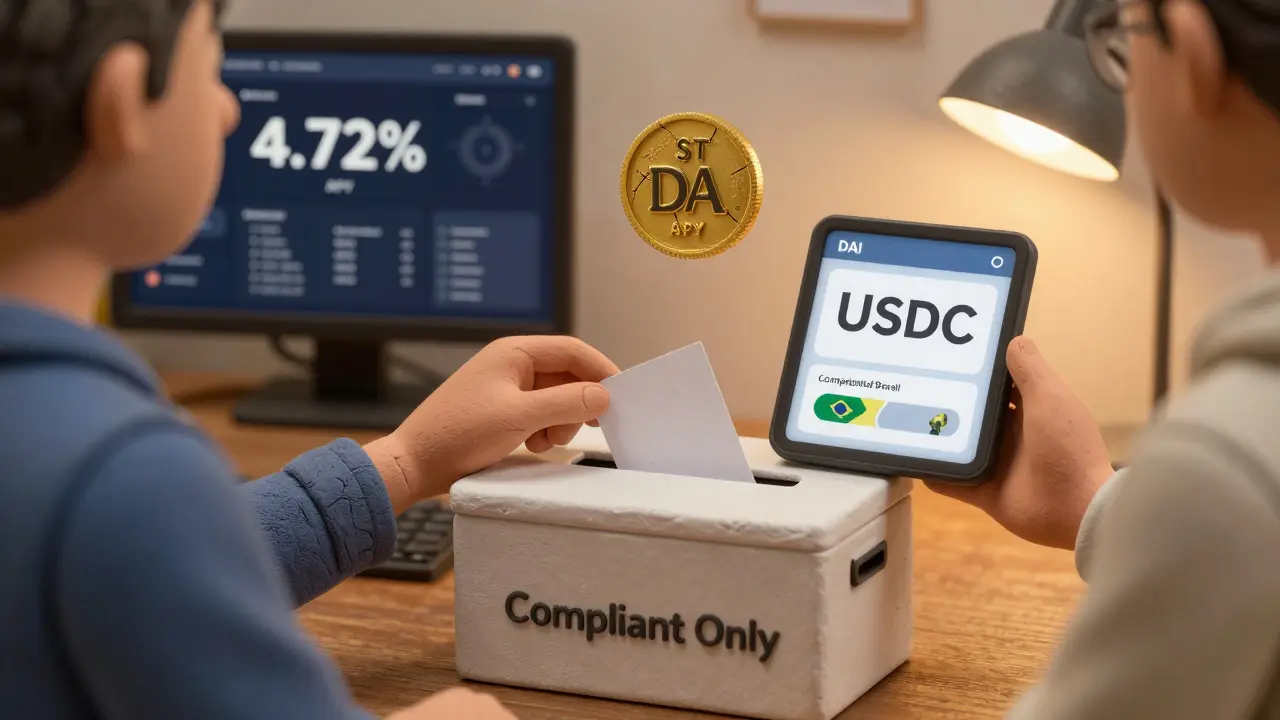
DAI’s biggest strength? It’s not controlled by any company. No CEO. No board. No government. MakerDAO’s governance is run by token holders voting on changes. That’s why 78% of DAI is locked in DeFi protocols like Aave and Curve. Traders use it for lending, borrowing, and earning yield - averaging 4.72% APY, higher than USDC’s 3.85% and USDT’s 2.91%.
But it’s not easy. Getting DAI requires understanding collateral ratios, stability fees, and liquidation risks. During the May 2021 ETH crash, DAI spiked to $1.12 for eight hours because people rushed to sell ETH and buy DAI. It recovered, but the volatility scared off new users. 67% of newcomers say the process is too confusing. And while DAI has never fully broken its $1 peg for long, its reliance on USDC as collateral (58.3% as of 2025) means it’s not as independent as it claims.
Still, DAI is the only stablecoin that can survive a total collapse of the traditional banking system. That’s why DeFi natives swear by it. MakerDAO’s emergency shutdown system can handle $2 billion in redemptions within 72 hours - and recover 99.3% of collateral. That’s engineering.
Who Uses What - And Why
It’s not just about tech. It’s about who you are.
- Traders and retail users in emerging markets - USDT. It’s everywhere. Fast. Cheap. Easy to cash out. If you’re in Nigeria or Argentina and need to send money fast, USDT on Tron is your best bet.
- Institutional investors and regulated businesses - USDC. If you’re a fund, a startup, or a company dealing with U.S. banks, USDC is the only choice. It’s audit-ready, compliant, and accepted by major financial players.
- DeFi power users and crypto purists - DAI. If you’re earning yield on Aave, swapping on Uniswap, or using lending protocols, DAI is your native currency. It’s the only stablecoin built for the decentralized future.
Here’s a real example: A small e-commerce business in Florida sells digital products to customers in Brazil. They use USDT to receive payments - low fees, fast settlement. But when they pay their U.S.-based web developer? They switch to USDC. Why? Because their bank won’t accept USDT. They need a compliant, traceable payment. That’s not a flaw - it’s strategy.
The Big Picture: What’s Changing in 2025
The stablecoin landscape is shifting fast. USDT’s market share has dropped from 60% in 2023 to 53.1% in 2025. Why? Regulatory pressure. The SEC is cracking down on Tether for “inadequate disclosure.” Meanwhile, USDC’s market share is rising - from 27% to 30.2% - thanks to the GENIUS Act and partnerships with Visa and BlackRock.
DAI is holding steady at 4%, but its role is growing. MakerDAO’s “Endgame Plan” aims to reduce its reliance on USDC as collateral and start accepting real-world assets like real estate and corporate bonds. If that works, DAI could become the first truly decentralized stablecoin backed by tangible value - not just crypto.
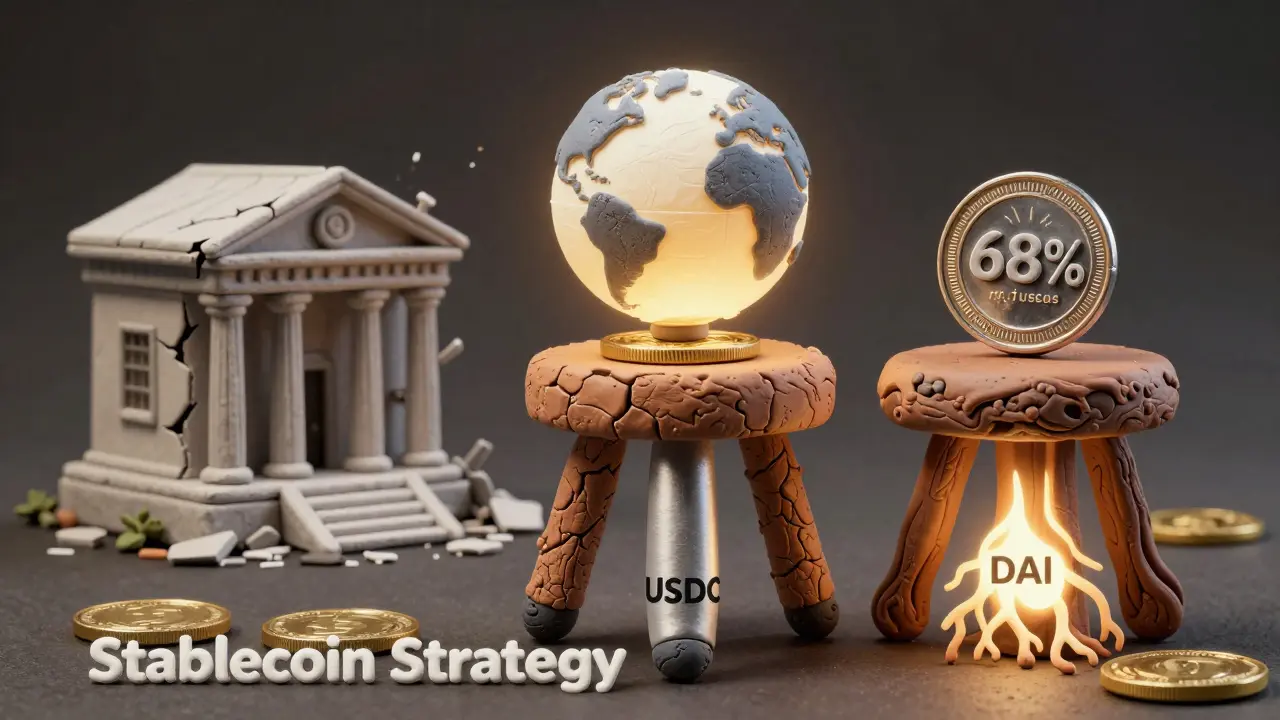
And here’s the quiet trend: most smart users now use all three. USDT for speed and liquidity. USDC for compliance and safety. DAI for DeFi yield. A 2025 TransFi survey found 68% of enterprises now use at least two stablecoins. That’s the new norm.
Which One Should You Use?
Ask yourself these questions:
- Do you care about regulation? → Go with USDC.
- Do you need the lowest fees and fastest transfers? → USDT on Tron wins.
- Are you deep in DeFi and don’t trust banks? → DAI is your home.
- Are you a business with U.S. customers or partners? → USDC is mandatory.
- Are you in a country with strict capital controls? → USDT is your lifeline.
There’s no single winner. The best stablecoin is the one that fits your situation. USDT is the workhorse. USDC is the banker. DAI is the revolutionary. You don’t have to pick one. Pick the right tool for the job.
Is USDT still safe to use in 2025?
USDT is still widely used, especially for trading and peer-to-peer payments. But it’s not as safe as it looks. Its reserves include risky assets like corporate bonds and Bitcoin. While it hasn’t failed, it’s had temporary depegs during market stress. Use it for liquidity, not long-term holding - especially if you’re in the U.S. or dealing with regulated entities.
Why is USDC more expensive to send than USDT?
USDC is mostly on Ethereum, where transaction fees are higher due to network demand. USDT can be sent on Tron, Solana, or other low-fee chains. A USDC transfer on Ethereum costs $0.45-$1.20. The same amount on Tron-based USDT costs $0.0014. If cost matters, choose the chain. But if compliance matters, you pay the fee.
Can DAI lose its $1 peg permanently?
DAI has never permanently lost its peg. It’s designed to self-correct. If DAI drops below $1, users can mint more DAI by paying stability fees, increasing supply and pushing the price back up. If it rises above $1, users can burn DAI to unlock collateral, reducing supply. Its emergency shutdown mechanism has been tested under extreme conditions. While volatility can cause short-term deviations, its architecture is built for resilience.
Is USDC really 100% backed by cash?
Yes - but not all in cash. As of 2025, 62.4% of USDC’s reserves are in cash and cash equivalents like money market funds. The rest - 37.6% - are U.S. Treasury securities that mature in under 90 days. These are among the safest assets in the world. All reserves are held in segregated accounts at regulated U.S. banks and audited monthly. You’re not holding physical dollars, but you’re holding assets as close to cash as possible in the digital world.
Should I use only one stablecoin or multiple?
Most experienced users use multiple. USDT for fast, cheap transfers and trading. USDC for payments, savings, and compliance. DAI for earning yield in DeFi. Relying on just one puts you at risk - whether it’s regulatory action, a depeg, or a chain outage. A multi-stablecoin strategy is now the standard for both traders and businesses.
Joe West
December 5, 2025 AT 02:32USDT is still the go-to for P2P trades in Latin America and Africa-no debate. I’ve sent $5k to a cousin in Lagos via Tron and it cleared in 90 seconds for $0.0014. USDC? Too slow, too expensive. You want compliance? Fine. But if you’re trying to move money where banks don’t reach, USDT is the only real option. Just don’t leave it sitting in your wallet for months.
Richard T
December 5, 2025 AT 17:10Interesting breakdown. I’ve been using USDC for business payments because my accountant screamed if I used anything else. But I’ve started dipping into DAI for yield farming on Aave-got 5.1% APY last month. It’s wild how DAI’s volatility during the ETH crash actually made me appreciate its design. It’s not perfect, but it’s the only one that doesn’t rely on a CEO’s press release to stay alive.
jonathan dunlow
December 6, 2025 AT 16:36Look, I get it-USDT is messy, USDC is corporate, DAI is chaotic. But here’s the truth: the future isn’t about picking one, it’s about mastering the ecosystem. I run a small crypto consultancy, and we use all three like tools in a toolbox. USDT for speed, USDC for audits, DAI for DeFi. Why? Because the world doesn’t operate in single-choice paradigms anymore. If you’re still trying to force yourself into one stablecoin, you’re thinking like a 2020 crypto bro. The smart ones? They’re hedging their stability like they hedge their portfolio. And honestly? That’s the only sane move left in this wild west. Stop looking for the ‘best’-look for the ‘right for now.’ And change it when the game changes. That’s how you survive.
Mariam Almatrook
December 8, 2025 AT 02:30One must question the fundamental moral hazard inherent in the commodification of monetary stability through opaque corporate entities. USDT, with its labyrinthine reserve composition-corporate bonds, Bitcoin, secured loans-is not a stablecoin; it is a financialized speculation wrapped in the veneer of fiat equivalence. USDC, while ostensibly more transparent, remains a tool of state-sanctioned financial control, its freeze mechanisms a chilling precedent for monetary sovereignty. DAI, despite its reliance on USDC collateral, at least aspires to a decentralized ideal. Yet even this noble aspiration is compromised by the very architecture of its governance. One cannot escape the conclusion: in a world where money is code, true freedom remains an illusion.
Chris Mitchell
December 9, 2025 AT 15:46Use the right tool. No more, no less.
rita linda
December 11, 2025 AT 10:24It’s embarrassing how Americans treat crypto like a free-for-all while ignoring the fact that USDC is the only one that plays by the rules. USDT? A rogue asset. DAI? A crypto cult’s fantasy. We’re not in some libertarian fantasyland-we’re in a regulated economy. If you’re using anything other than USDC for anything beyond gambling on Binance, you’re not being smart, you’re being reckless. And if you think DAI’s ‘decentralized’ magic makes it safer? Please. It’s built on a house of cards made of ETH and USDC. Wake up.
nicholas forbes
December 11, 2025 AT 21:02Just wanted to say-this is one of the clearest breakdowns I’ve read. I used to think USDT was the only option until I got burned during the SVB panic. Now I keep 70% in USDC, 20% in DAI for yield, and 10% in USDT for quick swaps. No regrets. And honestly? If you’re not using multiple, you’re just lazy.
Regina Jestrow
December 11, 2025 AT 23:36Okay, but have you seen the MakerDAO Endgame Plan? 🤯 I just read it last night and I’m crying. Imagine DAI backed by real estate tokens and corporate bonds? No more reliance on USDC? That’s not innovation-that’s a revolution. I’ve been holding DAI since 2021 and I swear, every time I think it’s too complicated, it surprises me. Like, the emergency shutdown system? It’s like a nuclear reactor with 17 backup generators. And it’s run by… people voting on Discord? 🤯 I’m obsessed.
Martin Hansen
December 12, 2025 AT 21:45USDT users are just crypto peasants who don’t care about compliance or safety. If you’re still using USDT in 2025, you’re either in a sanctioned country or you’ve never opened a financial statement. USDC is the only adult option. DAI? Cute for degens. But if you’re not using USDC for anything serious, you’re not serious. Period.
Maggie Harrison
December 14, 2025 AT 02:01Just got back from a trip to Mexico-every vendor takes USDT. Even the street tacos. 😭 But my Airbnb host? He only accepted USDC because his bank froze his USDT last month. So I switched mid-trip. DAI? I used it to earn 5% on Aave while I slept. 🌍💸 Three coins. One trip. Zero regrets. 🙌