What Are Gaming NFTs? A Clear Guide to Digital Ownership in Video Games
 Feb, 26 2025
Play-to-Earn NFT Earnings Calculator
Calculate your potential earnings from play-to-earn NFT games. Input your playtime and game parameters to see realistic estimates based on current market conditions. Remember: NFT values fluctuate wildly and this is for educational purposes only.
Input Parameters
Estimated Earnings
Ever played a video game and thought, “I wish I could actually own this skin, not just rent it”? That’s exactly what gaming NFTs promise. Unlike regular in-game items that vanish when you stop playing, gaming NFTs are digital assets you truly own-on the blockchain. They’re not just cosmetics or collectibles. They’re proof of ownership that lives outside the game, tradable, sellable, and transferable. And while the hype has cooled since 2021, the idea isn’t dead-it’s evolving.
What Exactly Is a Gaming NFT?
A gaming NFT is a unique digital token stored on a blockchain that represents something inside a video game. It could be a rare sword, a custom character, a virtual land plot, or even a ticket to an in-game event. The key word here is unique. Unlike Bitcoin or Ethereum, where one coin is exactly like another, each NFT has its own digital fingerprint. No two are the same.
These tokens are created using smart contracts-self-running code on blockchains like Ethereum, Polygon, or Solana. When you buy a gaming NFT, you’re not downloading a file. You’re getting a verified entry in a public ledger that says: “This item belongs to this wallet.” That entry can’t be erased, copied, or altered. Even if the game shuts down, your ownership record stays intact.
Think of it like owning a signed baseball card. The card itself isn’t special-it’s the signature, the rarity, and the proof it’s real that gives it value. Gaming NFTs work the same way. They turn digital items into verifiable collectibles.
How Are Gaming NFTs Different From Regular In-Game Items?
In traditional games, you don’t own anything. You’re just borrowing it. When you buy a skin in Fortnite or a weapon in Call of Duty, you’re agreeing to a license. The game company can take it away, ban your account, or remove the item entirely. Your purchase doesn’t give you rights-it gives you access.
Gaming NFTs flip that model. Once you buy one, it’s yours. You can sell it on third-party marketplaces like OpenSea. You can use it in other games if the developers allow it. You can even hold onto it as an investment. This is called interoperability-assets that work across different platforms.
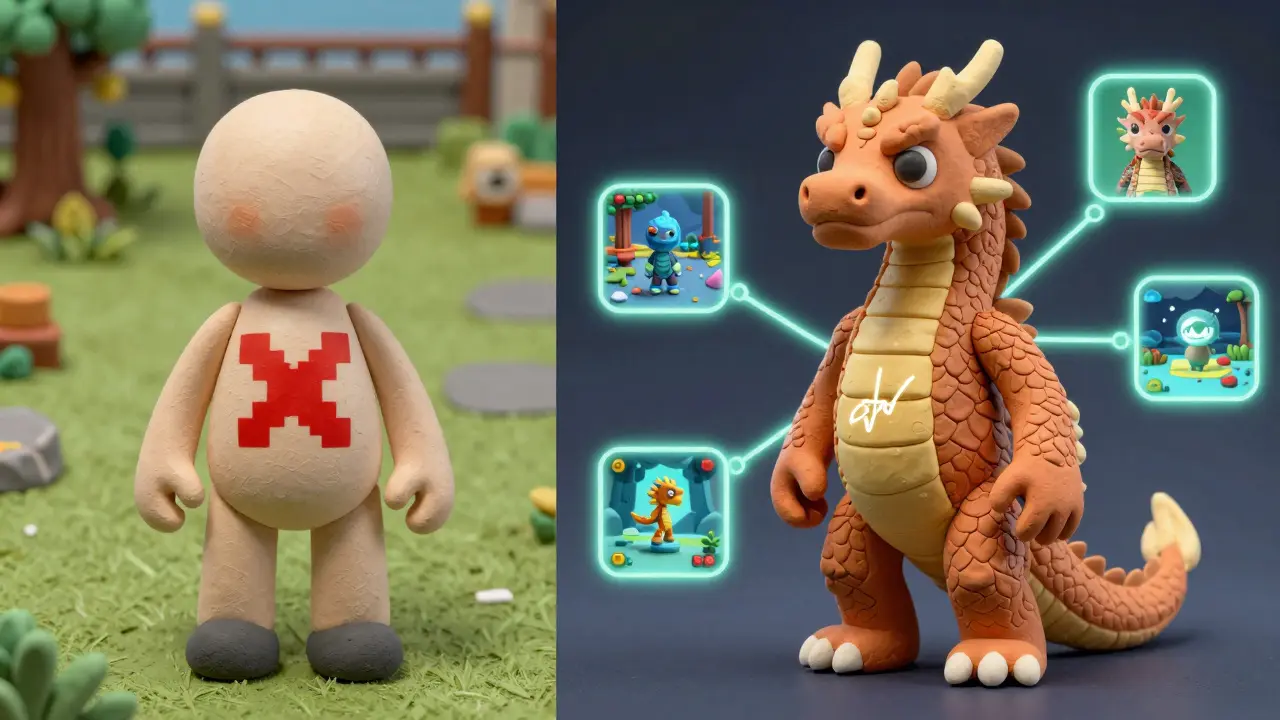
For example, if you own a rare dragon skin as an NFT in one game, and another game supports the same NFT standard, you might be able to wear that same dragon in the second game. That’s impossible in traditional gaming. It’s like owning a physical jersey that you can wear to different sports events-not just one team’s stadium.
Play-to-Earn: The Big Promise
One of the biggest draws of gaming NFTs is play-to-earn. Instead of spending hours grinding for rewards that only exist inside the game, you earn tokens or NFTs that have real-world value.
Axie Infinity, one of the first major play-to-earn games, let players in the Philippines earn $10 to $50 a day during its 2021 peak by battling and breeding digital creatures called Axies. For many, that was more than their daily wage. It wasn’t just a game-it was income.
But here’s the catch: play-to-earn isn’t passive. You still have to play. A lot. And the value of your earnings depends on the market. When crypto prices dropped in 2022, Axie Infinity’s daily players fell from 2.8 million to under 400,000. The economy crashed because people stopped buying Axies-not because the game got worse.
Today, smarter games are shifting focus. Instead of pushing quick cash, they’re building long-term value. Players now earn NFTs for skill, not just time. Some games reward you with rare items for completing quests, not for grinding monsters. The goal isn’t just to make money-it’s to make the game better.
Where Do Gaming NFTs Live?
Most gaming NFTs run on Ethereum, the same blockchain behind most crypto transactions. But Ethereum is slow and expensive. A single transaction used to cost $50 or more in gas fees. That’s why many new games now use alternatives like Polygon, Solana, or Avalanche.
Polygon, for example, is built on top of Ethereum but cuts transaction costs by 90%. It’s faster, cheaper, and uses far less energy. That’s why platforms like Immutable X and Ronin (used by Axie Infinity) chose it. They wanted to make NFT gaming accessible, not a luxury for crypto whales.
Each blockchain has its own rules. Some let you mint NFTs easily. Others require strict verification. Some support cross-game use. Others lock assets inside one title. That’s why checking the blockchain before buying matters. You don’t want to buy an NFT that can’t be sold later because it’s stuck on a dead network.
The Downsides: Scams, Fees, and Frustration
Gaming NFTs aren’t magic. They come with real problems.
High entry costs. To get started, you need a crypto wallet like MetaMask, some Ethereum or Polygon tokens to pay fees, and basic tech skills. New users often get stuck on wallet setup. A 2022 survey found 43% of newcomers gave up because they couldn’t connect their wallet.
Volatility. An NFT you buy for $100 today could be worth $10 tomorrow. Or $1,000. There’s no guarantee. Many people treat NFTs like stocks, but without regulation, insider trading, fake hype, and rug pulls (where developers disappear with funds) are common.
Environmental impact. Ethereum used to consume as much electricity as a small country per transaction. That’s changed since it switched to a greener system in 2022, but some blockchains still use high-energy methods. Most modern gaming NFT platforms now use proof-of-stake, which uses 99% less energy than old proof-of-work systems.
Bad user experience. Many NFT games have clunky interfaces. Marketplaces like OpenSea have 1.7-star ratings on Trustpilot, mostly because beginners can’t figure out how to buy, sell, or transfer items. If you’re not tech-savvy, you’ll get lost fast.
Who’s Behind Gaming NFTs Today?
Big names like Ubisoft and Electronic Arts dabbled in NFTs early on. Ubisoft launched Quartz in 2021 but pulled back after player backlash. EA’s CEO said in 2022 they were “watching” NFTs-but not convinced. That’s still the stance of most major studios.
Instead, indie developers and blockchain-native teams are driving innovation. Games like The Sandbox, Decentraland, and My Pet Hooligan are built from the ground up around NFTs. They don’t treat NFTs as an add-on-they make them core to gameplay.
Industry data shows a shift. In 2023, 78% of blockchain game developers said they prioritized “player value over speculation.” That’s a big change from 2021, when most NFT games felt like casinos with graphics.
What’s Next for Gaming NFTs?
The future isn’t about flashy skins or get-rich-quick schemes. It’s about utility.
New standards like ERC-6551 let NFTs own other NFTs. Imagine a character that holds weapons, armor, and a pet-all as separate NFTs inside one “account.” That’s possible now. Games are starting to use this to create deeper progression systems.
Interoperability is growing. Companies like Immutable X now support over 12 million monthly users across dozens of games. The goal? One NFT, many worlds.
By 2026, Gartner predicts 10% of major game studios will use NFTs. That’s up from less than 1% in 2022. Not because they’re trendy-but because players want real ownership.
And that’s the real win. Gaming NFTs aren’t about making money. They’re about giving players control. If you spend hundreds of hours mastering a game, shouldn’t you own what you’ve earned?
How to Get Started (Without Getting Scammed)
If you want to try gaming NFTs, here’s how to do it safely:
- Start with a trusted game. Try The Sandbox or Axie Infinity (on Ronin wallet)-they’re established and have tutorials.
- Use Polygon or Solana-based games. Lower fees mean less frustration.
- Get a wallet like MetaMask or Phantom. Never share your private key. Ever.
- Only spend what you can afford to lose. NFT values swing wildly.
- Join Discord communities. Learn from others before buying anything.
- Avoid games that promise “guaranteed returns.” If it sounds too good to be true, it is.
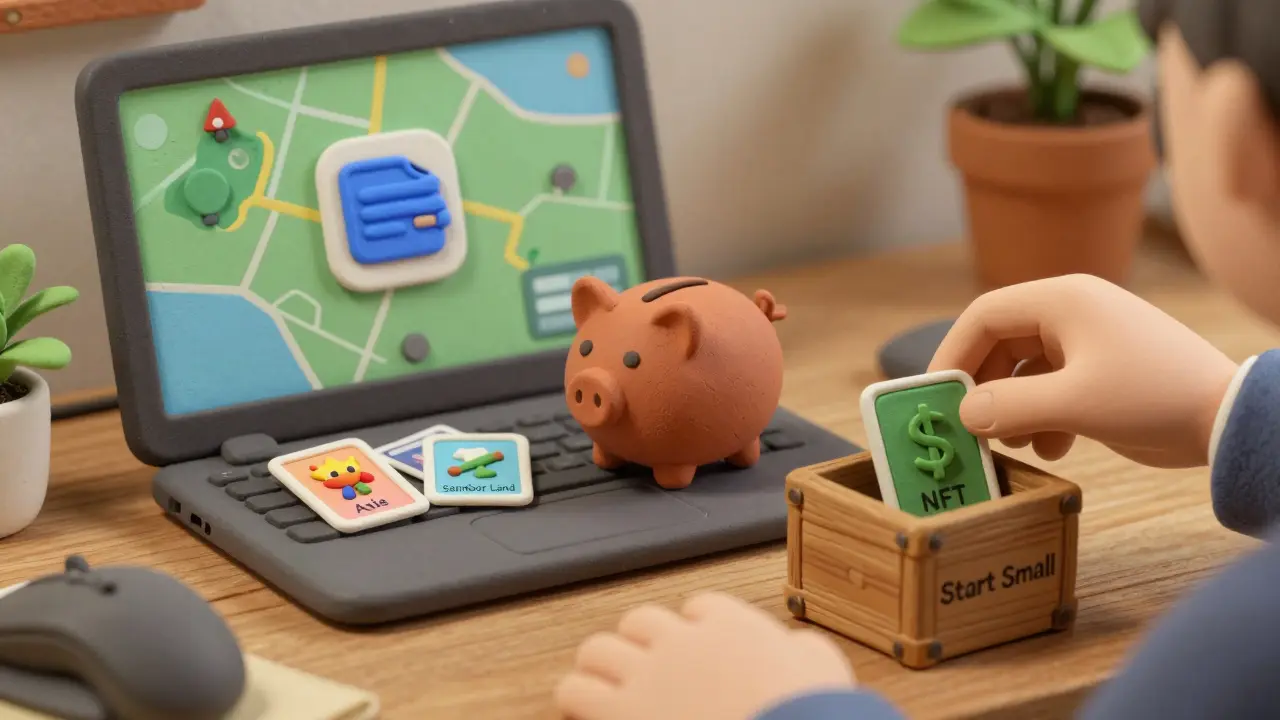
You don’t need to invest thousands. Start with a $5 NFT. Learn how to transfer it. Sell it. Try again. Treat it like learning to ride a bike-not a stock portfolio.
Are gaming NFTs worth buying?
It depends on your goal. If you want to make quick cash, probably not-most NFTs lose value. But if you enjoy the game and like owning your items, yes. The real value isn’t in flipping NFTs-it’s in playing games where your time and skill actually matter. Buy for fun, not profit.
Can I lose my gaming NFTs?
You can lose access if you lose your wallet password or private key. But the NFT itself still exists on the blockchain. It’s like losing the key to your house-the house is still there, but you can’t get in. Always back up your recovery phrase in a safe, offline place.
Do I need cryptocurrency to play NFT games?
Yes, but not always upfront. Some games let you earn tokens as you play, then use them to buy NFTs. Others require you to buy crypto first to pay for gas fees. Start with a game that has a free-to-play option or uses a low-cost blockchain like Polygon.
Are gaming NFTs legal?
Yes, in most countries. But regulations are changing. The U.S. SEC is watching closely-some NFTs might be classified as securities, which changes how they’re sold. Always check local laws before investing. Don’t assume something is safe just because it’s online.
Can I use gaming NFTs in different games?
Sometimes. It depends on the game developers. If two games use the same blockchain standard (like ERC-721 or ERC-1155) and agree to support each other’s NFTs, you can transfer items. But most games still lock assets inside their own worlds. True cross-game use is rare-but growing.
What’s the difference between NFTs and crypto coins?
Crypto coins like Bitcoin or Ethereum are fungible-each one is identical and interchangeable. NFTs are non-fungible, meaning each one is unique. One Bitcoin equals another Bitcoin. One NFT does not equal another NFT. That’s why NFTs can represent one-of-a-kind items like digital art or rare game skins.