What Are NFTs in Cryptocurrency? Simple Guide to Digital Ownership
 Feb, 3 2026
NFTs are not just digital art you see in headlines. They’re unique digital certificates stored on a blockchain that prove you own something-whether it’s a drawing, a song, a video clip, or even a piece of virtual land. Unlike Bitcoin or Ethereum, where every coin is identical and interchangeable, each NFT is one-of-a-kind. You can’t split it, copy it, or replace it. That’s what makes it non-fungible.
How NFTs Work on the Blockchain
NFTs live on blockchains, mostly Ethereum, using standards like ERC-721 and ERC-1155. These standards are like rules that tell the blockchain how to create, track, and transfer each token. When someone creates an NFT, they use a smart contract-a self-executing program on the blockchain-that locks in details like who made it, when it was minted, and what it represents.
The actual digital file-like a JPEG or MP4-is usually not stored on the blockchain itself. That would be too expensive and slow. Instead, the NFT holds a link to the file, often stored on decentralized systems like IPFS (InterPlanetary File System). This keeps the file accessible even if the original website goes down. The NFT itself is the proof of ownership, not the file.
Every time an NFT changes hands, the transaction is recorded permanently on the blockchain. That means anyone can check the full history: who owned it before, how many times it was sold, and for how much. This transparency is why NFTs are used for verifying authenticity. A painting might be copied a thousand times online, but only one NFT holds the original, verified ownership record.
What Can You Actually Own With an NFT?
People think NFTs are just for weird monkey pictures or expensive memes. But they’re used for far more:
- Digital Art: Artists sell unique pieces directly to collectors. Beeple’s $69 million sale in 2021 brought mainstream attention, but thousands of smaller artists now earn royalties every time their work is resold.
- Gaming Assets: In games like Axie Infinity or Decentraland, NFTs represent characters, weapons, or land. You can sell them outside the game, trade them with others, or even use them across different games if developers build interoperability.
- Music and Media: Musicians release limited-edition tracks or albums as NFTs. Fans get exclusive access, behind-the-scenes content, or even a share of future revenue.
- Utility NFTs: These aren’t just collectibles-they unlock real benefits. Think VIP concert access, membership to private communities, or discounts on products. Some NFTs even give holders voting rights in decentralized organizations.
- Digital Fashion: Brands like Nike and Gucci sell virtual clothing worn in metaverse spaces or social apps. Owning an NFT lets you show off digital sneakers on Twitter or in a virtual room.
The key shift is from owning a copy to owning the original-verified, unchangeable, and transferable.
The Rise and Fall of the NFT Market
The NFT market exploded in 2021. Sales hit $1.58 billion that year. CryptoPunks and Bored Ape Yacht Club became cultural symbols. People paid hundreds of thousands for pixelated apes. But by 2023, the hype faded. Trading volume dropped. Many projects lost value.
By 2024, the market stabilized around $600-700 million in annual revenue, according to industry reports. Some analysts, like CoinLedger, estimate the total market size at $43 billion in 2024, with projections of over $60 billion in 2025. Others, like Precedence Research, see lower numbers but still predict steady growth. The difference? It depends on whether you count speculative trading or real utility use.
What’s clear is that the boom was driven by speculation. The recovery is being led by practical applications. People aren’t buying NFTs just to flip them anymore. They’re buying them because they unlock experiences, access, or income streams.
Why NFTs Are Different From Traditional Digital Files
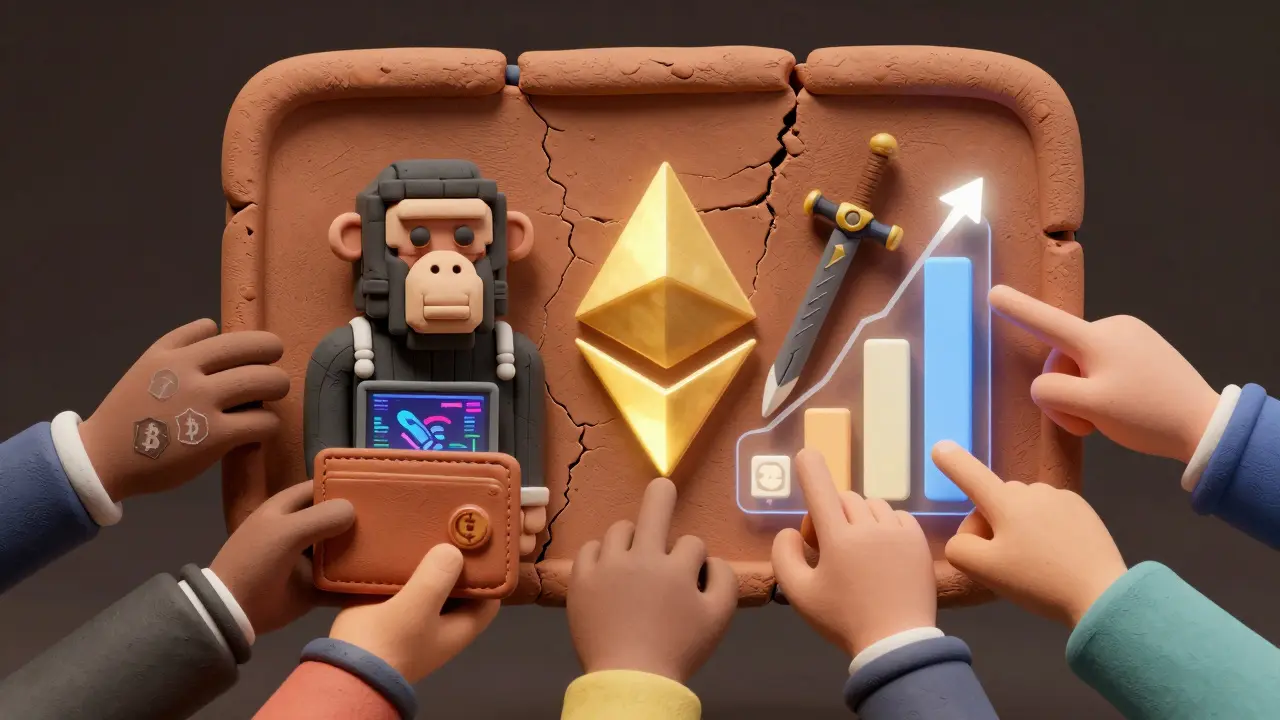
You can download a JPEG of the Mona Lisa. You can’t own the original painting without buying it from the Louvre. NFTs change that for digital items.
Before NFTs, digital files were easy to copy. Anyone could right-click and save. There was no way to prove scarcity. NFTs solve that. They create artificial scarcity on the internet-something that was thought impossible.
Also, smart contracts automate royalties. If you sell an NFT for $1,000, and the original creator set a 5% royalty, they automatically get $50 the next time it sells. No middleman. No paperwork. This gives creators ongoing income, something rarely possible in traditional art markets.
And unlike physical collectibles, NFTs can be sent instantly across the world. No shipping. No customs. No risk of damage. You just need a wallet and an internet connection.
Problems and Criticisms
NFTs aren’t perfect. Many people still don’t understand what they’re actually buying. Just because you own an NFT doesn’t mean you own the copyright. You can’t stop someone else from sharing the image online. You don’t automatically get licensing rights.
Some marketplaces have stopped enforcing royalties. LooksRare, for example, let sellers disable them entirely. That breaks the promise of ongoing creator income. It’s a sign that the ecosystem is still figuring out how to balance incentives.
Environmental concerns used to be a big issue. Ethereum used to consume massive amounts of energy to validate transactions. But in 2022, Ethereum switched to a more efficient system called Proof-of-Stake. Energy use dropped by over 99%. That’s no longer a major argument against NFTs.
Then there’s volatility. Prices swing wildly. One day an NFT is worth $10,000. The next, it’s $200. There’s no regulation to protect buyers. No FDIC insurance. If you lose your private key, your NFT is gone forever.
AI and the Future of NFTs
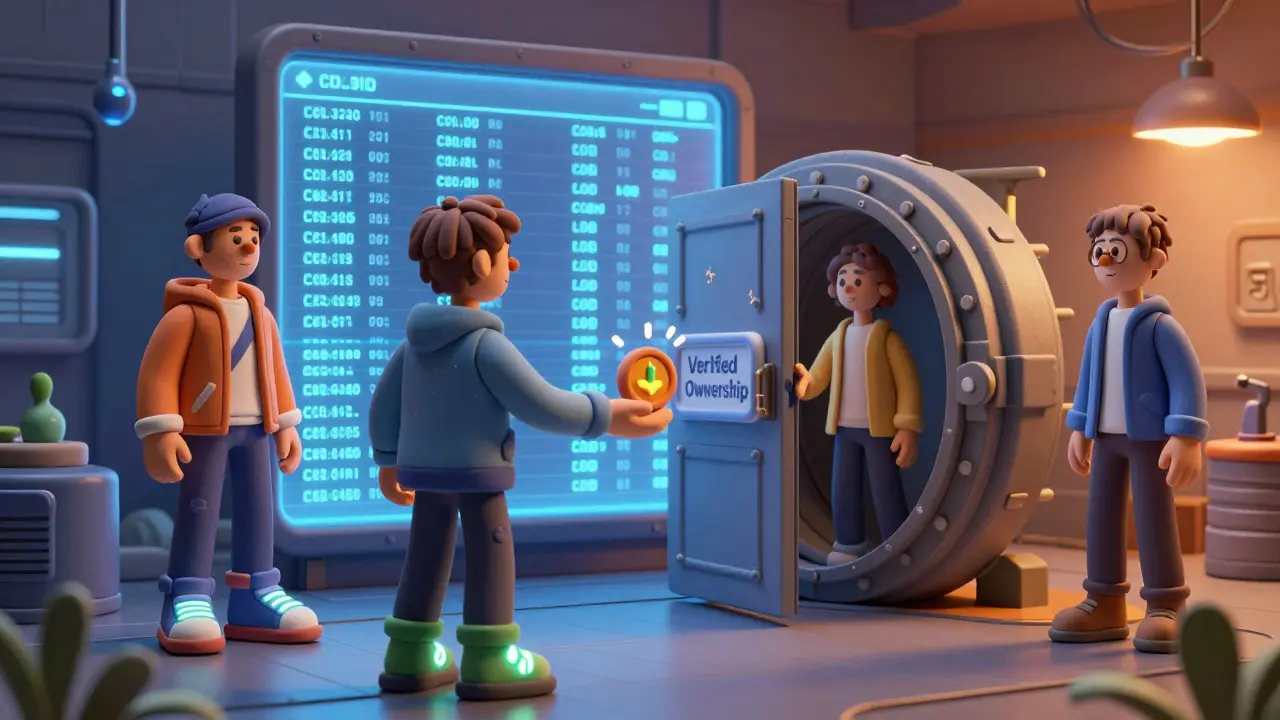
Artificial intelligence is now merging with NFTs. Platforms like Art Blocks and Alethea AI generate unique digital art on the fly using machine learning. Each piece is different, and each is minted as an NFT. Some AI-generated NFTs even evolve over time, changing based on how people interact with them.
This isn’t just about art. AI helps analyze trends, predict which NFTs might rise in value, and even suggest pricing based on past sales. It’s making the market smarter-not just more speculative.
Looking ahead, NFTs are moving beyond collectibles. They’re becoming tools for digital identity, event tickets, real estate deeds, and even medical records. Companies are testing them for supply chain tracking. Imagine proving a diamond’s origin or a medicine’s authenticity with a single NFT.
Is This Just a Bubble?
Some say NFTs are dead. Others say they’re just getting started.
The truth is, the hype phase is over. What’s left is the real work: building useful applications. The NFTs that survive won’t be the ones with flashy visuals. They’ll be the ones that solve real problems-giving creators fair pay, letting gamers truly own their gear, or letting fans access exclusive experiences.
It’s still early. But the technology is here to stay. Blockchain doesn’t disappear just because prices drop. The infrastructure is built. The wallets are installed. The smart contracts are running. Now, the focus is on making them useful, not just valuable.
Can I just screenshot an NFT and own it?
No. Taking a screenshot gives you a copy of the image, not the NFT. The NFT is the blockchain record that proves you’re the official owner. Anyone can have a copy of the file, but only one person owns the verified original. It’s like owning a print of the Mona Lisa versus owning the original painting in the Louvre.
Do I need cryptocurrency to buy an NFT?
Yes, most NFT marketplaces require cryptocurrency like Ethereum (ETH) to make purchases. You’ll need a wallet like MetaMask to store your crypto and connect it to the marketplace. Some platforms now accept credit cards, but those are exceptions, not the norm. Crypto is still the backbone of how NFTs move on the blockchain.
Are NFTs legal?
Yes, NFTs are legal in most countries, including the U.S. and EU. But regulations vary. In the U.S., the IRS treats NFTs as property, so you must report profits as capital gains. The EU is focusing on consumer protection and anti-money laundering rules. Some countries, like China, restrict speculative trading. Always check local laws before buying or selling.
What happens if the NFT marketplace shuts down?
Your NFT doesn’t disappear. It’s stored on the blockchain, not the marketplace. If OpenSea or another platform closes, you can still access your NFT using your wallet and another marketplace. The file linked to the NFT might become harder to view if it’s hosted on a centralized server, but the ownership record remains permanent on the blockchain.
Can I make money from NFTs?
Yes-but it’s not easy. Some artists and creators earn royalties every time their NFT resells. Gamers sell rare in-game items for profit. Investors buy low and sell high. But most people lose money. The market is unpredictable. Treat NFTs like any other investment: do your research, don’t invest more than you can afford to lose, and focus on utility over hype.
Brittany Coleman
February 4, 2026 AT 13:01NFTs are just digital heirlooms now. Not about flipping. Not about hype. Just about holding something that means something to you. I own a generative poem NFT from a poet I met online. Every time I look at it, I remember that late night chat. That’s worth more than any price tag.
People forget ownership isn’t about scarcity. It’s about connection.
laura mundy
February 6, 2026 AT 08:42Stop pretending this isn’t just digital trading cards for rich guys who think they’re artists. You don’t own art if you can’t hang it on your wall. You don’t own music if you can’t play it without a blockchain app. This is theater wrapped in code. And the audience is broke.
And don’t even get me started on royalties being optional now. The whole system’s a lie.
Jacque Istok
February 6, 2026 AT 16:33Wow. So you’re telling me the entire crypto world spent two years pretending a JPEG is a painting and now we’re supposed to be impressed it’s ‘stabilizing’? Congrats. You turned the internet into a flea market where the only thing more overpriced than the items is the self-importance of the buyers.
Meanwhile, real creators are still getting ripped off by platforms that won’t enforce royalties. And you call this progress? The only thing evolving here is the vocabulary of delusion.
Mendy H
February 8, 2026 AT 11:33The market cap projections are statistically meaningless when 92% of NFTs have zero utility beyond speculative resale. The IPFS links are brittle, the smart contracts are inconsistently implemented, and the regulatory framework is a patchwork of jurisdictional arbitrage. The so-called ‘utility’ NFTs are either token-gated marketing gimmicks or poorly executed loyalty programs masquerading as innovation.
Moreover, the environmental argument was never the core flaw-it was the structural fragility. A system that requires a decentralized ledger to prove ownership of a file hosted on a centralized server is not a solution. It’s a Rube Goldberg machine built on vapor.
Taybah Jacobs
February 8, 2026 AT 22:06It’s important to remember that every disruptive technology faces skepticism before it becomes infrastructure. The internet was once called a fad. Email was seen as unnecessary. Blockchain is simply the next layer of digital trust. NFTs are not about the art. They’re about the protocol.
Focus on the mechanics, not the memes. The value isn’t in the image. It’s in the immutable record. And that record is here to stay.