What Are Wrapped Tokens in Cryptocurrency? A Simple Breakdown
 Dec, 12 2025
Wrapped Token Fee Calculator
This calculator shows the total cost of wrapping Bitcoin (BTC) into WBTC on Ethereum. It includes both the 0.1-0.3% wrapping fee and Ethereum gas fees. Fees can vary based on network congestion and platform.
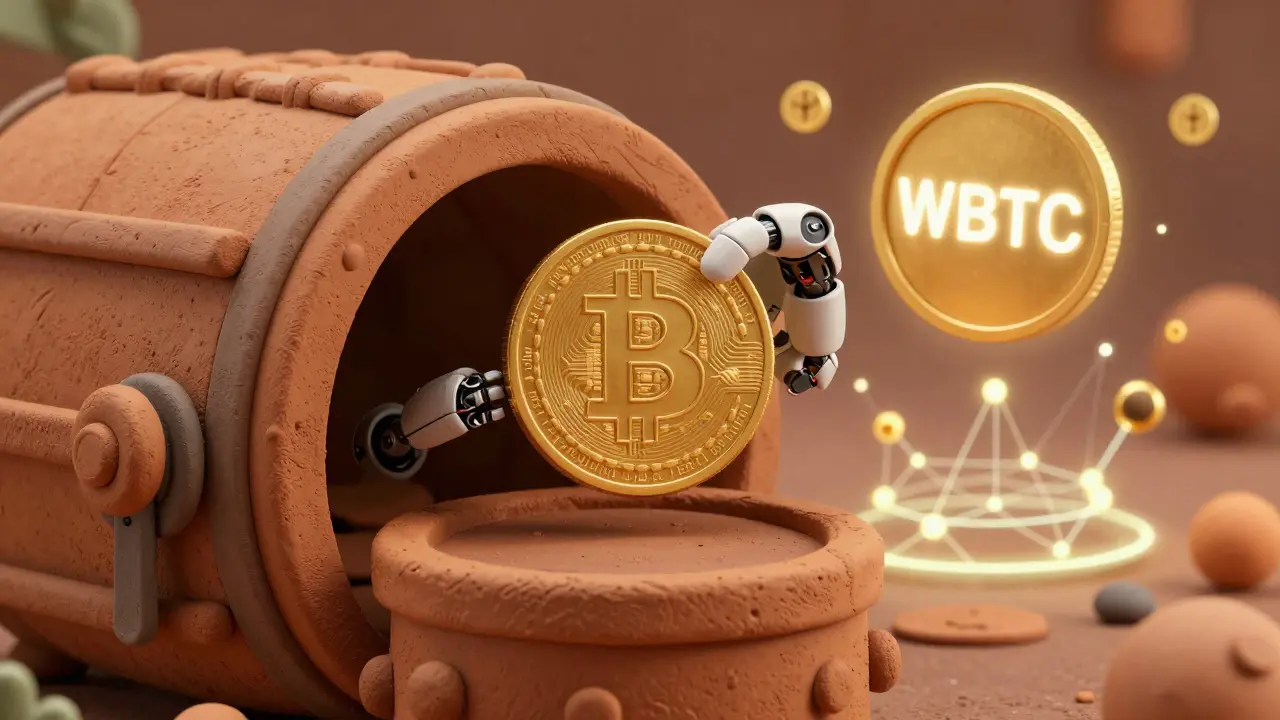
Imagine you have Bitcoin, but you want to use it on Ethereum to earn interest, trade on decentralized exchanges, or borrow money - without selling it. That’s where wrapped tokens come in. They’re not new coins. They’re digital representations of existing cryptocurrencies, locked up on one blockchain and mirrored on another. Think of them like a voucher: you hand over your Bitcoin, get a token that acts like Bitcoin on Ethereum, and when you’re done, you trade it back for your original Bitcoin.
How Wrapped Tokens Work
Wrapped tokens solve a real problem: blockchains don’t talk to each other. Bitcoin runs on its own network. Ethereum runs on another. They use different rules, different code, different languages. You can’t just send BTC to an Ethereum wallet and expect it to work. So, wrapped tokens act as bridges.Here’s how it actually happens:
- You send your Bitcoin (say, 1 BTC) to a trusted custodian - often a group of companies like BitGo, Kyber, or Ren.
- That custodian locks your Bitcoin in a secure digital vault.
- On Ethereum, a smart contract mints 1 WBTC (Wrapped Bitcoin) and sends it to your wallet.
- Now you have WBTC - it looks and acts like any other ERC-20 token on Ethereum.
- When you want your Bitcoin back, you burn the WBTC. The smart contract triggers the release of your original BTC from the vault.
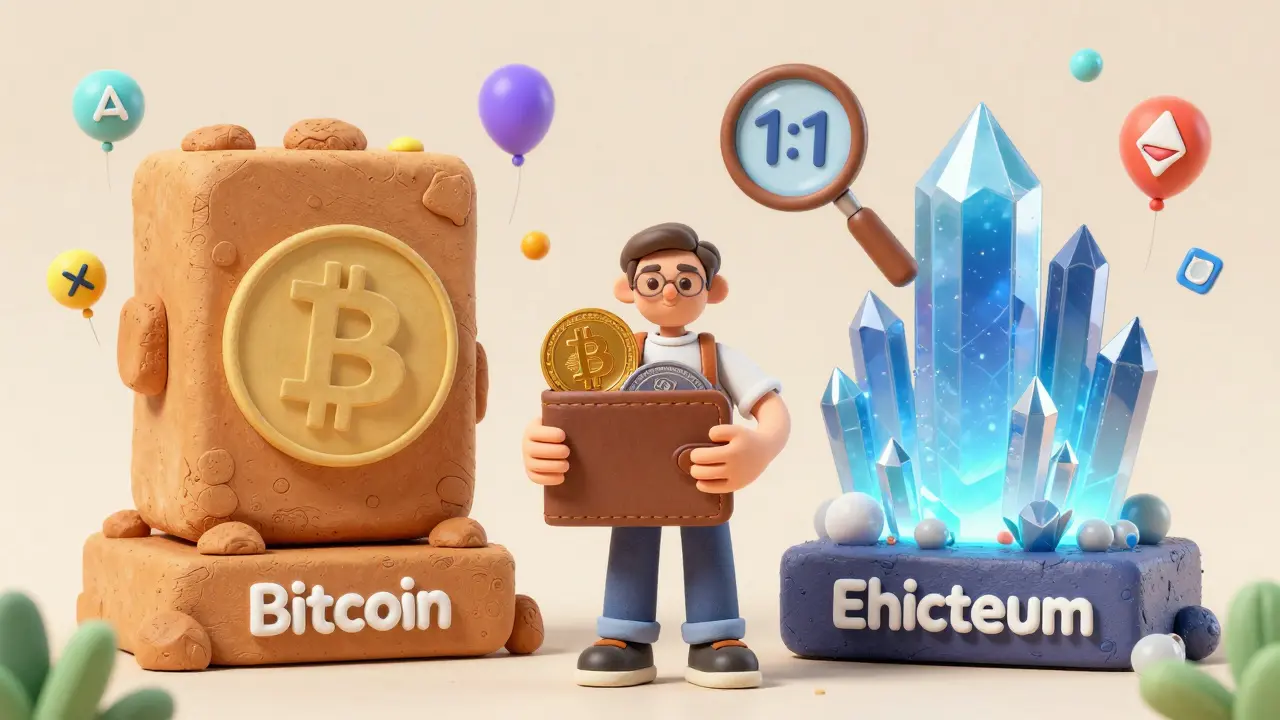
This 1:1 backing is critical. Every WBTC should always equal one real Bitcoin. That’s why audits matter. Companies like Chainlink and CertiK check that the locked Bitcoin matches the number of WBTC in circulation. If they don’t match, the whole system breaks.
Why People Use Them
Most wrapped tokens are used in DeFi - decentralized finance. Bitcoin holders who want to earn yield have had zero options until wrapped tokens came along. Now, with WBTC, you can:
- Lend it on Aave and earn 3-5% APY
- Provide liquidity on Uniswap and collect trading fees
- Use it as collateral to borrow USDC or ETH
As of October 2023, WBTC alone had over $10 billion locked in DeFi protocols. That’s more than 78% of all Bitcoin used in DeFi. Without wrapped tokens, Bitcoin would be stuck on its own chain, unable to participate in the booming Ethereum ecosystem.
It’s not just Bitcoin. Wrapped ETH (WETH) lets Ethereum be used on chains that don’t support its native format. Wrapped Litecoin (WLTC), Wrapped Solana (WSOL), and even wrapped fiat like USDC (on 8+ blockchains) follow the same model. In total, wrapped tokens had over $12.7 billion locked in late 2023.
The Downside: Centralization and Risk
Wrapped tokens aren’t perfect. Their biggest flaw? They rely on custodians. Someone has to hold your real Bitcoin. That’s a central point of failure.
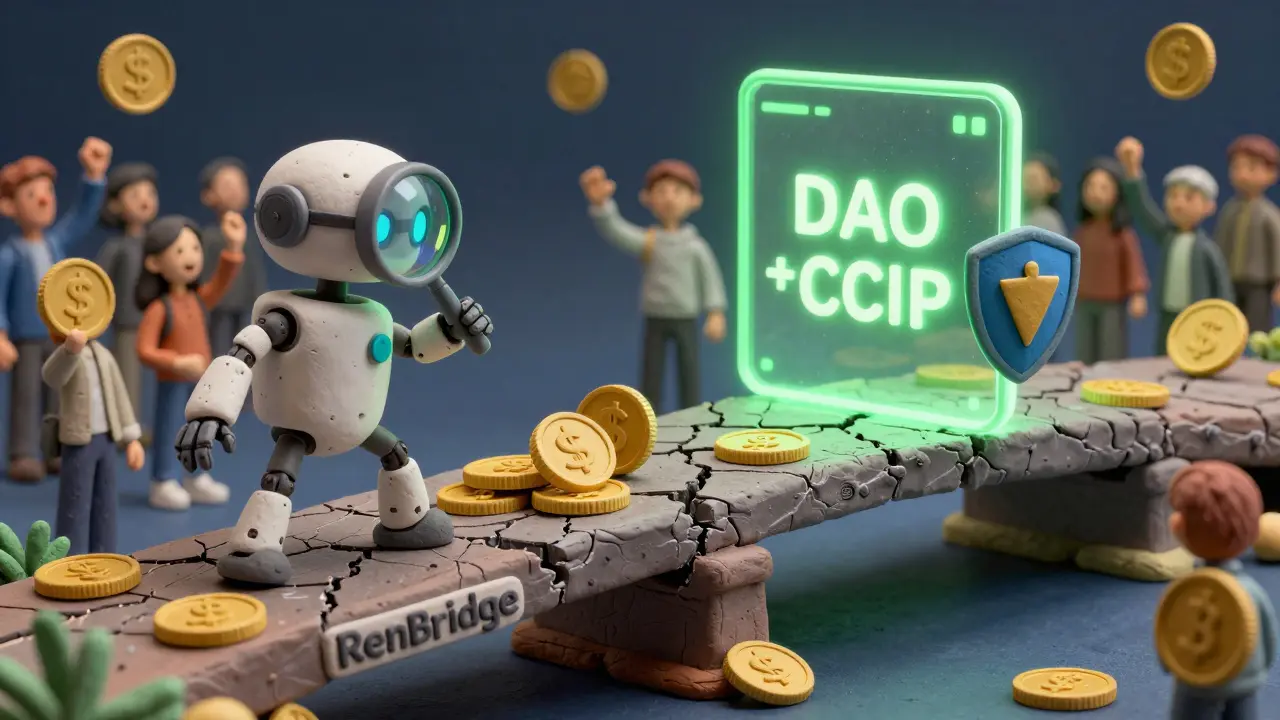
Back in November 2022, a bug in the RenBridge protocol trapped $96 million in wrapped tokens for three days. Users couldn’t unwrap. No one could fix it until developers rolled out a patch. That’s not the kind of thing that happens with native assets.
Also, you pay fees. Wrapping or unwrapping typically costs 0.1-0.3%. That might sound small, but on $10,000, it’s $10-30. Plus, transactions can take 15-60 minutes depending on network traffic. And if you pick the wrong token or set slippage too low, your transaction can fail.
Security isn’t guaranteed either. The Wormhole bridge was hacked in 2022, losing $325 million. While that wasn’t a wrapped token issue per se, it shows how fragile cross-chain bridges can be.
Even regulators are watching. The SEC has flagged wrapped tokens as potential securities if the custodian has too much control. The EU’s MiCA rules require 1:1 backing and regular audits - which most major wrapped tokens already do.
Wrapped Tokens vs. Other Cross-Chain Solutions
There are other ways to move assets between chains:
- Atomic swaps: Peer-to-peer trades without intermediaries. Great in theory, but barely used - fewer than 100 daily transactions across all networks.
- Bridges like Wormhole: Allow direct transfers, but have been hacked multiple times.
- Sidechains (like Polygon): Create their own ecosystems. You can’t bring Bitcoin in - you have to mint new tokens.
Wrapped tokens win on simplicity and liquidity. They plug directly into existing DeFi apps. You don’t need to learn new interfaces. Your MetaMask wallet works the same. That’s why WBTC dominates: it’s the most trusted, most liquid wrapped asset on Ethereum.
Who Uses Them and Why
On Reddit’s r/ethfinance, users regularly post about earning 4% APY on their Bitcoin via WBTC - something impossible before. One user made $3,200 in 48 hours by exploiting yield differences between Aave and Compound.
But not everyone is happy. Reviews on Trustpilot show 41% of complaints are about slow customer support. Another 37% say the verification process is confusing for beginners.
Institutional players are jumping in too. Fidelity’s Bitcoin Fund now uses WBTC for Ethereum-based settlements. Circle reports $4.2 billion in wrapped USDC across blockchains in just one month.
Most usage? 68% goes into lending and yield farming. 22% is for trading across chains. Only 10% is used in NFT markets.
What’s Next?
The industry knows the centralization problem needs fixing. The WBTC consortium is moving toward a DAO - a decentralized governance model. By Q2 2024, BitGo’s control over custody will drop from 100% to 35%. Other projects like Chainlink’s CCIP are building trust-minimized bridges that don’t need custodians at all.
Ethereum’s upcoming Cancun-Deneb upgrade will lower wrapping costs by 40-60%. That could make it cheaper and faster to move assets between chains.
But experts don’t think wrapped tokens are going away anytime soon. Vitalik Buterin called them a “necessary evil” in 2022 - and still called them essential in October 2023. He says they’ll keep bridging liquidity for at least 3-5 years while native cross-chain tech catches up.
For now, wrapped tokens are the most practical way to unlock Bitcoin’s potential in DeFi. They’re not perfect. But they work. And until something better comes along, they’ll keep running the show.
Are wrapped tokens the same as the original cryptocurrency?
No. Wrapped tokens are digital representations - not the original asset. For example, WBTC is not Bitcoin. It’s an ERC-20 token on Ethereum that’s backed 1:1 by Bitcoin locked in a custodian’s vault. You can trade, lend, or use WBTC like Bitcoin on Ethereum, but you can’t send it to a Bitcoin wallet. To get your real Bitcoin back, you must unwrap it.
Can I lose my wrapped tokens?
You won’t lose them if you hold them in your own wallet. But you can lose access if you lose your private key. The bigger risk is if the custodian fails, the smart contract bugs out, or the bridge gets hacked. That’s why it’s important to use well-audited wrapped tokens like WBTC and avoid obscure ones with low liquidity or unclear backing.
Do I pay fees to wrap or unwrap tokens?
Yes. Most platforms charge 0.1% to 0.3% for wrapping or unwrapping. You also pay Ethereum gas fees - usually between 0.005 and 0.02 ETH - to execute the transaction. These fees vary based on network congestion. Some services bundle the fees, others charge them separately. Always check the total cost before confirming.
Is WBTC safe to use?
WBTC is one of the safest wrapped tokens because it’s backed by a consortium of trusted companies, regularly audited, and uses multi-signature wallets (requiring 3-5 approvals to move funds). It’s also the most liquid, with deep trading pairs on major DEXs. But no system is 100% risk-free. Always verify the current reserve status on the WBTC website before large transactions.
Can I wrap Bitcoin on any blockchain?
You can wrap Bitcoin on Ethereum, Binance Smart Chain, Polygon, and others - but only through specific platforms. WBTC is only on Ethereum. renBTC and tBTC are also on Ethereum. Other chains have their own versions, like wBTC on Polygon or WBTC on Arbitrum. Each has its own custodian and smart contract. Never assume a wrapped token on one chain is the same as on another.
What’s the difference between wrapped tokens and sidechains?
Sidechains like Polygon create their own blockchain with its own tokens. To use Bitcoin on Polygon, you’d need to mint a new token - often with less liquidity and less security. Wrapped tokens, like WBTC, are direct 1:1 representations of the original asset on a different chain. They integrate directly into existing DeFi apps, making them more reliable and liquid than sidechain alternatives.
Do wrapped tokens affect the price of the original cryptocurrency?
Not directly. The price of WBTC should always track Bitcoin’s price because it’s 1:1 backed. If WBTC trades above BTC, arbitrageurs will wrap more BTC to sell WBTC and bring the price back down. If it trades below, they’ll burn WBTC to reclaim BTC and push the price up. This keeps the peg stable. However, high demand for wrapped tokens can increase overall interest in the original asset, indirectly boosting its price.
Bridget Suhr
December 13, 2025 AT 21:48So wrapped tokens are basically like IOUs for crypto? I get it - you’re not really moving Bitcoin to Ethereum, you’re just getting a ticket that says ‘I own 1 BTC’ and using that instead. Kinda wild that we’ve built whole financial systems on digital receipts. I’ve used WBTC to earn yield and honestly, it’s been smooth… until I tried to unwrap during gas spike season. Took 3 hours and $18 in fees. Worth it? Maybe. Annoying? Absolutely.
Ike McMahon
December 14, 2025 AT 16:32WBTC is the gold standard for a reason. Audited, liquid, backed by trusted custodians. If you’re new to DeFi and want to use BTC outside Bitcoin’s chain, start here. Avoid random wrapped tokens with no audits - they’re gambling, not investing. Also, always check the reserve status on wbtc.network before you move big amounts. Simple. Safe. Smart.
Lynne Kuper
December 16, 2025 AT 05:32Oh wow, so we’re now using blockchain bridges like we’re trading baseball cards in 1992? ‘I’ll give you 1 WBTC for your 0.5 ETH’ - yeah, sure. And we call this innovation? The fact that we need a middleman to hold our Bitcoin just so we can use it on Ethereum is laughable. Vitalik calls it a ‘necessary evil’? More like a band-aid on a broken leg. The whole system’s built on trust, not code. And don’t even get me started on those ‘decentralized’ custodians who still hold the keys. We’re literally just recreating banks, but with more gas fees and fewer FDIC protections. Sigh.
Lois Glavin
December 17, 2025 AT 16:50I tried wrapping my BTC once just to see what it was like. Didn’t even know where to start. Took me 20 minutes just to figure out which platform to use. Then I had to wait for the custodian to confirm. Then gas fees hit. By the time I got my WBTC, I forgot why I even did it. Honestly? I just left it in my wallet and forgot about it. Maybe I’m just not DeFi material. But I do like that I can earn something on it now - even if it’s only 3%. Better than sitting idle, I guess.
Abhishek Bansal
December 18, 2025 AT 08:23lol so you’re telling me the entire DeFi ecosystem runs on a system where a few companies hold your Bitcoin and you have to trust them? And you call this decentralized? Bro. You’re literally trusting BitGo like they’re your bank. Meanwhile, I’m over here hodling my BTC on a cold wallet and laughing. WBTC? More like W-BROKE. If you’re not using native chains, you’re not crypto. You’re just a tourist with a MetaMask wallet.