What is AgriDex (AGRI) Crypto Coin? The Blockchain Platform Transforming Farm Trade
 Jan, 15 2026
AgriDex (AGRI) isn’t just another cryptocurrency. It’s a working digital marketplace built to fix how farmers, buyers, and distributors trade food around the world. While most crypto projects chase hype or speculative gains, AgriDex tackles a real, $2.7 trillion problem: the broken system behind buying and selling crops like coffee, sugar, grains, and olive oil.
Why Agricultural Trade Is Broken
Think about how your coffee gets from a farm in Colombia to your local shop. It passes through brokers, middlemen, banks, and clearinghouses. Each step adds cost and delay. Transaction fees can hit 3% to 10%. Settlements take 3 to 7 days. Farmers often wait weeks to get paid-even after their crop is shipped. In emerging markets, many farmers can’t even access banking services. That’s where AgriDex steps in.AgriDex cuts out the middlemen. Instead of paper invoices and bank wires, it uses blockchain to connect farmers directly with buyers. When a shipment is confirmed, payment happens in minutes-not days. And it’s all recorded on-chain so no one can fake the details.
How AgriDex Works
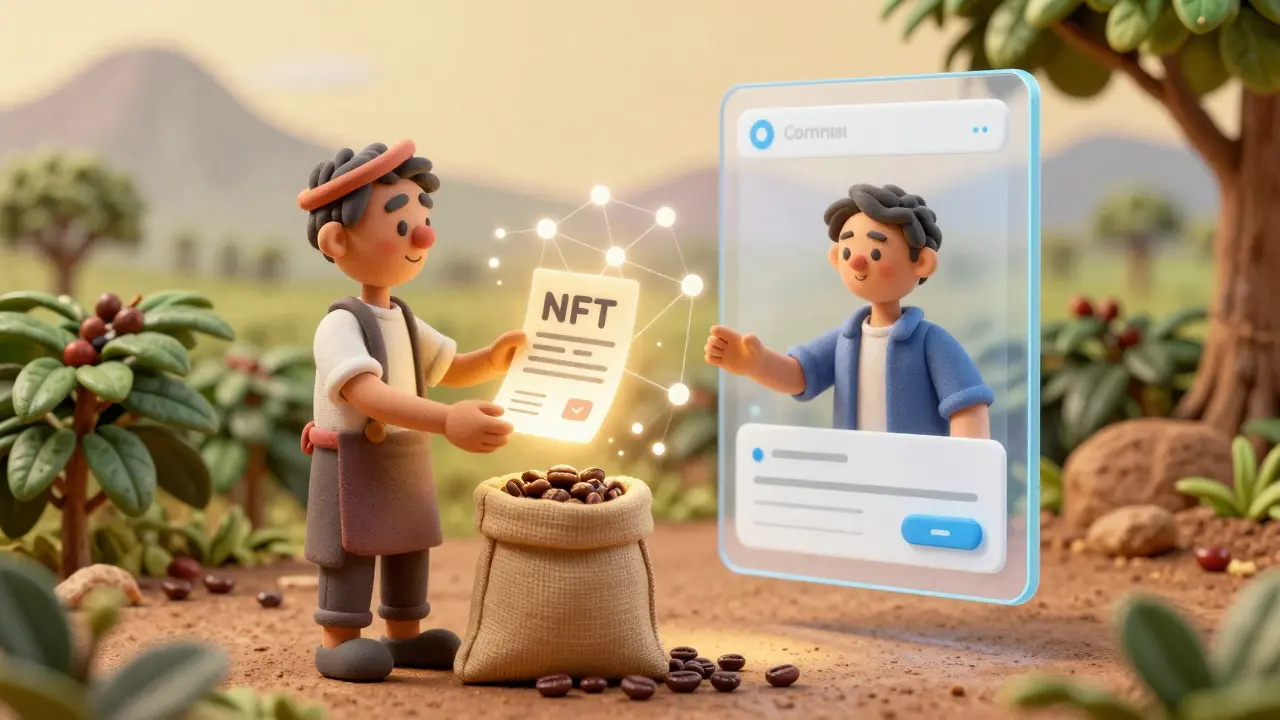
AgriDex runs on the Solana blockchain. That’s not an accident. Solana processes 65,000 transactions per second and charges just $0.00025 per transaction. For a farmer in Kenya selling coffee to a buyer in Germany, that means near-instant payment with almost zero fees.Here’s the core trick: each shipment of coffee, sugar, or olive oil gets turned into a digital asset called an NFT. This isn’t just a token-it’s a tamper-proof digital receipt. It holds everything: the farm location, harvest date, weight, quality grade, buyer info, and payment confirmation. Once it’s on the blockchain, it can’t be altered. Buyers know exactly what they’re paying for. Farmers get paid faster. Everyone trusts the system.
Payments are made in USDC, a stablecoin pegged to the U.S. dollar. That means no wild price swings like Bitcoin. Farmers get predictable income. No more losing money because the exchange rate changed while they waited for a bank transfer.
What Is the AGRI Token?
The AGRI coin is the native token of the AgriDex platform. It’s not a currency you use to buy coffee. Instead, it’s the governance token. Holders of AGRI can vote on changes to the platform-like new crop types, fee structures, or upgrades. It’s how the community runs the system, not a company.AgriDex launched as a SaaS platform for agricultural businesses, but the AGRI token gives users real ownership. If you’re a farmer using the platform regularly, holding AGRI gives you a say in its future. It’s not speculation-it’s participation.
What Crops Can You Trade?
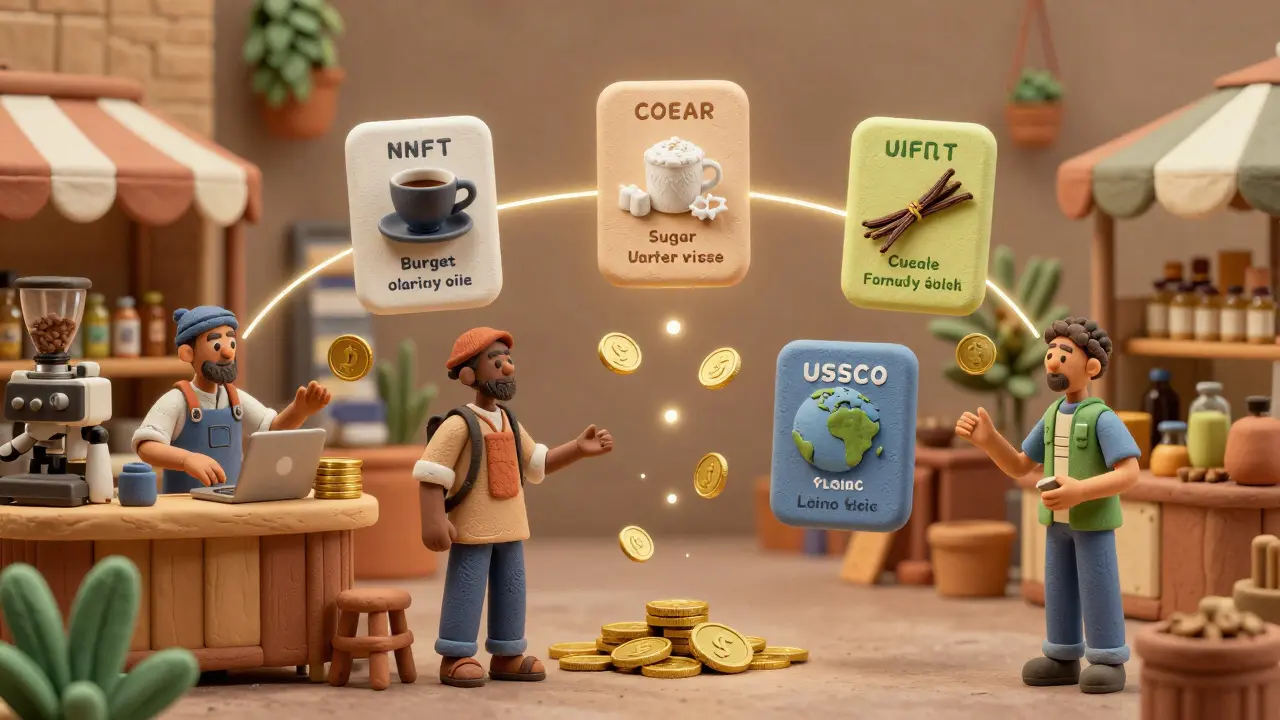
AgriDex started with the big ones: coffee, sugar, wheat, soybeans, and olive oil. Those are high-value, frequently traded commodities with clear global demand. But the platform has expanded. By late 2025, it added specialty crops like vanilla and saffron-products that small farmers rely on but often get exploited by middlemen.Each crop has its own NFT template with specific data fields. For vanilla, you track origin, curing method, and moisture content. For coffee, you record altitude, varietal, and processing type. This level of detail matters. Buyers pay more for verified quality. Farmers get paid fairly.
How Is AgriDex Different From Other Platforms?
There are other blockchain projects trying to fix agriculture-like TE-FOOD and AgriDigital. But they mostly focus on tracking supply chains. AgriDex goes further: it’s a full trading marketplace.TE-FOOD tracks where your rice came from. AgriDex lets you buy it, pay for it, and get paid for it-all on the same platform. And because it’s built on Solana, it’s faster and cheaper than platforms using Ethereum, which can take seconds to confirm a transaction and cost dollars in fees.
AgriDex also integrates ESG data-environmental, social, and governance metrics-right into the NFT. Did the farmer use regenerative practices? Did they pay fair wages? That info is recorded permanently. Buyers who care about sustainability can filter for it. That’s a new kind of value.
Who Uses AgriDex?
As of December 2025, AgriDex had 1,200 registered farmers and 287 institutional buyers across 37 countries. Most users are small-to-medium producers in Africa, Southeast Asia, and Latin America. These are farmers who’ve been stuck in the old system for decades.One Ugandan coffee cooperative reported it took them two weeks to learn the platform-but after that, they started getting paid in 15 minutes instead of 10 days. That cash flow difference lets them buy seeds, pay workers, and plan ahead. It’s not a luxury-it’s survival.
On the buyer side, it’s food processors, exporters, and specialty retailers who want transparency. A European olive oil brand using AgriDex can prove to customers that every bottle came from a farm that used no pesticides and paid fair wages. That’s a marketing advantage.
Challenges and Criticisms
AgriDex isn’t perfect. Solana had five major outages between 2021 and 2022. While it’s been stable since early 2023, some users still worry. And blockchain doesn’t solve everything. If a farmer doesn’t have internet access or a smartphone, they can’t use the platform. AgriDex is trying to solve that with offline data collection tools, but it’s a slow process.Some economists at the International Food Policy Research Institute argue that blockchain won’t fix deep-rooted issues like land ownership or lack of infrastructure. They’re right-but AgriDex doesn’t claim to. It’s fixing one piece: the payment and trust problem.
There’s also regulatory risk. Tokenizing physical commodities isn’t legal everywhere. In some countries, it’s unclear if an NFT representing a bag of coffee is considered a financial instrument. AgriDex is working with legal teams in key markets, but that’s a moving target.
What’s Next for AgriDex?
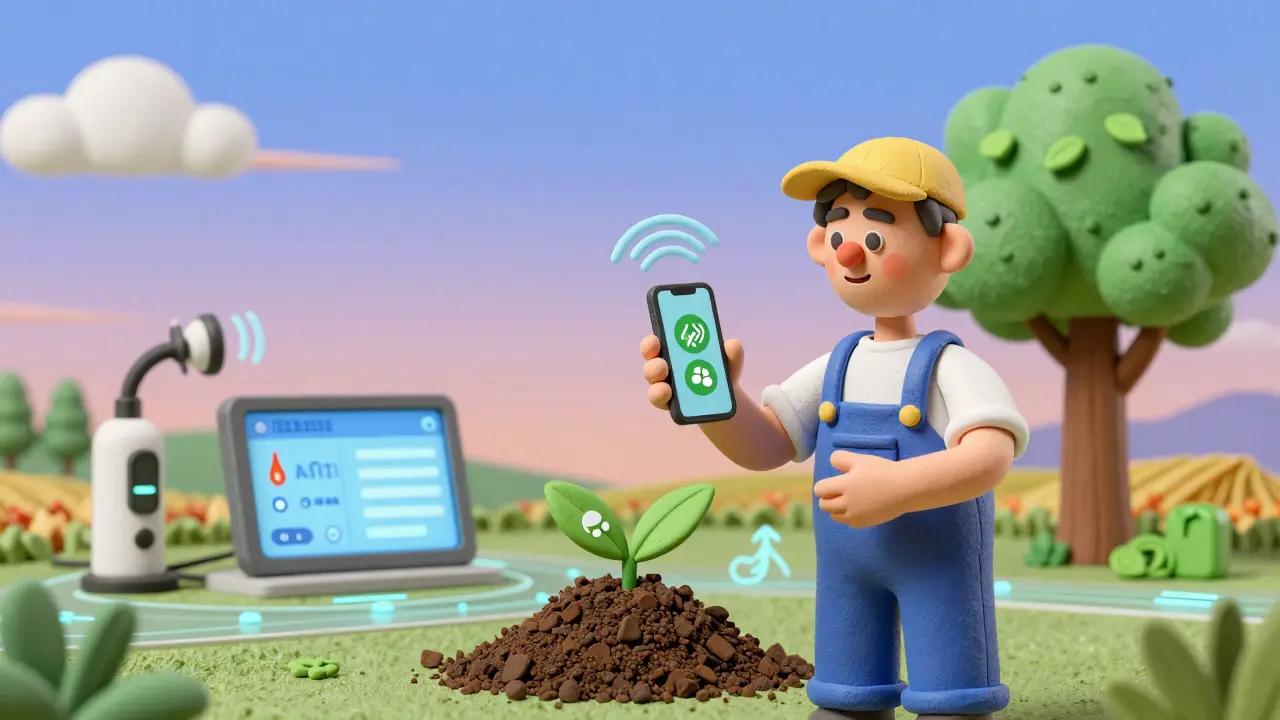
The roadmap is clear. By mid-2026, they’re launching a mobile app designed for farmers with low digital literacy-think simple icons, voice commands, and SMS alerts. Later in 2026, they’ll integrate IoT sensors that automatically upload data like soil moisture or temperature during transport. That means even more accurate quality tracking.In 2027, they plan to explore carbon credit trading. If a farmer uses low-emission practices, they could earn AGRI tokens as a reward. That turns sustainability into income.
Market analysts at Delphi Digital say AgriDex has strong product-market fit-especially for exporters in emerging economies. The real question is whether regulators will let it scale.
Is AGRI a Good Investment?
As of January 2026, the AGRI token price dropped 7.3% over seven days while the broader crypto market rose 5.5%. That’s a red flag for traders looking for quick gains. But AgriDex isn’t a pump-and-dump coin. Its value comes from usage.Think of it like Ethereum in 2015. No one cared about the price back then-people cared about what it could do. AgriDex is the same. If 10,000 farmers start using it next year, demand for AGRI as a governance token will rise. That’s real utility, not speculation.
Right now, it’s early. Only 8,500 active users are tracked across social platforms. But adoption is growing. The platform’s community on Telegram has over 4,200 members, mostly farmers and agribusinesses asking questions and sharing success stories.
How to Get Started
If you’re a farmer or buyer interested in AgriDex:- Get a Solana-compatible wallet (like Phantom or Backpack).
- Buy some USDC on a centralized exchange like Coinbase or Kraken.
- Transfer USDC to your Solana wallet.
- Visit agridex.com/token and connect your wallet.
- Follow the step-by-step guide to list your crop or find buyers.
Experienced crypto users can do this in 15 minutes. Farmers new to tech may need 2-3 weeks to get comfortable. There are video tutorials on YouTube and a responsive Telegram support group with 24-hour email replies.
Final Thoughts
AgriDex isn’t trying to make you rich. It’s trying to make small farmers paid fairly, faster. It’s not flashy. It doesn’t have a celebrity CEO or a meme coin. But it’s solving a real problem with real technology.If blockchain is going to change the world, it won’t be through speculative tokens. It’ll be through tools like AgriDex-quiet, practical, and focused on the people who grow our food.
Callan Burdett
January 16, 2026 AT 20:51This is the kind of crypto I can actually get behind 😭 Farmers finally getting paid in minutes instead of waiting weeks? That’s not tech-that’s justice. I’ve seen documentaries where farmers in Kenya sell their coffee for half what it’s worth just because they can’t wait for bank transfers. AgriDex isn’t just smart, it’s human. If blockchain can fix THIS, then yeah, I’m all in.
Haley Hebert
January 18, 2026 AT 06:17I know people roll their eyes at crypto, but this actually makes me hopeful? Like, I used to think NFTs were just monkey pics and JPEGs, but turning a shipment of coffee into a verifiable digital record that includes where it was grown, how it was processed, and who got paid-that’s revolutionary. And using USDC so farmers aren’t getting screwed by volatility? Genius. I don’t even drink coffee but I want to buy from a farm on AgriDex just to support it.
Pat G
January 18, 2026 AT 07:48Another socialist crypto scam dressed up as ‘helping farmers.’ Who authorized this? The UN? The World Bank? You think some blockchain startup in Silicon Valley knows better than centuries of trade systems? This is just another way for tech bros to loot developing nations under the guise of ‘empowerment.’
Rod Petrik
January 20, 2026 AT 02:33solana outages were a joke and they’re still hiding the truth 😏 the whole thing is a fed project to push digital dollars and track farmers’ land use… they’re gonna use the NFT data to seize property later… you think they care about fair wages? nah… they want your soil data and your biometrics from the phone app… i saw a leak… they’re already talking to the doj… 🤫
Pramod Sharma
January 21, 2026 AT 20:09Technology doesn't solve poverty. But it can remove one layer of exploitation. That’s enough to start.
Liza Tait-Bailey
January 22, 2026 AT 17:19i just love that this isnt some flashy coin with a dog mascot… its just… real. farmers get paid faster, buyers know whats in their olive oil, and its not all about pumping the price. i wish more projects were like this. 🌱
nathan yeung
January 23, 2026 AT 00:53AgriDex is what happens when tech stops trying to be cool and starts trying to help. Solana’s cheap fees make this possible. USDC keeps it stable. NFTs make it trustworthy. No hype. Just function. This is how you build something that lasts.
Bharat Kunduri
January 24, 2026 AT 17:49lol this is so niche who even cares… coffee nfts? i mean sure its cool but its like putting a fancy lock on a leaky boat… farmers need roads, not wallets… and who’s gonna teach grandma in rural india to use phantom wallet? 🤡
Chris O'Carroll
January 25, 2026 AT 18:53Okay but let’s be real-this is the most boring crypto project ever. No memes. No Elon tweets. No moon. Just… farmers. And data. And USDC. I almost respect it. Like, it’s the crypto equivalent of a well-made peanut butter sandwich. No flair, no drama, just… works. And somehow, that’s the most impressive thing.
Christina Shrader
January 27, 2026 AT 09:41I work with smallholder farmers in rural Georgia. We’ve tried everything-microloans, cooperatives, direct-to-consumer sales. Nothing cuts the delay like this. The first time one of our growers got paid within an hour after harvest? She cried. Not because of the money-because for the first time, she felt seen. This isn’t just tech. It’s dignity.