What is Decentralized Identity? A Guide to User-Controlled IDs
 Apr, 24 2026
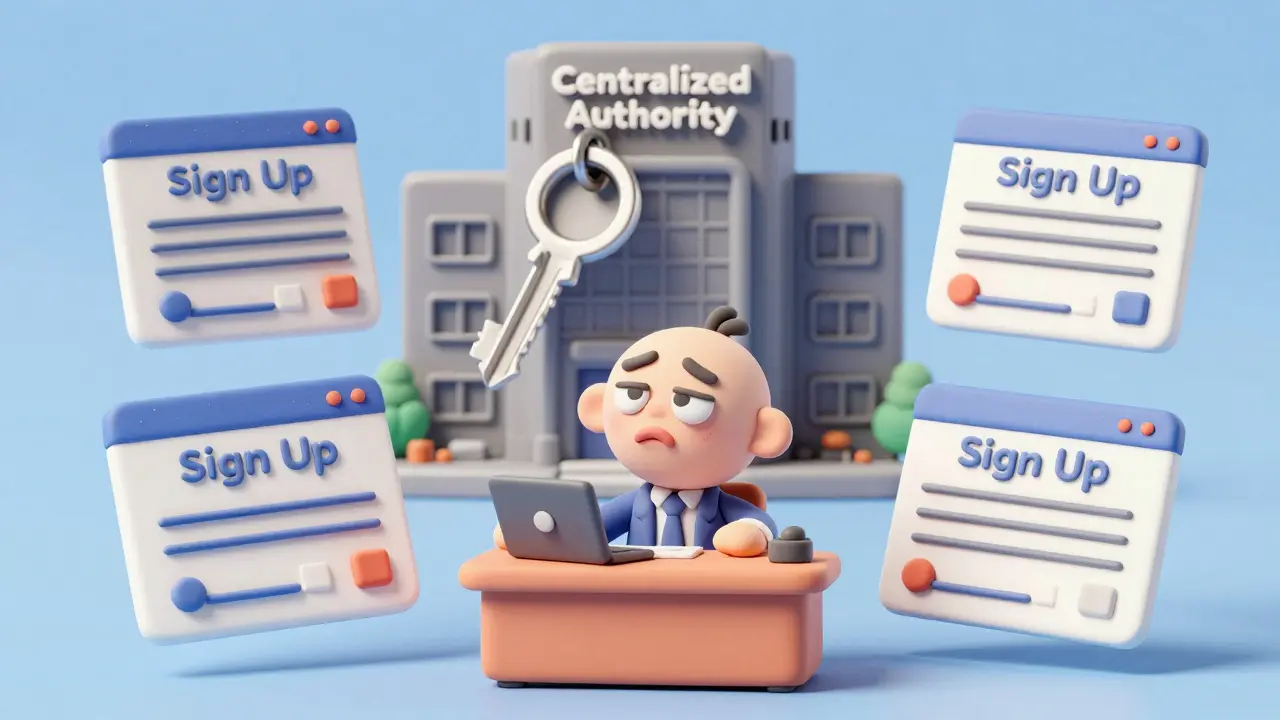
Imagine if you didn't have to create a new account every time you signed up for a website. No more filling out the same name, email, and address for the tenth time this month, and no more worrying about whether a company is leaking your data in a breach. That is the promise of Decentralized Identity is a framework for digital identity management that shifts control from central authorities to the individual user. Also known as DID, it uses blockchain technology to ensure you own your data, rather than renting it from a tech giant.
For decades, we've relied on a "centralized" model. Your bank holds your financial identity, your government holds your citizenship ID, and Google or Facebook holds your social identity. If any of these systems go down, or if they decide to ban you, you lose access to your digital self. Decentralized identity flips this script. It lets you carry your credentials in a digital wallet and share only what is necessary-like proving you're over 21 without showing your exact birth date.
| Feature | Centralized Identity (Current) | Decentralized Identity (DID) |
|---|---|---|
| Control | Controlled by the service provider | Owned and managed by the user |
| Data Storage | Central databases (Honeypots) | User's digital wallet / Distributed ledger |
| Privacy | Provider sees all your activity | Selective disclosure (Zero-Knowledge) |
| Single Point of Failure | High (Server crash = No access) | Low (Distributed across blockchain) |
The Core Pillars: How It Actually Works
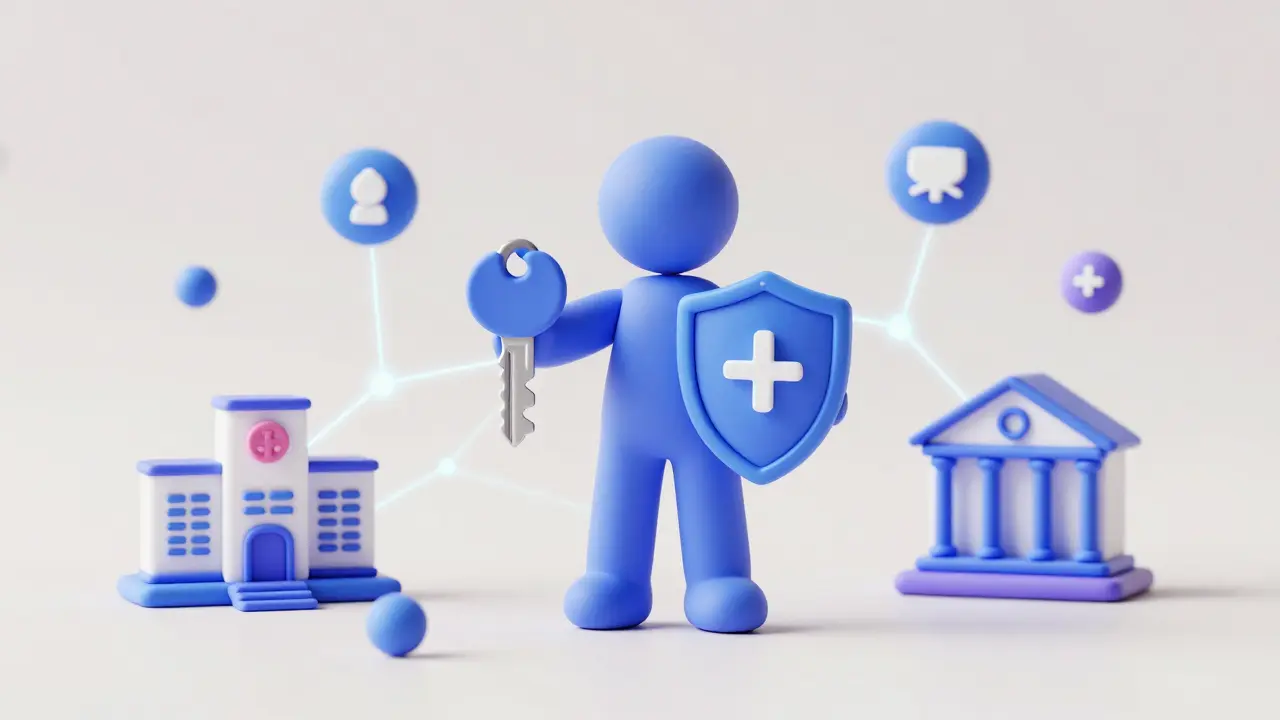
To understand how this works, you need to know about Self-Sovereign Identity (SSI). This is the philosophy that individuals should have sole ownership of their digital identities. In an SSI world, you aren't a "user" in someone else's database; you are the sovereign owner of your data.
This is made possible through three main components:
- Decentralized Identifiers (DIDs): Think of a DID as a permanent, unique address. Unlike an email address (which is owned by Google or Yahoo), a DID is created by you using cryptographic keys. It is recorded on a blockchain so that anyone can verify the ID exists, but nobody can change it or delete it without your permission.
- Verifiable Credentials (VCs): These are digital versions of your real-world documents. A university might issue a VC for your degree, or a government might issue one for your passport. These aren't just PDFs; they are cryptographically signed claims that a computer can verify instantly.
- Digital Wallets: This is the app on your phone where your VCs live. It acts as your secure vault. When a service asks for proof of identity, your wallet sends a cryptographic proof rather than the original document.
The Trust Triangle: Issuers, Holders, and Verifiers
Decentralized identity doesn't happen in a vacuum. It relies on a "Trust Triangle" to function without a middleman. Let's use a real-world scenario: applying for a high-security job.
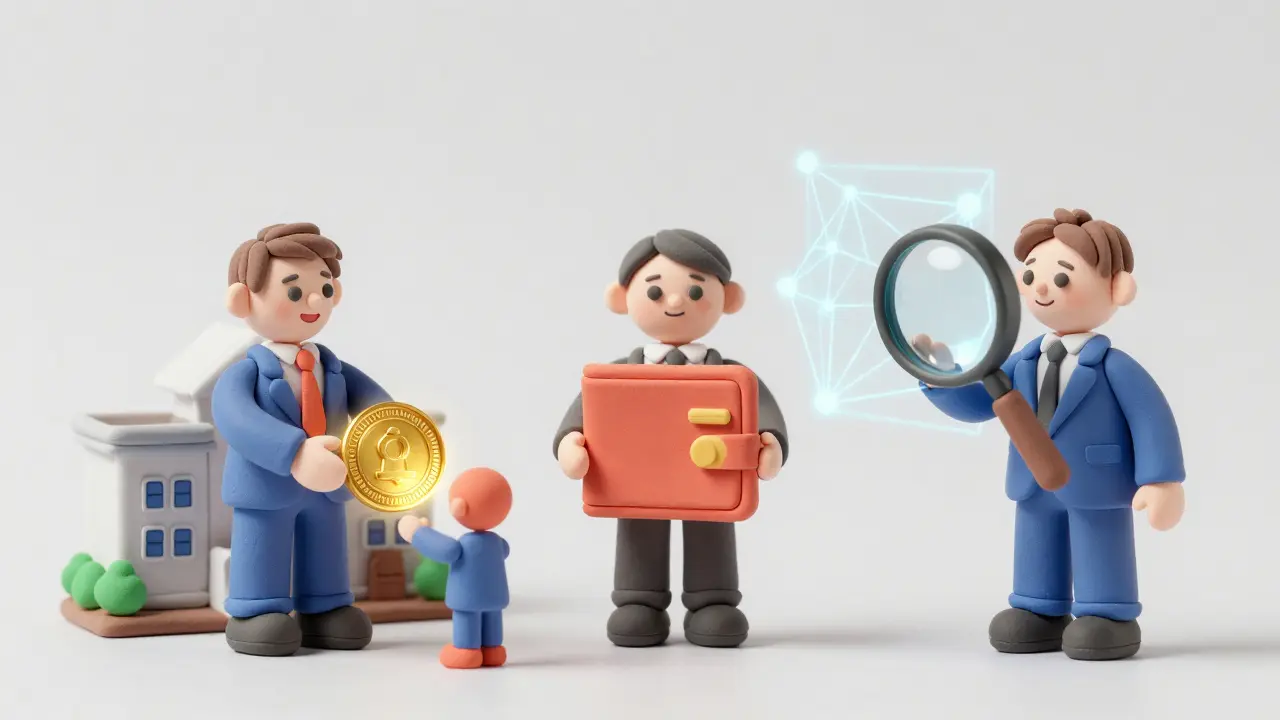
First, there is the Issuer. This is a trusted entity, like a university. They verify your degree and "issue" a Verifiable Credential to your wallet. They sign it with their private key, proving it's authentic.
Next is the Holder-that's you. You store that credential in your wallet. You decide when to show it and who gets to see it. You aren't asking the university for permission every time you apply for a job; you already have the proof in your pocket.
Finally, there is the Verifier. This is the employer. Instead of calling the university to verify your diploma (which takes days), the employer's system checks the blockchain to see if the university's public key matches the signature on your credential. The verification happens in milliseconds.
Why Blockchain is the Secret Sauce
You might wonder why we need a blockchain for this. Why not just use a cloud database? The answer is trust and immutability. In a traditional system, the database admin can change your records, or a hacker can wipe the server. Blockchain provides a distributed ledger that serves as a "source of truth."
The blockchain doesn't actually store your private data-that would be a privacy nightmare. Instead, it stores the DID document, which contains public keys and service endpoints. This allows anyone to verify a credential without needing to contact the original issuer. It removes the "single point of failure." If one node in the network goes down, thousands of others still hold the record of your identity's validity.
One of the coolest technical tricks used here is Zero-Knowledge Proofs (ZKPs). ZKPs allow you to prove something is true without revealing the underlying data. For example, you can prove to a website that you are over 18 without revealing your actual birth date, or prove you have a certain amount of money in your bank account without showing your full balance. This is a massive leap forward for digital privacy.
Real-World Applications: Where is This Actually Used?
While it feels like futuristic tech, decentralized identity is starting to hit the mainstream in several sectors:
- Government Services: Imagine a digital passport or driver's license that you can use to board a plane or enter a building without pulling out a physical card. Some regions are already testing digital ID wallets to streamline tax filings and voting.
- Healthcare: Patients can hold their own medical records as VCs. Instead of your new doctor spending hours calling your old clinic to get your history, you simply grant them temporary access to your health credentials in your wallet.
- Finance & KYC: The "Know Your Customer" (KYC) process is a nightmare for users. Every bank makes you upload the same ID photos. With DID, you do KYC once, get a verified credential, and then share that proof with every other financial institution instantly.
- Education: Universities are moving toward issuing digital diplomas. This prevents degree fraud and allows students to instantly share their certifications with recruiters on platforms like LinkedIn.
The Hurdles: Why Isn't Everyone Using It?
If it's so great, why are we still using passwords and usernames? There are a few big roadblocks. First, there's the "user experience" gap. Managing cryptographic keys is scary for the average person. If you lose your private key in a truly decentralized system, there is no "Forgot Password" button. You could lose your identity forever.
Second, we have a standardization problem. For this to work, the government, the banks, and the tech companies all have to agree on the same standards. The World Wide Web Consortium (W3C) is working on these standards, but adoption takes time. It's like trying to get every country in the world to agree on one type of electrical plug-it's possible, but it's a slow process.
Lastly, there's a psychological barrier. People are used to trusting big brands like Google or Apple with their data. Shifting that trust to a mathematical protocol requires a change in how we think about security and ownership.
Does decentralized identity store my personal data on the blockchain?
No, and that's a critical point. Your personal data (like your name, address, or social security number) is stored locally in your digital wallet. Only the Decentralized Identifier (DID) and the public keys needed for verification are stored on the blockchain. This ensures that if the blockchain is public, your private life remains private.
What happens if I lose my digital wallet?
This is currently the biggest challenge. In a fully decentralized system, losing your private keys means losing access to your identity. However, many modern systems are implementing "social recovery" or "guardian" models, where trusted friends or institutions can help you recover your identity without possessing your data themselves.
Is DID more secure than a traditional login?
Yes, in terms of systemic risk. Traditional logins rely on a central database (a "honeypot") that hackers love to target. Because DID distributes the data among users, there is no single database to breach. Additionally, the use of cryptographic signatures makes it nearly impossible to forge a verifiable credential.
Who issues the credentials in a decentralized system?
Credentials are issued by entities that already have the authority to verify those facts. For example, a government issues a passport credential, a university issues a degree credential, and an employer issues a work experience credential. The blockchain just provides the mechanism to verify those signatures.
Can companies still track me if I use a DID?
It's much harder. Since you control the flow of information and can use Zero-Knowledge Proofs, you can share specific attributes without revealing your entire profile. You can effectively create different "personas" for different services, preventing companies from building a comprehensive shadow profile of your movements across the web.
Next Steps and Implementation
If you are a developer or a business owner looking to implement this, start by exploring the W3C DID specifications. You don't need to build your own blockchain; many existing layers like Ethereum or Hyperledger Indy provide the necessary infrastructure. For the average user, the best move is to keep an eye on "digital identity wallets" coming to iOS and Android, as these will likely be the entry point for most people.
Whether you're tired of password fatigue or worried about data privacy, decentralized identity is the path toward a cleaner, more secure internet. It's about moving from a world where we are the product, to a world where we actually own the keys to our own digital lives.
jill huyo-a
April 24, 2026 AT 21:41This is such a helpful breakdown of a complex topic. I really appreciate how the trust triangle is explained because it makes the whole flow much easier to visualize for someone who isn't a developer.
Robert Mosolygo
April 25, 2026 AT 12:24The absolute naivety here is staggering. You really believe that "decentralization" is a shield when the very protocols are designed by the same globalist entities that run the current systems? It is a classic bait-and-switch. They want us to move our identities into "wallets" so they can track our every movement via a permanent, immutable ledger that can never be erased. Once you link your biological identity to a DID, you have effectively volunteered for a digital panopticon. The "social recovery" feature is just a backdoor for government agencies to seize your identity under the guise of "security." It is a psychological operation to make us feel in control while we are actually walking straight into a high-tech cage. Trusting a mathematical protocol is just another way of saying you trust the people who wrote the math. This is just the infrastructure for a social credit system disguised as "privacy." Wake up.
Alex Hunter
April 26, 2026 AT 02:15The point about Zero-Knowledge Proofs is the real game changer here. Being able to verify eligibility without exposing the raw data is a huge win for civil liberties. It'll take a while for the average person to get comfortable with it, but the potential for reducing identity theft is massive.
Mike Krasner
April 27, 2026 AT 03:51blockchain is just a buzzword for a slow database
Kathleen Bergin
April 28, 2026 AT 16:50Actually the blockchain part is only for the public keys and not the data. It's basic crypto and anyone who knows a little bit about it gets that it's about the public key infrastructure not storing a list of names on a chain.
Matthew Morse
April 28, 2026 AT 17:55idk why people care so much about this just use a password manager and move on