What is DePIN in Cryptocurrency? A Practical Guide to Decentralized Physical Infrastructure
 Jun, 17 2026
Imagine getting paid to share your spare Wi-Fi signal or renting out the computing power of your idle graphics card. That isn’t a sci-fi plot; it’s the reality of DePIN. If you’ve been watching the crypto space lately, you’ve probably seen this term popping up everywhere. But what exactly is it, and why are investors and developers suddenly obsessed with it?
At its core, DePIN stands for Decentralized Physical Infrastructure Networks. It’s a sector within blockchain technology that uses cryptocurrency incentives to build real-world infrastructure. Instead of a single company building cell towers or data centers, thousands of individuals contribute their own hardware. In return, they earn tokens. This model flips traditional infrastructure on its head, turning passive assets into active income streams while lowering costs for everyone involved.
The Core Concept: Tokenizing Real-World Assets
To understand DePIN, you have to look at how infrastructure has always worked. Traditionally, massive corporations or governments build things like power grids, internet networks, and storage facilities. They charge high fees because they have monopolies and huge upfront costs. DePIN challenges this by using blockchain as a coordination layer.
Think of it like Uber, but for infrastructure. Uber didn’t buy all the cars; it created a platform where car owners could offer rides. Similarly, DePIN projects don’t buy all the servers or antennas. They create a protocol where anyone can plug in their device and start providing service. The blockchain records who provided what service and automatically pays them in tokens. This removes the middleman and drastically cuts costs.
Is DePIN just another crypto trend?
Unlike meme coins, DePIN solves a tangible problem: the high cost and slow deployment of physical infrastructure. While speculative trading exists, the underlying value comes from actual services rendered, such as wireless connectivity or GPU rendering.
Two Main Types of DePIN Networks
Not all DePIN projects are the same. Experts generally split them into two categories based on the type of resource being shared. Understanding this distinction helps you decide which projects might be worth your time or investment.
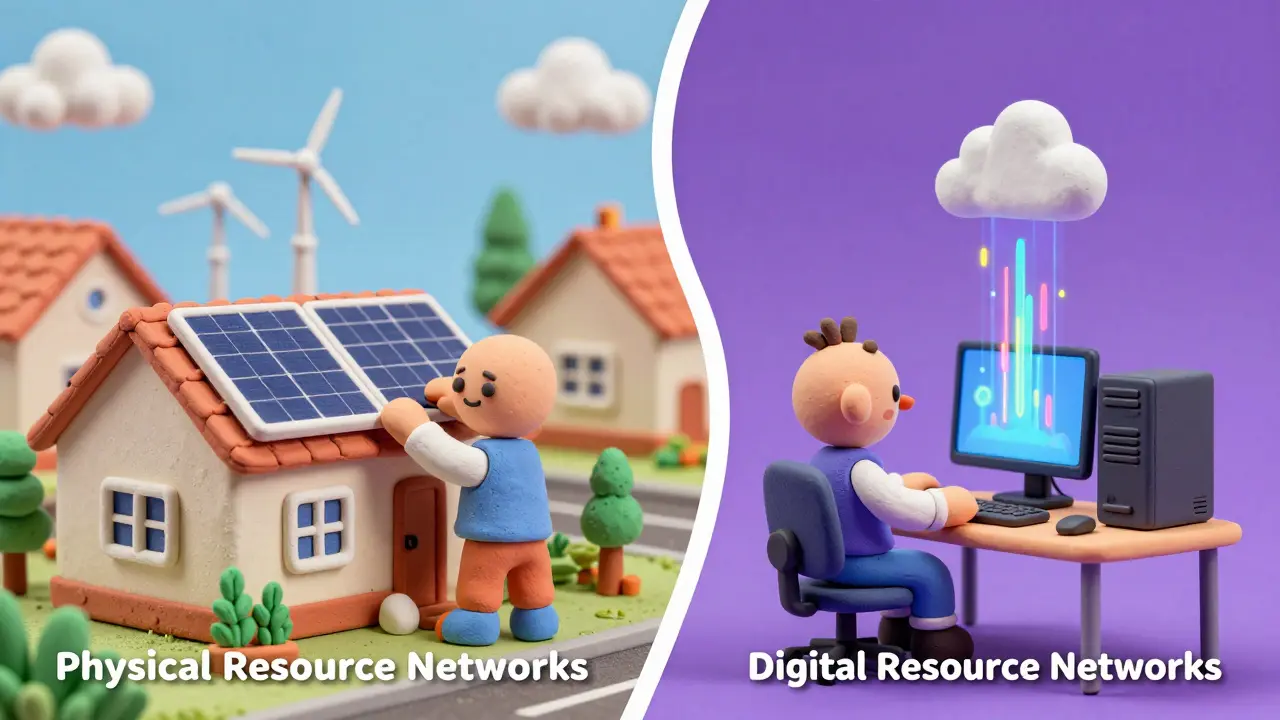
- Physical Resource Networks (PRNs): These involve hardware tied to a specific location. Examples include wireless hotspots, solar panels, or EV charging stations. Because the hardware is fixed, the value depends heavily on geography. A hotspot in a busy city center earns more than one in the middle of nowhere because there are more users nearby.
- Digital Resource Networks (DRNs): These involve resources that aren’t tied to a location. Think of computing power, bandwidth, or cloud storage. Your GPU doesn’t care if it’s in New York or Tokyo; it just processes data. These networks are often easier to scale globally because location doesn’t impact performance.
| Feature | Physical Resource Networks (PRN) | Digital Resource Networks (DRN) |
|---|---|---|
| Example Hardware | Wi-Fi Hotspots, Solar Panels | GPUs, Hard Drives |
| Location Dependency | High (Value varies by area) | Low (Global access) |
| Primary Use Case | Connectivity, Energy Grids | AI Rendering, Cloud Storage |
| Barrier to Entry | Medium (Installation required) | Low to High (Depends on specs) |
How Does DePIN Actually Work?
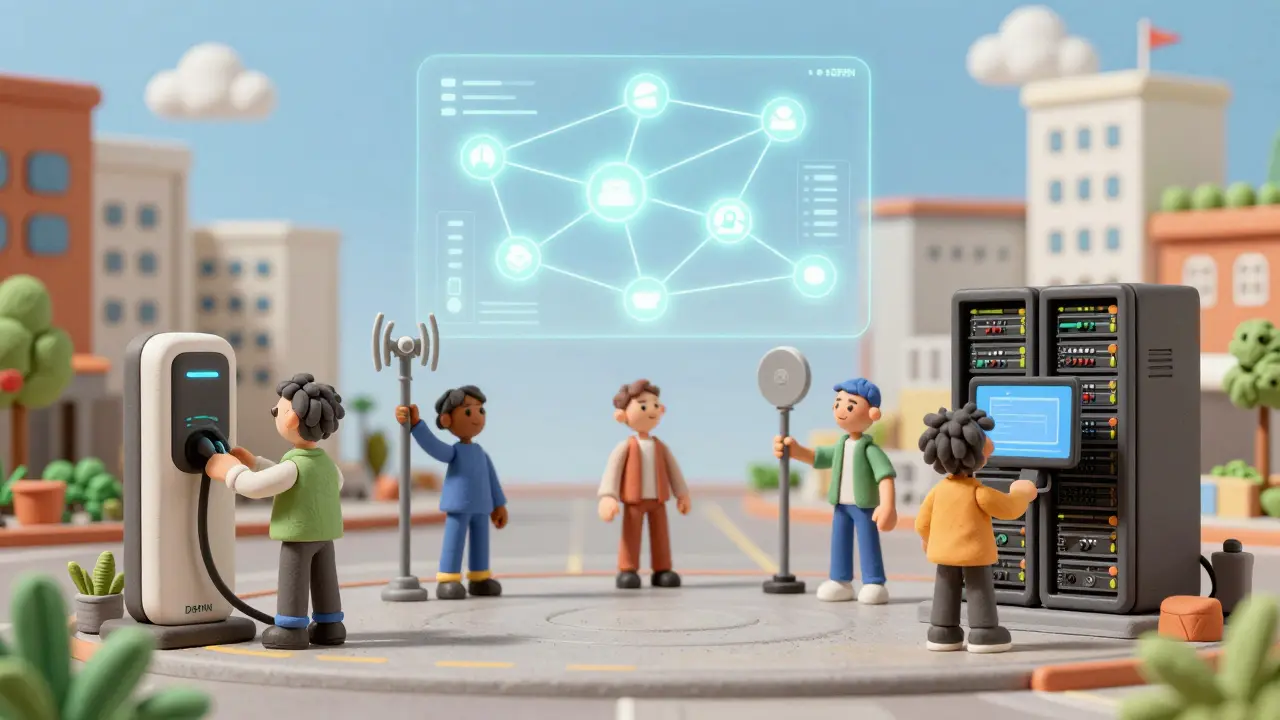
The magic happens through three layers working together. First, you have the off-chain network. This is where you, the provider, install your device. You might plug in a Helium hotspot for wireless coverage or connect your PC to a render farm. Second, you have the blockchain itself. This acts as the public ledger. It records every transaction, ensuring that when you provide a service, you get credited accurately. No central server can alter these records.
Third, you have smart contracts. These are self-executing codes that handle the payments. When your device verifies it has delivered data or electricity, the smart contract automatically sends you tokens. This automation is crucial. It allows millions of small providers to operate without needing a payroll department or manual invoicing. For instance, the Helium Network migrated to Solana in 2023, boosting transaction throughput from 5 transactions per second to over 65,000. This speed is essential for handling the micro-transactions that keep DePIN economies running smoothly.
Why Is Everyone Talking About DePIN Now?
The growth numbers are staggering. In early 2023, the total market cap for DePIN projects was around $470 million. By late 2023, that number exploded to over $3.2 billion. Why the sudden surge? Several factors align perfectly right now.
First, the demand for AI and machine learning is skyrocketing. Training AI models requires massive amounts of GPU power. Traditional cloud providers like AWS dominate this market, but they are expensive and centralized. DePIN projects like Render Network allow artists and developers to rent out unused GPU cycles at a fraction of the cost. Reports suggest decentralized compute can be 40-60% cheaper than traditional cloud services.
Second, rural connectivity remains a global issue. Building cellular towers costs millions and takes years. DePIN offers a faster, cheaper alternative. Community-driven networks can deploy hundreds of low-cost hotspots in weeks, bringing internet to underserved areas. Projects like the People's Broadband Project in Detroit have already demonstrated this by providing free internet to thousands of residents using community-deployed hotspots.
Risks and Challenges You Should Know
It’s not all smooth sailing. DePIN faces significant hurdles that could slow its adoption. One major issue is regulatory uncertainty. Governments are still figuring out how to classify these networks. Are they utilities? Telecom companies? Financial instruments? In many jurisdictions, the rules are unclear, which scares off institutional investors.
Then there’s the technical complexity. Setting up a basic hotspot might take an hour, but configuring a high-end GPU node for a digital resource network can require intermediate blockchain knowledge. Surveys indicate that nearly two-thirds of potential participants find the setup process too difficult. If the barrier to entry is too high, the network won’t grow fast enough to become viable.
Economic sustainability is another concern. Many DePIN projects rely on token emissions to pay providers. If the token price crashes, rewards become worthless, and providers turn off their devices. This creates a death spiral. Successful projects need to transition from relying solely on token inflation to generating real revenue from service fees. Only time will tell which networks can make this shift.
Getting Started with DePIN
If you want to participate, you have two main paths: using the networks or providing infrastructure.
As a user, it’s simple. You download an app that connects to a DePIN network. For example, you might use a mobile carrier that routes your data through Helium hotspots instead of traditional towers. You pay lower fees, and the network grows stronger.
As a provider, you need to invest in hardware. Start small. Research projects thoroughly before buying equipment. Check community forums like Reddit’s r/DePIN to see real earnings reports. Location matters immensely for physical networks. Use coverage maps to ensure your area has demand. For digital networks, ensure your hardware meets the minimum specifications. Don’t buy expensive GPUs unless you’re sure the network supports your specific model.
Finally, stay informed. The DePIN landscape changes rapidly. New protocols launch weekly, and old ones merge or fail. Follow industry reports and join Discord communities to get troubleshooting tips and updates. The most successful participants are those who treat DePIN as a long-term infrastructure play, not a quick flip.
What is the difference between DeFi and DePIN?
DeFi (Decentralized Finance) focuses on financial services like lending and trading without banks. DePIN focuses on physical infrastructure like energy, storage, and connectivity. Both use blockchain, but DePIN interacts with the real world through hardware.
Is it profitable to run a DePIN node?
Profitability varies widely. Factors include hardware cost, electricity prices, location density, and token value. Some users report earning $50-$120 monthly with minimal effort, while others lose money due to volatile token prices. Always calculate ROI based on current rates, not peak hype.
Which blockchain do DePIN projects use?
Many popular DePIN projects use Solana due to its high speed and low fees. Others operate on Ethereum, Polygon, or dedicated blockchains. The choice depends on the project's needs for scalability and security.
Can I use my existing computer for DePIN?
Yes, for Digital Resource Networks (DRNs). If you have a powerful GPU or extra storage, you can likely join networks like Render or Filecoin. However, check the specific hardware requirements first to ensure compatibility.
What are the biggest risks of investing in DePIN?
Key risks include regulatory crackdowns, token price volatility, and technological failure. Additionally, some projects may fail to achieve the network effect needed to sustain rewards, leading to abandoned hardware investments.