What is DGTEK TOKEN (USDG)? AI Claims vs. Reality Check
 Jul, 24 2026
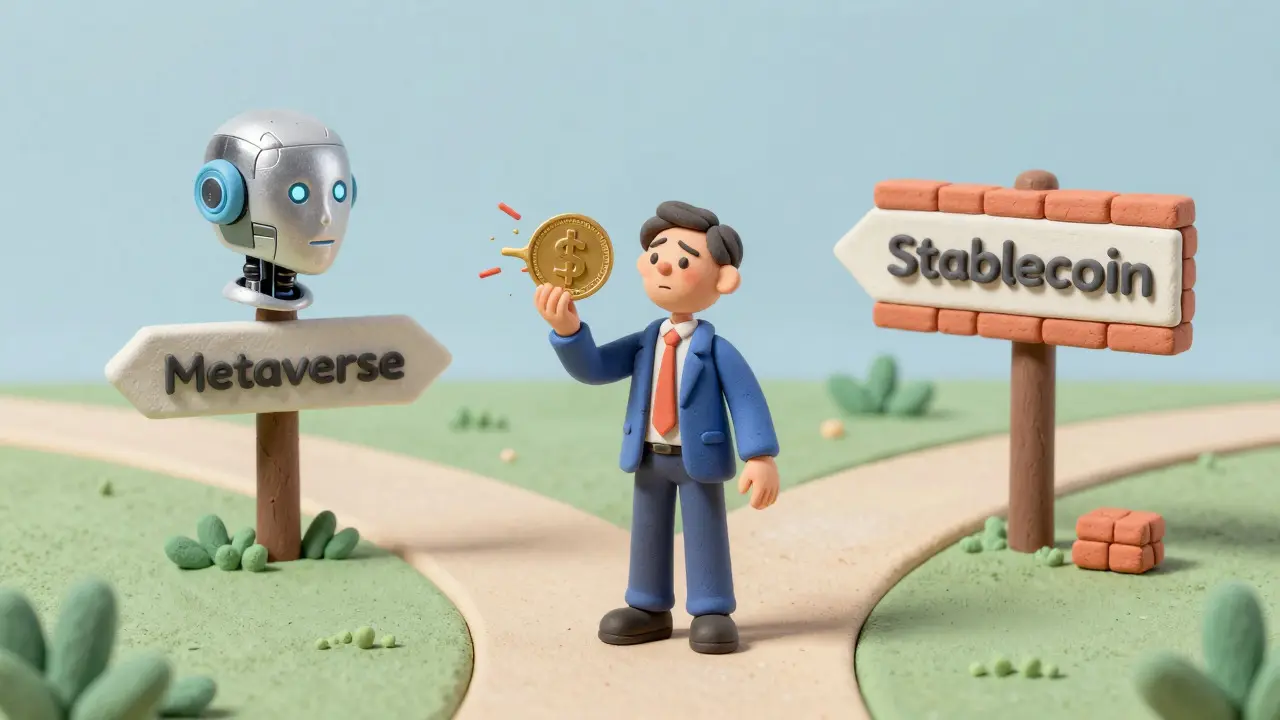
You’ve probably seen DGTEK TOKEN with the ticker USDG popping up on your feed or exchange list. The pitch sounds too good to ignore: an artificial intelligence system based in Switzerland that predicts market trends, powers a metaverse marketplace, and helps you trade smarter. It sounds like the holy grail of crypto investing. But if you dig just a little deeper, things get messy. Really messy.
Here is the problem with USDG right now: nobody can agree on what it actually is. One site says it’s a speculative AI token on the BNB Chain. Another calls it a stablecoin for payments on Ethereum. A third lists its supply as zero, while another claims billions are circulating. If you are thinking about buying this coin, you need to understand exactly why these contradictions exist before you spend a single dollar.
The Identity Crisis: AI Token or Stablecoin?
When you look at major data aggregators, you will see two completely different stories fighting for attention. On one side, platforms like CoinMarketCap and Blockspot describe DGTEK TOKEN as a "metaverse token." They claim it uses an "AI Supportive System" located in Switzerland to analyze past, present, and future crypto trends. The goal? To give users predictive analytics so they can make better trading decisions. They also promise a future NFT marketplace and a broader metaverse ecosystem.
On the other side, sites like CoinCodex and SwapSpace describe USDG as a stablecoin built for seamless digital payments and blockchain-based financial services. This description suggests a completely different utility: holding value steady for transactions rather than speculating on price movements. SwapSpace even claims this version was launched in 2022 by a team of blockchain enthusiasts with a total supply of only 500 million coins.
This isn’t just a minor difference in marketing copy. It’s a fundamental clash in identity. An AI-driven speculative asset behaves very differently from a payment stablecoin. If you buy USDG expecting it to hold its value like USDT, but it’s actually a volatile meme-style token, you could lose money fast. Conversely, if you think you’re buying into a high-growth AI project, but it’s just a low-liquidity payment token, your growth expectations will be dashed.
Technical Confusion: Which Blockchain Is It On?
The confusion doesn’t stop at the use case; it extends to the underlying technology. In crypto, the blockchain a token lives on determines how you store it, how much it costs to transact, and which wallets you can use. For USDG, the answer depends entirely on who you ask.
| Source / Platform | Blockchain Network | Token Standard | Reported Total Supply |
|---|---|---|---|
| Coinbase & Bitget | BNB Smart Chain (BSC) | BEP20 | 10,000,000,000 USDG |
| SnapSpace | Ethereum | ERC-20 | 500,000,000 USDG |
| TheBitTimes | Base | ERC-20 / ERC-721 / ERC-1155 | N/A |
Coinbase and Bitget clearly list DGTEK TOKEN as a BEP20 token on the BNB Smart Chain. Bitget provides a specific contract address starting with 0x5350... and confirms the max supply is 10 billion. However, TheBitTimes tracks a different USDG contract on the Base blockchain, listing it as compatible with multiple standards including NFTs (ERC-721). Meanwhile, SwapSpace insists the original USDG is on Ethereum. This multi-chain fragmentation makes it incredibly difficult to verify which "USDG" you are actually interacting with when you swap tokens on a decentralized exchange.
The Supply Paradox: Zero vs. Billions
If you want to know the true value of a cryptocurrency, you look at its market capitalization. Market cap is calculated by multiplying the current price by the circulating supply. For DGTEK TOKEN, this calculation breaks down because the data sources disagree violently on how many tokens exist.
Let’s look at the numbers. Some platforms, including Coinbase and Bitget, report a circulating supply of zero. Yet, they still show a live price hovering around $5.40 to $6.90. How can something have a price but no supply? Usually, this means the token hasn’t been distributed to public wallets yet, or the data feed is broken. Other sites like Coinranking claim the entire 10 billion supply is circulating, leading to a Fully Diluted Valuation (FDV) of nearly $69 billion. That would make it one of the largest cryptocurrencies in the world, rivaling giants like Solana or Ripple. But then you look at CoinCodex, which says only 2 billion are circulating, putting the market cap closer to $10.7 billion.
This discrepancy is a massive red flag. A $69 billion valuation for a token ranked outside the top 3,000 on most lists makes no sense. It suggests that either the data aggregators are using automated templates that haven’t been updated, or the token’s liquidity is artificially manipulated. When you see a market cap swing between $0 and $69 billion depending on which website you visit, treat every number with extreme skepticism.

Price Volatility and Trading Risks
Despite the claims of being a "stablecoin" by some sources, USDG trades like a highly volatile speculative asset. As of mid-2026, prices have fluctuated wildly. We saw an all-time high of roughly $16.07 in July 2025, followed by a sharp correction. Recent data shows prices bouncing between $4.88 and $6.90. In a single 24-hour period, Coinbase recorded a drop of nearly 20%. That is not stability; that is gambling.
Liquidity varies significantly across exchanges. You might see over $8 million in daily volume on CoinCodex, but Bitget reports less than $36,000 in volume on their specific page. This inconsistency means that if you try to sell a large amount of USDG, you could crash the price simply because there aren’t enough buyers waiting on the order book. Always check the depth chart before entering a position.
Red Flags for Due Diligence
Before you connect your wallet, consider these critical risks associated with DGTEK TOKEN:
- No Clear Team Identity: While Blockspot mentions an "AI Supportive System" in Switzerland, no named founders, developers, or corporate entities are publicly linked to the project. Anonymous teams carry higher risk.
- Conflicting Launch Dates: Sources cite launches in 2022, 2024, and listings in 2025. This lack of a clear timeline makes it hard to track the project’s history or roadmap progress.
- Vague Roadmap: Promises of a "metaverse marketplace" and "NFT platform" remain generic. There are no technical whitepapers, GitHub repositories, or beta tests cited in major aggregator descriptions.
- Data Integrity Issues: The fact that major exchanges like Binance show a market cap of zero while quoting a non-zero price indicates broken data feeds or negligible liquidity.

How to Buy USDG (If You Still Want To)
If you decide the potential rewards outweigh the significant risks, here is how you typically acquire DGTEK TOKEN. Most users access it through centralized exchanges (CEXs) or decentralized swaps.
- Centralized Exchanges: Platforms like Bitget and Coinbase offer fiat on-ramps. You can buy USDG directly with a credit card. Look for the pair USDG/USDT or USDG/BUSD. Be aware that fees may be higher due to lower liquidity compared to major pairs like BTC/USDT.
- Decentralized Swaps: If you are comfortable with self-custody, you can swap for USDG on Uniswap (V3) or PancakeSwap (v2). Crucial Step: Verify the contract address. If you are on BNB Chain, ensure you are using the BEP20 contract. If you accidentally buy the Ethereum or Base version, you might end up with a worthless duplicate token.
- Wallet Setup: Ensure your wallet supports the network you chose. MetaMask works for Ethereum, Base, and BNB Chain (with custom RPC settings). Trust Wallet is also a popular option for mobile users.
Final Verdict: Proceed with Caution
DGTEK TOKEN (USDG) presents a confusing picture. It markets itself as an AI-powered metaverse leader but lacks the technical transparency and consistent data to back those claims up. The conflicting information regarding its blockchain network, supply, and purpose suggests that it may be suffering from poor governance, data scraping errors, or potentially misleading marketing.
For most investors, the risks currently outweigh the benefits. The volatility is high, the liquidity is questionable, and the fundamental value proposition is unclear. If you do choose to invest, treat it as a high-risk speculative play, not a long-term store of value. Never invest more than you can afford to lose, and always double-check the contract address before swapping.
Is DGTEK TOKEN (USDG) a stablecoin?
It is contradictory. Some sources like CoinCodex describe it as a stablecoin for payments, but its price behavior shows high volatility, ranging from $4.88 to over $16. Most evidence suggests it acts more like a speculative token than a stable asset.
Which blockchain does DGTEK TOKEN operate on?
Major exchanges like Coinbase and Bitget list it on the BNB Smart Chain (BEP20). However, other trackers list versions on Ethereum and Base. You must verify the specific contract address for the network you are using.
What is the total supply of USDG?
Most sources citing the BNB Chain version state a maximum supply of 10 billion USDG. However, older or alternative listings mention a supply of 500 million. Circulating supply data is unreliable, ranging from 0 to 10 billion across different platforms.
Who created DGTEK TOKEN?
The team remains largely anonymous. References are made to an "AI Supportive System" based in Switzerland, but no individual founders or registered corporate entities are prominently disclosed in public listings.
Why is the market cap of USDG inconsistent?
Market cap inconsistencies arise because data aggregators disagree on the circulating supply. Some list it as zero, resulting in a $0 market cap, while others assume full circulation, leading to valuations near $69 billion. This reflects poor data quality rather than actual economic reality.