What is Dione Protocol (DIONE)? A Deep Dive into Green Blockchain
 Apr, 21 2026
Most people think of cryptocurrency as an environmental nightmare. Between the massive server farms and the endless energy consumption, blockchain has a reputation for being "dirty." Dione Protocol is a blockchain ecosystem launched in 2022 that aims to flip this script by bridging the gap between decentralized finance (DeFi) and real-world renewable energy sustainability. Rather than just talking about being "green," it builds the actual infrastructure to prove it.
Key Takeaways
- Core Mission: Integrating renewable energy into blockchain operations to reduce the carbon footprint.
- Technological Shift: Moving from an Ethereum-based ERC20 token to its own Layer 1 blockchain called Odyssey.
- Key Products: Includes Orion (AI-driven energy validation), Nebra (P2P energy trading), and a user-friendly wallet.
- Consensus: Uses Proof of Stake (PoS) for energy efficiency and network security.
The Big Shift: From Ethereum to Odyssey
When Dione Protocol first hit the scene, it started as an ERC20 token on the Ethereum network. This is a common move for new projects-it's easier to launch on an existing platform than to build a whole new highway from scratch. However, relying on another network means you're limited by their rules and fees.
That's why the project is migrating to Odyssey is the dedicated Layer 1 blockchain developed by Dione Protocol to serve as the native foundation for the DIONE coin. . By moving to its own Layer 1, the protocol gains full control over its scalability and security. More importantly, Odyssey is designed to be powered entirely by renewable energy, ensuring that every transaction on the network aligns with the project's environmental goals.
Breaking Down the Ecosystem: Orion, Nebra, and More
Dione isn't just a single coin; it's a suite of tools designed to make green energy trading a reality. They use a concept called DePIN (Decentralized Physical Infrastructure Networks), which essentially means using blockchain to manage physical hardware in the real world.
Orion: The AI Energy Validator
Orion is the heavy lifter. It uses Artificial Intelligence to detect and validate renewable energy sources. Imagine a system that can prove a server is actually running on wind or solar power rather than a coal plant. To take it a step further, Orion employs off-grid validators powered by solar energy and Starlink connectivity, allowing the network to stay secure even in the most remote corners of the planet.
Nebra: Energy Trading for Everyone
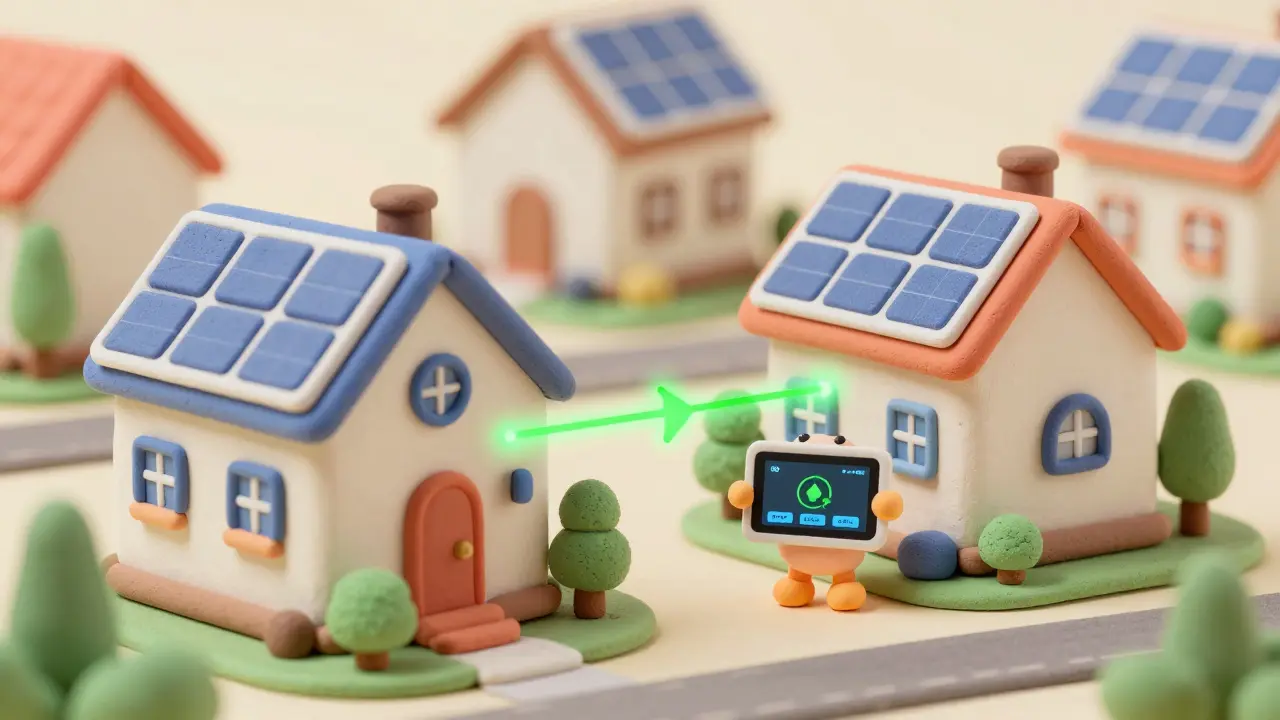
Have you ever wondered why you can't sell your excess solar panel energy directly to your neighbor? Nebra is a decentralized energy trading platform that solves this. It allows "prosumers" (people who both produce and consume energy) to trade renewable resources peer-to-peer. This removes the middleman and makes green energy cheaper and more accessible.
The Dione Wallet
To make all this accessible to regular people, not just "crypto whales" or developers, the ecosystem includes a dedicated wallet. It's designed to be intuitive, lowering the barrier to entry for those who find traditional seed phrases and hexadecimal addresses intimidating.

How DIONE Stays Secure and Sustainable
Security in crypto usually comes at a cost-either in energy (like Bitcoin) or in centralization. Dione Protocol opts for Proof of Stake (PoS) is a consensus mechanism where validators are chosen based on the number of coins they hold and are willing to "stake" as collateral . This is exponentially more energy-efficient than the old Proof of Work (PoW) systems.
By requiring node operators to stake DIONE tokens, the network creates a financial incentive for honesty. If a validator tries to cheat the system, they lose their staked coins. To add another layer of protection, the protocol uses multi-factor authentication (MFA) and advanced encryption to keep user data private and secure from hackers.
| Component | Primary Function | Key Technology |
|---|---|---|
| Orion | Renewable energy validation | AI & Starlink |
| Nebra | P2P Energy Trading | Decentralized Exchange |
| Odyssey | Network Infrastructure | Layer 1 Blockchain |
| Dione Wallet | Asset Management | User Interface (UI) |
Market Reality: Price and Volatility
If you're looking at the Dione Protocol price, you'll notice something strange: different exchanges show different numbers. As of mid-April 2026, Binance might show DIONE around $0.000615, while Coinbase lists it significantly lower, and MEXC sits somewhere in between. This is common for tokens in a transition phase-especially during a migration to a new blockchain like Odyssey.
The market cap currently fluctuates between $7 million and $18 million USD, depending on the source. For a project that's essentially in its early growth stage, this volatility is expected. Some data shows DIONE trading nearly 90% below its all-time high. For some, this is a red flag; for others, it's an entry point into a project that is actually building physical infrastructure rather than just selling a whitepaper.
Why Dione Matters in the Bigger Picture
The real value of Dione isn't just in the token price, but in its approach to energy democratization. By allowing people to become "prosumers" through Nebra, it breaks the monopoly that big energy companies have over the grid. It turns a passive consumer into an active participant in the energy economy.
Furthermore, the use of DePIN ensures that the blockchain has a tangible impact on the real world. While many crypto projects exist only as lines of code in a cloud server, Dione's commitment to solar-powered validators and satellite connectivity shows a level of concrete implementation that is rare in the DeFi space.
What exactly is the DIONE coin used for?
DIONE serves as the native utility token for the ecosystem. It is used for staking to secure the network via Proof of Stake, paying for transaction fees on the Odyssey blockchain, and facilitating the trading of renewable energy resources on the Nebra platform.
Is Dione Protocol still on Ethereum?
It started as an ERC20 token on Ethereum, but the project is migrating to its own Layer 1 blockchain called Odyssey. This allows the protocol to be fully powered by renewable energy and operate with greater efficiency.
How does Orion use AI?
Orion utilizes AI to identify and validate green energy sources. This ensures that the energy used to power the blockchain is actually renewable, preventing "greenwashing" and providing a transparent record of environmental impact.
What is a "prosumer" in the context of Nebra?
A prosumer is an individual who both produces energy (for example, through home solar panels) and consumes it. Nebra allows these individuals to sell their excess green energy directly to other users without needing a central utility company.
Is staking DIONE safe?
The protocol uses a Proof of Stake (PoS) mechanism, which is generally considered secure and energy-efficient. Security is further bolstered by encryption and multi-factor authentication (MFA) for user accounts, though like all crypto investments, there is inherent market risk.
Next Steps for New Users
If you're just getting started, your best bet is to download the Dione Wallet to familiarize yourself with the ecosystem's interface. If you're looking to invest, keep a close eye on the Odyssey migration progress, as the shift to a native Layer 1 often changes the liquidity and pricing dynamics on exchanges.
For those interested in the technical side, researching the DePIN model will give you a better understanding of how Orion and Nebra interact with physical hardware. Whether you're a climate activist or a DeFi enthusiast, the project provides a unique intersection of environmentalism and decentralized finance.
debashish sahu
April 22, 2026 AT 04:18The concept of peer-to-peer energy trading could actually be a game changer for rural electrification in developing regions. Using a decentralized system to bypass inefficient grids is exactly the kind of application that gives blockchain actual utility beyond speculation.
Larry Yang
April 23, 2026 AT 12:10Typical low cap fluff. The sheer lack of liquidity across these exchanges is a massive red flag and honestly just shows the market doesnt care about this little a-venture. The a-ll time high drop is just the price of buying into another whitepaper fantasy that thinks AI and Starlink are magic buzzwords for actual growth.
Sara Ellis
April 25, 2026 AT 02:47it is all about the energy of the earth moving through the code now
Benjamin Forg
April 25, 2026 AT 03:02layer 1 is just another way for them to control the ledger and hide the real flows of money from the public eye they want us thinking about green energy while they build a digital cage for our assets probably linked to some globalist agenda using starlink to track every node on the planet
Robert Mosolygo
April 25, 2026 AT 09:52The disparity in pricing across Binance and Coinbase isn't just a "transition phase," it's a textbook indicator of fragmented liquidity and potential manipulation. If you analyze the market cap fluctuations, it becomes clear that the valuation is purely artificial. They are leveraging the "green" narrative to distract investors from the fact that the underlying tokenomics are likely designed to bleed retail investors dry while the insiders dump during the Odyssey migration. It is a predatory cycle wrapped in an environmentalist bow.
Tony Gurley-Ward
April 27, 2026 AT 01:51I love how we've reached the peak of human ingenuity where we use a galactic satellite network just to make sure a server isn't lying about its power source. It's a wonderfully absurd dance of technology, though I'll admit the idea of being a "prosumer" has a certain poetic charm to it, like gardening but with electrons.
Lisa Camp
April 28, 2026 AT 13:11Stop whining about the price drop and look at the actual infrastructure! This is about taking the power back from the big energy monopolies and putting it in our own hands. If you can't see the potential for a total energy revolution here, you're just dead weight in this market!
Guy Bianco
April 28, 2026 AT 22:52It is quite prudent to consider the long-term viability of the Odyssey Layer 1. While the volatility is indeed present, focusing on the DePIN aspect may provide a more stable perspective for those new to the space. 🌿