What is Ellipsis (EPS) Crypto Coin? A Clear Guide to Its Purpose, Price, and Risks
 Feb, 13 2026
Ellipsis (EPS) isn’t just another crypto coin. It’s a governance token built for a specific job: helping users trade stablecoins with low slippage on the Binance Smart Chain. Launched in spring 2021, it was designed as a fork of Curve Finance - a well-known DeFi protocol - but with one big difference: it focused only on the BNB chain. That meant faster, cheaper trades for stablecoins like BUSD, USDT, and USDC, without needing to jump between blockchains.
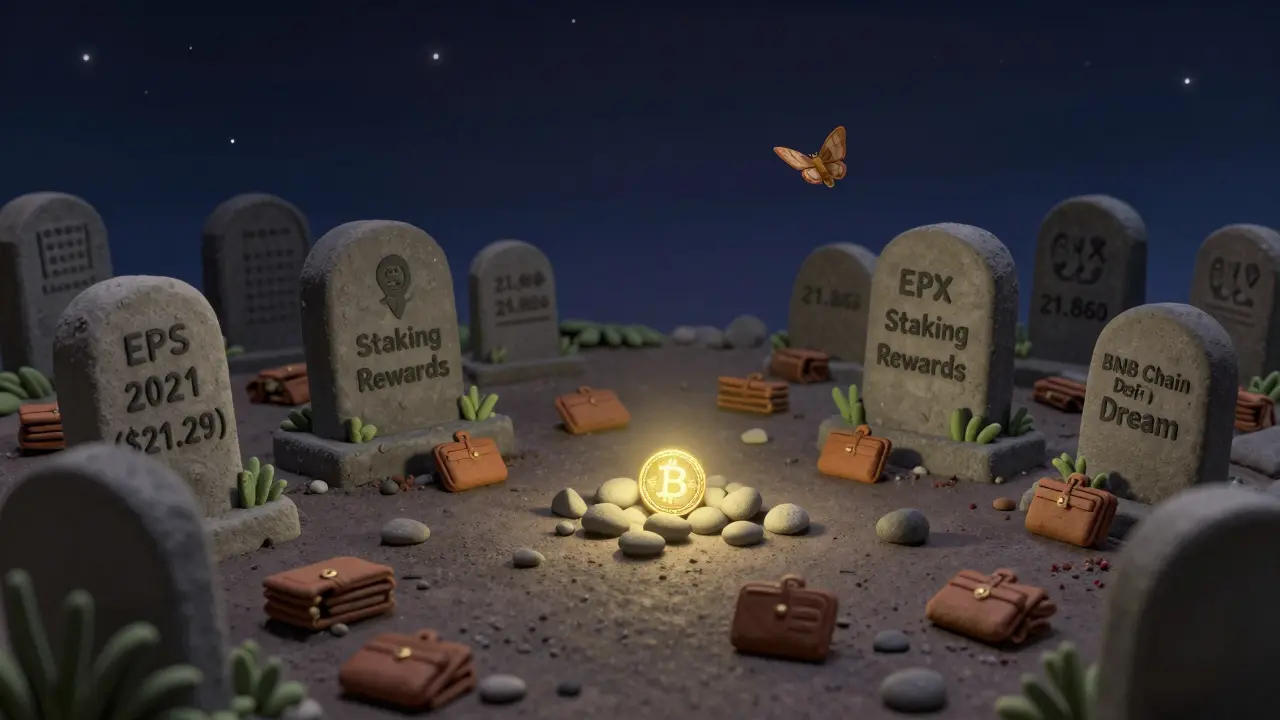
At its peak in March 2021, EPS hit $21.29. That’s not a typo. Today, it trades around $0.02943. That’s a 99.86% drop. If you bought at the top, you’re underwater by almost everything. But if you’re looking at EPS now, you’re not seeing a failed project - you’re seeing a token that’s still alive in a crowded, shifting DeFi world. The question isn’t whether it’s dead. It’s whether it still has a reason to exist.
How Ellipsis (EPS) Actually Works
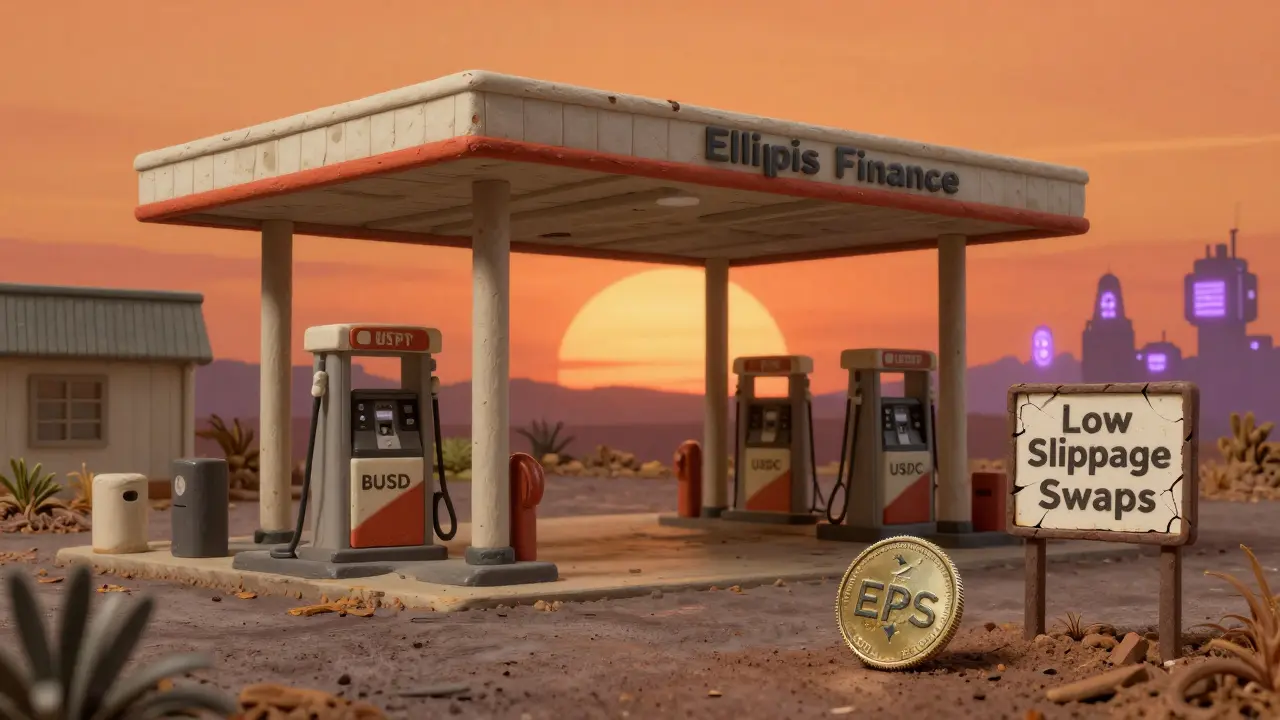
Ellipsis isn’t a wallet or a marketplace. It’s a decentralized exchange (DEX) that only lets you swap between stablecoins. Think of it like a specialized gas station that only sells diesel - no gasoline, no electric. If you need to swap USDT for BUSD, Ellipsis might be one of the cheapest places to do it on BNB Chain.
Here’s how it works in practice:
- You connect your MetaMask wallet to Ellipsis Finance.
- You pick two stablecoins - say, USDT and USDC.
- You swap them. The platform uses a special algorithm to minimize price slippage, which means you get close to the real market rate.
- You earn trading fees as a liquidity provider, or you hold EPS to vote on future changes to the platform.
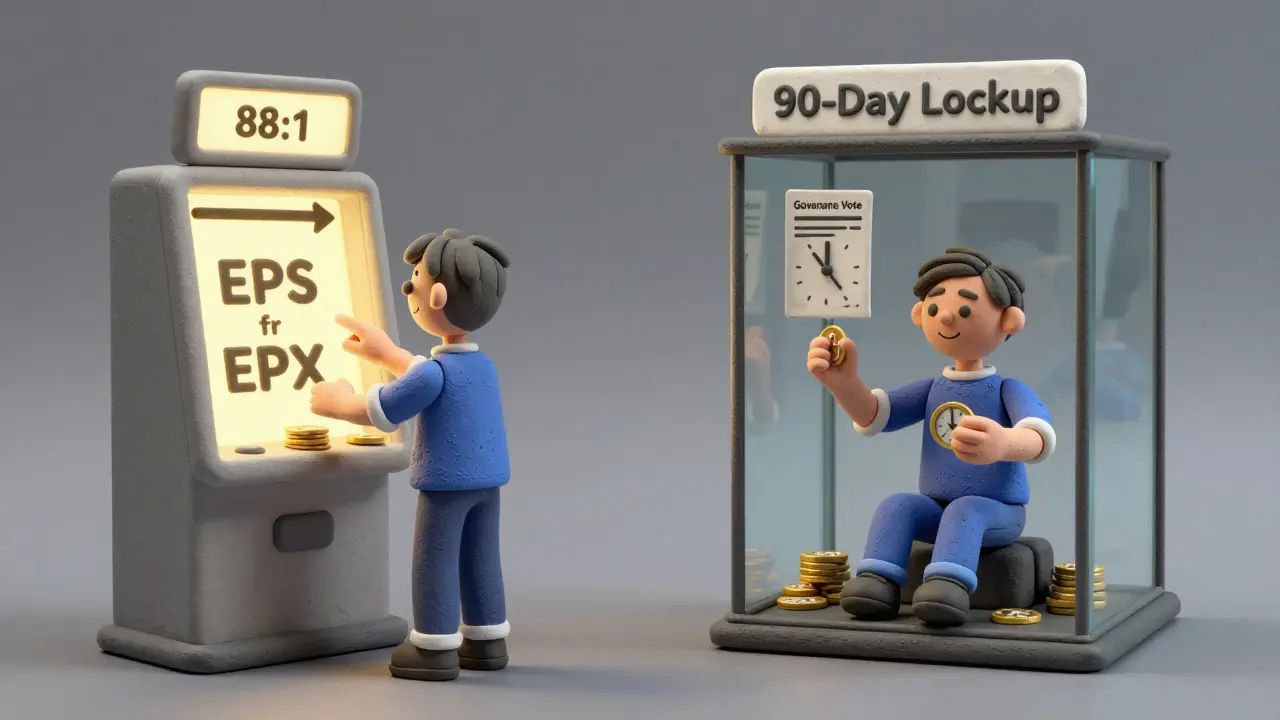
But here’s the twist: EPS isn’t the only token anymore. In late 2021, Ellipsis did a token migration. EPS became the governance token, and EPX became the staking token. You can still trade EPS, but if you want to earn yield by staking, you need to swap your EPS for EPX. The exchange rate? 88 EPX for 1 EPS. That’s not obvious. Many users got confused, and some lost money trying to figure it out.
Why EPS Price Crashed - And Why It’s Still Here
The price drop wasn’t a hack. It wasn’t a rug pull. It was the market catching up.
When Ellipsis launched, DeFi was booming. Everyone was chasing yield. Projects with flashy names and big tokenomics got pumped. EPS was one of them. But Curve Finance - the original - had way more liquidity, better branding, and cross-chain support. Ellipsis, stuck on BNB Chain, couldn’t compete. As users moved to Uniswap, SushiSwap, and Curve, Ellipsis’s trading volume dried up.
Today, 24-hour trading volume for EPS is under $1,000 on most platforms. Compare that to Curve, which moves billions daily. That’s the difference between a local diner and a national chain. Ellipsis still works. But almost no one uses it anymore.
Still, 723.7 million EPS tokens are in circulation out of a 1 billion max supply. That means the token hasn’t been burned or destroyed. The team hasn’t vanished. There are still 21,860 wallets holding EPS. That’s not zero. It’s a small, quiet community.
The Dual-Token System: EPS vs. EPX
This is where Ellipsis gets complicated - and why many users avoid it.
- EPS: The original token. Used for voting on governance proposals. You can trade it on PancakeSwap and Mdex.
- EPX: The staking token. You can’t trade it directly. You get it by swapping EPS at a 1:88 ratio. Then you lock EPX to earn rewards.
Here’s the catch: if you lock your EPX for 90 days or longer, you get extra rewards. But if you need cash in 30 days? You’re stuck. You can’t sell your EPX. You can’t get your EPS back without burning your EPX. It’s a trade-off: higher yield now, less flexibility later.
Most DeFi users don’t like this. They want options. Ellipsis gave them a locked-in system. That’s why adoption stalled. Even long-term holders are divided. Some say it’s smart incentive design. Others call it a trap.
Where You Can Trade EPS Today
You won’t find EPS on Coinbase or Binance. It’s only on decentralized exchanges. Here are the main places:
- PancakeSwap V2 (EPS/WBNB pair): Highest volume - around $286 in 24 hours.
- PancakeSwap V1 (BSC): $420 volume - slightly more active, but older interface.
- Mdex BSC: $176 volume - smaller user base, but still functional.
That’s it. No centralized exchange supports it. No major wallet has integrated it as a default asset. If you want to buy EPS, you need to know how to swap tokens on a DEX, pay BNB for gas, and understand impermanent loss. It’s not beginner-friendly.
Who Still Uses Ellipsis?
There are three types of people still interacting with Ellipsis:
- Long-term holders who bought EPS at $0.05 or below and believe it could rebound if DeFi on BNB Chain revives.
- Yield farmers who lock EPX for the extra rewards and are okay with the 90-day lockup.
- Researchers and DeFi historians studying why some protocols fail despite solid tech.
There are no big institutions, no venture funds, no influencers pushing it. It’s a quiet, niche project. That’s not necessarily bad - but it’s not a growth story either.
Is EPS a Good Investment?
Let’s cut through the noise.
Price predictions for EPS have been wildly off. In 2022, some analysts said it would hit $0.10. It didn’t. In 2023, others said $0.15. It didn’t. Today, the price is $0.029. That’s not a failure of prediction - it’s a failure of demand.
Here’s the reality:
- Pros: Low price = low entry. If BNB Chain grows again, and Ellipsis gets new liquidity, it could rise. The tech still works. The code is open. The token supply is mostly circulating.
- Cons: Zero development updates. No new features. No marketing. No team transparency. Competitors like Curve dominate the stablecoin space. Trading volume is near zero. It’s a ghost of what it once was.
If you’re looking for a high-growth crypto, EPS isn’t it. If you’re looking for a speculative play with a 10x chance? Maybe. But the odds are stacked against it.
Should You Buy EPS?
Only if:
- You understand DeFi well enough to swap tokens, manage gas fees, and lock assets.
- You’re okay with holding for years - maybe decades - with no guarantee of return.
- You’re not putting in more than you can afford to lose completely.
Don’t buy EPS because you saw a tweet saying it’s "undervalued." Don’t buy it because it’s cheap. Buy it only if you believe in the long-term survival of BNB Chain’s DeFi ecosystem - and believe Ellipsis has a real shot at becoming relevant again.
For most people? Skip it. There are dozens of better DeFi options with real volume, active teams, and clear roadmaps. Ellipsis is a relic. Not a revolution.
What is EPS crypto used for?
EPS is the governance token for the Ellipsis Finance platform. It lets holders vote on changes to the protocol, like fee structures or new features. It’s not used for staking - that’s EPX’s job. You can trade EPS on decentralized exchanges like PancakeSwap.
Can I stake EPS directly?
No, you cannot stake EPS directly. After the 2021 migration, EPS became a governance-only token. To earn staking rewards, you must swap EPS for EPX at a rate of 88 EPX per 1 EPS. Then you can lock EPX to receive additional yield.
Why is EPS price so low?
EPS crashed because Ellipsis Finance lost its competitive edge. Curve Finance and other DEXs offered better liquidity, cross-chain support, and more active development. Ellipsis stayed on BNB Chain, saw trading volume vanish, and failed to attract new users. The token’s all-time high was $21.29 in 2021; today it’s under $0.03.
Is Ellipsis still being developed?
There’s no public evidence of active development. No new features, no team updates, no GitHub commits in recent months. The project appears dormant. The dual-token system (EPS/EPX) hasn’t changed since 2021, and no roadmap has been published since then.
Where can I buy EPS crypto?
You can buy EPS on decentralized exchanges only: PancakeSwap V2, PancakeSwap V1 (BSC), and Mdex BSC. You’ll need a wallet like MetaMask, some BNB for gas fees, and the ability to swap tokens. It’s not available on any centralized exchange like Binance or Coinbase.
Gaurav Mathur
February 14, 2026 AT 00:00Grace Mugambi
February 14, 2026 AT 17:00Crystal McCoun
February 16, 2026 AT 16:11Beth Trittschuh
February 18, 2026 AT 09:13Peggi shabaaz
February 19, 2026 AT 20:30Kaz Selbie
February 21, 2026 AT 18:08Robbi Hess
February 21, 2026 AT 23:13Ace Crystal
February 23, 2026 AT 12:25krista muzer
February 24, 2026 AT 03:42