What is MAIV Coin? Multi-Asset Investment Vehicle Explained (2026 Guide)
 Aug, 8 2026
Imagine buying a slice of a massive commercial real estate deal or a private tech startup without needing hundreds of thousands of dollars in the bank. That is the promise behind Multi Asset Investment Vehicle, also known as MAIV. It is a blockchain-based cryptocurrency platform designed to bridge the gap between decentralized finance (DeFi) and traditional finance (TradFi). The goal is simple: take high-yield investment opportunities that are usually locked away for big institutions and make them accessible to everyday people using Web3 technology.
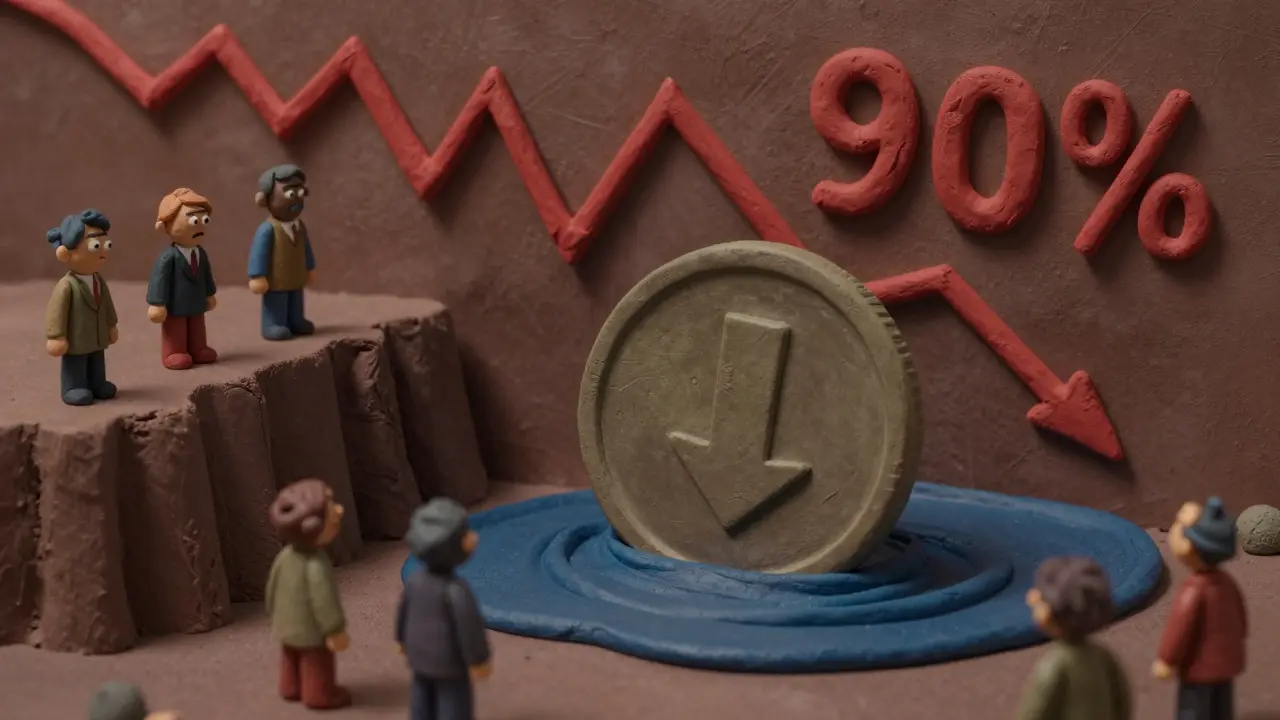
But does it actually work? And is it safe? As of mid-2026, the story of MAIV is complex. While the concept of tokenizing private equity is gaining traction globally, MAIV itself has faced significant headwinds. Its price has dropped nearly 90% from its peak, and trading activity remains thin. If you are considering this coin, you need to look past the marketing hype and understand exactly what you are holding.
The Core Concept: Private Equity On-Chain
At its heart, MAIV operates as an ERC-20 token on the Ethereum blockchain. This means it uses the same infrastructure as thousands of other digital assets but adds a specific layer of utility. The platform positions itself as a "private equity, on-chain" solution. In plain English, this means they partner with private equity firms in Europe and the United States to turn exclusive commercial deals into digital tokens.
Why does this matter? Traditional private equity offers some of the best risk-adjusted returns in the financial world. However, these deals are notoriously difficult to access. You typically need to be an accredited investor, meaning you have a high net worth or income, and you must lock your money up for years with no easy way to sell your stake. MAIV aims to solve this by creating a compliant infrastructure that allows funds to move across borders quickly and cheaply. Theoretically, this gives retail investors exposure to assets like commercial real estate, infrastructure projects, or pre-IPO companies through a liquid crypto token.
Market Reality Check: Price and Volatility
While the vision is ambitious, the market data tells a different story about current adoption. Cryptocurrency markets are volatile, but MAIV’s performance highlights specific risks associated with niche DeFi projects. Let's look at the numbers as of May 2026.
| Metric | Data Point | Source/Context |
|---|---|---|
| Current Price Range | $0.000606 - $0.000678 USD | Varies by exchange (Coinbase, Crypto.com) |
| All-Time High (ATH) | $0.006005 USD | Reached Dec 3, 2025 |
| Decline from ATH | -89.91% | Significant correction |
| Market Cap | $760K - $1.21M USD | Micro-cap status |
| Total Supply | 10 Billion MAIV | Fixed supply |
| Circulating Supply | ~1.78 Billion MAIV | Approximately 17.8% of total |
| Unique Holders | 1,370 addresses | Low community adoption |
The drop from its all-time high in December 2025 to current levels is steep. A nearly 90% decline usually signals one of three things: failed expectations, lack of product delivery, or broader market skepticism. When you combine this with a market capitalization under $1.2 million, you are dealing with a micro-cap asset. These coins can swing wildly based on small trades, making them highly speculative.
Liquidity and Trading Challenges
One of the biggest red flags for any investor looking at MAIV right now is liquidity. Liquidity refers to how easily you can buy or sell an asset without affecting its price. For a platform promising institutional-grade access, the trading volume is surprisingly low.
On major platforms like Crypto.com, the 24-hour trading volume sits at just $42 USD. Even on more active aggregators like CoinMarketCap, the volume hovers around $2,000 USD per day. Compare this to established cryptocurrencies like Bitcoin or even popular DeFi tokens, which trade in billions daily. Low liquidity means two problems:
- Slippage: If you try to sell a large amount of MAIV, you might crash the price because there aren't enough buyers waiting.
- Access Issues: Some platforms, like Crypto.com, currently list the token as "not tradable yet." Others, like Phantom wallet, mark it as "unverified." This lack of verification means the wallet provider hasn't audited the contract for safety, adding another layer of risk.
The contract address for MAIV on Ethereum is 0x39903a1a6f289a67e0de94096915c4ccd506ab2a. Always double-check this if you are buying directly via a decentralized exchange (DEX). Buying unverified tokens carries the inherent risk of smart contract vulnerabilities, although the bigger issue here seems to be market interest rather than technical failure.
How MAIV Compares to Alternatives
You don't have to use MAIV to get exposure to alternative investments. The landscape for democratizing finance is crowded. Here is how MAIV stacks up against other options available in 2026.
| Platform Type | Examples | Minimum Investment | Liquidity | Risk Level |
|---|---|---|---|---|
| MAIV (Crypto) | MAIV Token | Very Low ($1+) | Low (Thin order books) | High (Volatility + Smart Contract Risk) |
| Traditional PE Funds | Blackstone, KKR | $25,000 - $100,000+ | Very Low (Locked for years) | Medium (Regulated) |
| Securities Crowdfunding | Forge Global, Carta | $100 - $1,000 | Low (Secondary markets exist) | Medium-High (Startup risk) |
| Robo-Advisors | Betterment, Wealthfront | $0 - $500 | High (Daily trading) | Low-Medium (Diversified) |
MAIV wins on accessibility. You can buy it with a few dollars. But it loses heavily on stability and trust. Traditional private equity is boring and slow, but it is regulated. Securities crowdfunding platforms like Forge Global offer real ownership stakes in startups with legal protections. MAIV sits in a gray area where the regulatory framework is still being written. The platform claims "fully compliant infrastructure," but specific details on which regulators approve their cross-border flows are scarce in public reports.

Who Is MAIV Actually For?
Given the current metrics, MAIV is not suitable for conservative investors. It is a bet on the future of Real World Assets (RWA) tokenization. You should consider it only if:
- You believe that blockchain will eventually replace traditional private equity paperwork.
- You are willing to lose the entire amount you invest due to the high volatility and low liquidity.
- You already hold diversified portfolios and want a tiny "moonshot" allocation.
If you are looking for steady yields or guaranteed returns, MAIV is likely not the answer. The holder count of just 1,370 unique addresses suggests that most retail investors haven't jumped on board yet. This concentration of ownership can lead to manipulation, where a few large holders dictate the price.
Regulatory Hurdles and Future Outlook
The biggest threat to MAIV isn't competition; it's regulation. The US Securities and Exchange Commission (SEC) has been aggressive in treating many utility tokens as unregistered securities. Since MAIV represents shares in private deals, it arguably falls squarely into the definition of a security. The platform emphasizes compliance, but without clear disclosure of licenses or partnerships with regulated custodians, the risk of enforcement actions remains.
Looking ahead, the viability of MAIV depends on execution. Can they onboard major private equity firms? Can they increase liquidity so that users can actually exit their positions easily? As of mid-2026, there have been few major announcements since the December 2025 peak. Silence in the crypto world often equates to stagnation. Until we see renewed development updates, partnership disclosures, or a surge in verified trading volume, MAIV remains a speculative experiment rather than a proven financial tool.
Is MAIV coin a good investment in 2026?
MAIV is considered a high-risk, speculative investment. With an 89% drop from its all-time high and very low trading volume, it lacks the stability of major cryptocurrencies. It may appeal to those betting on the future of tokenized private equity, but it is not suitable for conservative portfolios.
Where can I buy MAIV tokens?
MAIV is an ERC-20 token on the Ethereum network. It can be traded on decentralized exchanges (DEXs) and accessed via wallets like Phantom. Major centralized exchanges like Crypto.com list it but note it as "not tradable yet" on some interfaces. Always verify the contract address before purchasing.
What does "private equity on-chain" mean?
It refers to taking exclusive investment opportunities-like commercial real estate or private company stakes-and converting them into digital tokens on a blockchain. This theoretically allows smaller investors to buy fractions of these assets, which were previously only available to wealthy institutions.
Is MAIV regulated?
MAIV claims to use "fully compliant infrastructure" for cross-border payments. However, specific regulatory approvals or licensing details are not prominently disclosed in public sources. Investors should assume standard crypto risks regarding regulatory uncertainty, especially concerning US securities laws.
Why is the MAIV price so volatile?
The volatility stems from low liquidity and a small market cap (under $1.2M). With only ~1,370 holders, large buys or sells can drastically move the price. Additionally, the token is in a niche sector (Real World Assets) that is still finding its footing in the broader crypto market.
Carl Michaud
August 8, 2026 AT 17:45The sheer epistemological poverty on display here is staggering. You are conflating the theoretical utility of tokenized assets with the actual market reality, which is a disaster of liquidity and regulatory ambiguity. The term 'Multi-Asset Investment Vehicle' is merely semantic window dressing for what is essentially an unregistered security masquerading as a DeFi protocol. The decline from ATH is not a 'correction'; it is the inevitable gravitational collapse of a Ponzi structure built on vaporware promises. Most retail participants lack the financial literacy to understand that low float combined with high concentration equals manipulation by whale entities. It is pathetic how easily the masses are seduced by the jargon of 'private equity on-chain' without scrutinizing the underlying legal framework or the absence of institutional custody solutions. This is not innovation; it is predation wrapped in blockchain aesthetics.
Matt Kay
August 10, 2026 AT 13:00looks like another rug pull waiting to happen tbh. nobody buys this sh*t
Dave Kjendal
August 11, 2026 AT 07:48we chase the dream but the dream is just code. simple as that. why do we keep falling for it? because hope is cheaper than facts. you can have all the tech in the world but if no one trusts the man behind the curtain then its just noise. i see this pattern everywhere. same song different verse. stay away from these micro caps unless you want to lose your shirt. it is not about the asset it is about the narrative and the narrative is dead.
Kat Bennett
August 12, 2026 AT 11:56I actually think there is some merit to the long-term vision here, even if the current execution is lacking. When you consider that traditional private equity has been notoriously exclusionary for decades, locking out anyone who doesn't meet the arbitrary accredited investor thresholds, the idea of democratizing access through blockchain technology feels revolutionary rather than fraudulent. Yes, the price action is brutal right now, and yes, the liquidity is thin, but these are growing pains for a nascent sector that is trying to bridge two very different worlds. If MAIV can survive the initial skepticism and build out their compliance infrastructure properly, they could become a key player in the Real World Asset tokenization space within the next few years. It requires patience and a willingness to look past the short-term volatility to see the potential structural shift in how alternative investments are distributed globally. I am keeping a small position just to learn more about how these mechanisms work in practice.
Candice Cornett
August 14, 2026 AT 02:58you people are so naive thinking this is real investment. its gambling dressed up in suits. the regulators will crush it eventually. stop pretending you are smart for buying into hype. moral hazard at its finest.
Lance Jantz
August 14, 2026 AT 13:46Ah, the sweet scent of despair! Can you smell it? It’s intoxicating, isn’t it? Watching these digital dreams evaporate like morning dew under the scorching sun of reality. We are merely actors in a grand theater of finance, playing our parts while the puppeteers pull strings made of red tape and greed. Why resist the fall? Embrace the chaos! It’s beautiful in its own twisted way. Let the whales feast on the minnows while we dance on the edge of the abyss. Life is too short to be boringly prudent, my friends. Dive in!
Don Fizy
August 16, 2026 AT 02:31Hey everyone! :) Just wanted to add a quick tip for those looking at the contract address. Always double-check it against official sources before sending any ETH. Smart contracts can be tricky and scams are everywhere. Stay safe out there and don't invest more than you can afford to lose! Good luck to all the traders navigating this volatile space. Keep learning and stay positive! :)
Phil Babb
August 18, 2026 AT 02:19LISTEN UP!!! YOU ARE MISSING THE BIG PICTURE HERE!!! THIS IS NOT JUST A COIN!!! IT IS A MOVEMENT!!! THE ELITE WANT TO KEEP YOU POOR!!! THEY WANT TO KEEP THE WEALTH LOCKED AWAY!!! BUT WE CAN BREAK FREE!!! BUY THE DIP!!! HOLD THE LINE!!! DO NOT LET THEM WIN!!! THE SECURATION OF ASSETS IS THE FUTURE!!! WAKE UP SHEEPLE!!! WAKE UP!!!
Dominic Greco
August 19, 2026 AT 16:10Its all controlled by the deep state 🕵️♂️ They let it pump so they can dump on the little guys 📉 Watch the news cycles when the price drops 👀 Its never coincidence 😱 Trust no one except yourself 🔒 The matrix wants you broke 💸 Wake up sheeple 🐑 #CryptoTruth
Sean Rowland
August 20, 2026 AT 10:45One must interrogate the ontological status of such speculative instruments with rigorous academic detachment. The conflation of 'utility' with 'security' represents a fundamental category error in legal theory. Furthermore, the assumption that decentralized protocols inherently mitigate counterparty risk is demonstrably false given the centralization of liquidity pools. Your personal financial decisions are irrelevant to the macroeconomic trajectory of asset tokenization, yet you persist in projecting individual bias onto systemic structures. Cease this emotional attachment to value metrics that are fundamentally arbitrary constructs of social consensus.