What is Mina (MINA) crypto coin? The lightweight blockchain explained
 Jan, 25 2026
Most blockchains get bigger every day. Bitcoin’s chain is over 500 GB. Ethereum is more than 1.5 TB. That means you need a powerful computer, tons of storage, and hours to sync up just to verify a transaction. But what if your phone could run a full node? That’s the whole point of Mina (MINA).
What makes Mina different?
Mina Protocol doesn’t store the full history of every transaction. Instead, it keeps the entire blockchain at a constant size: just 22 kilobytes. That’s about the size of a single emoji. No matter how many transactions happen - 10,000 or 10 million - the chain stays tiny. This isn’t magic. It’s cryptography.
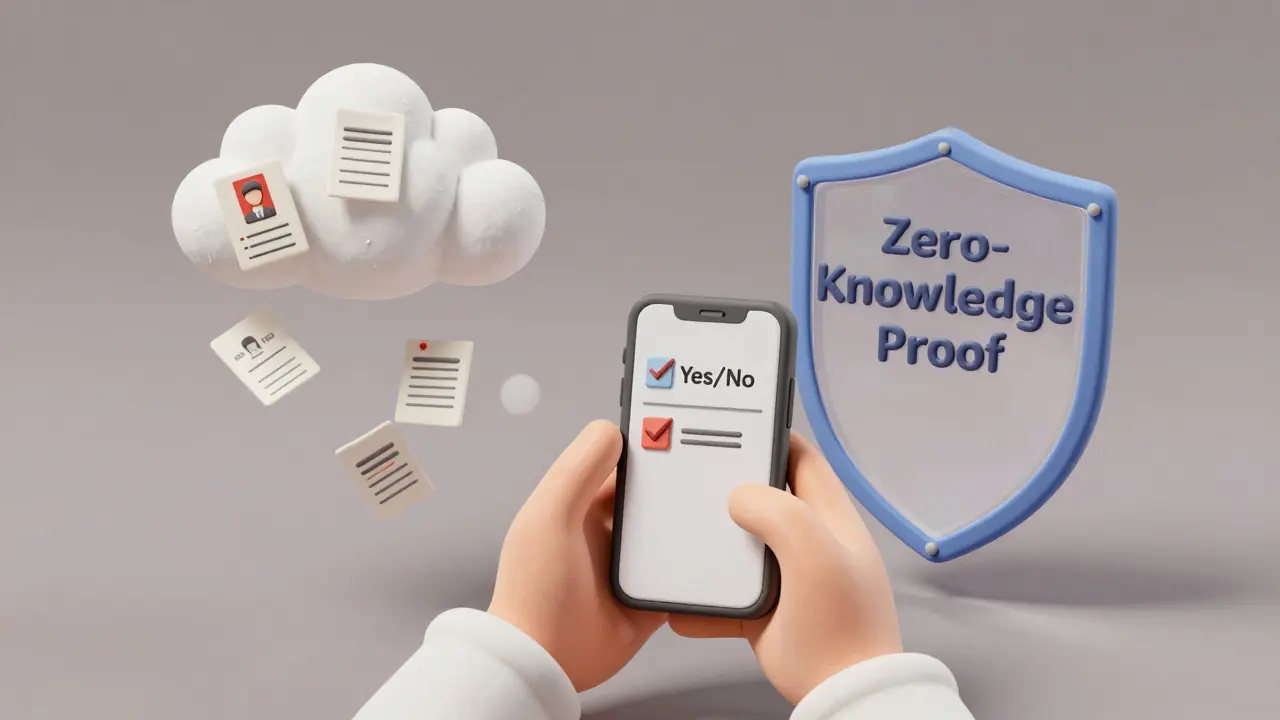
Behind Mina is something called recursive zk-SNARKs. These are zero-knowledge proofs that prove a transaction is valid without showing the data behind it. Think of it like a signed receipt that says, ‘This transaction happened and it’s legit,’ but doesn’t reveal who sent what or when. Every new block compresses the entire chain history into a new, tiny proof. The old proof gets folded in. And it keeps going. That’s how the chain never grows.
This isn’t just a neat trick. It changes everything. On Bitcoin or Ethereum, running a full node means downloading hundreds of gigabytes. On Mina, you can run one on a $50 Android phone. That means more people can verify the network themselves - not just big servers or cloud nodes. That’s real decentralization.
How does Mina actually work?
Mina has three main roles in its network:
- Block producers - they collect transactions and create new blocks, like miners in Bitcoin.
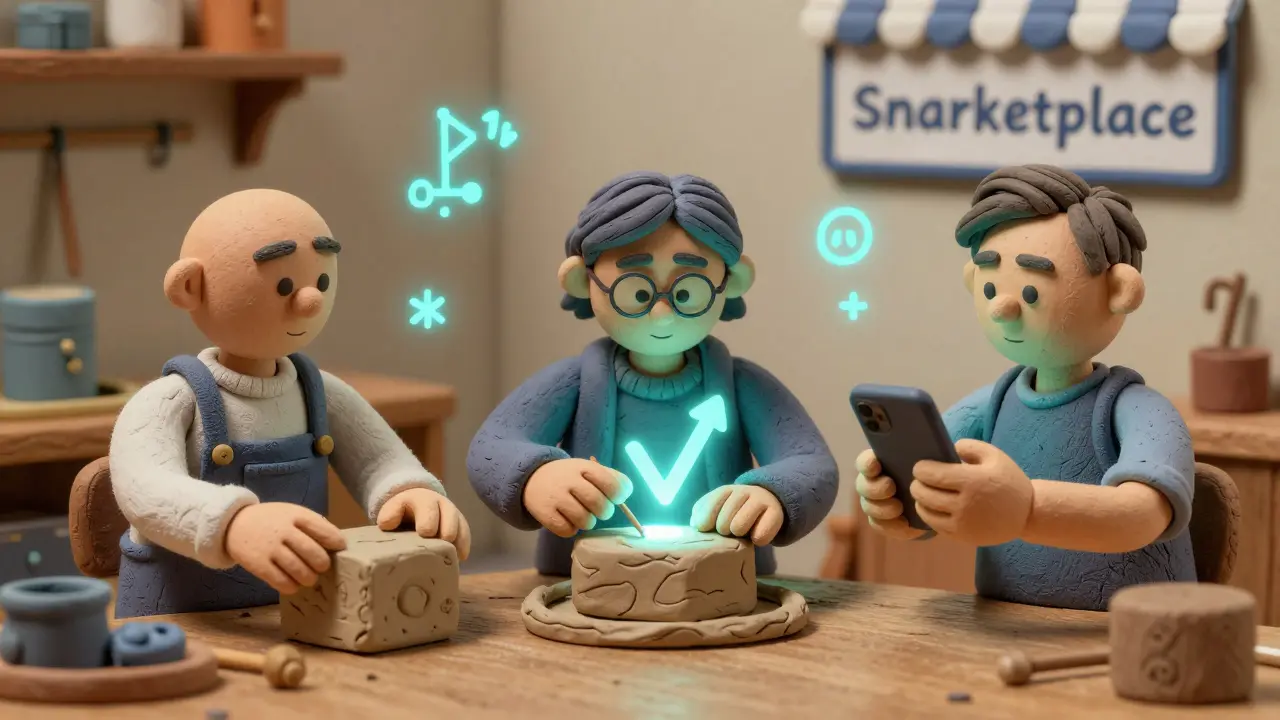
- Snarkers - they generate the zk-SNARK proofs that shrink the chain. These are the math wizards.
- Verifiers - anyone with a phone or laptop checks those proofs to make sure everything’s valid.
There’s even a marketplace called the Snarketplace where snarkers compete to create the cheapest, fastest proofs. The network picks the best bid. This keeps costs low and keeps proof generation open to anyone with decent hardware - no need for ASICs or massive GPUs.
Transactions are verified in about 200 milliseconds. That’s faster than loading a webpage. Compare that to Bitcoin’s 10-minute wait or even Ethereum’s 12-15 seconds. Speed isn’t Mina’s main strength - it’s accessibility.
What can you do with Mina?
Mina’s biggest innovation isn’t just the chain size - it’s zkApps. These are applications built directly on Mina that use zero-knowledge proofs to interact with real-world data without exposing it.
Imagine this: You want to prove you’re over 18 to sign up for a service. Normally, you’d send your ID. With a zkApp, you prove you’re over 18 without showing your birthdate, name, or anything else. The app just gets a yes/no answer. No data leaks. No middleman. This works for KYC, voting, credit checks, or even proving you own a house - all privately.
Developers are already building these. As of early 2024, over 1,000 zkApps have been created on Mina, with 200+ updated weekly. Projects like Teller Finance use Mina for private lending. Snarkify lets you prove identity without revealing personal info. These aren’t theory - they’re live.
How does MINA token work?
Mina’s native token, MINA, is used for staking, paying transaction fees, and rewarding participants. The total supply is capped at 1 billion MINA. As of early 2026, about 780 million are in circulation.
The network uses proof-of-stake. You don’t need 32 ETH like on Ethereum. You can stake as little as 1 MINA on exchanges like Kraken or Coinbase. The average staking reward is around 12% APY - higher than most major chains.
Unlike Bitcoin, Mina doesn’t have mining. There’s no energy waste. Every block is validated by cryptographic proofs, not brute force. That makes it one of the most energy-efficient blockchains in existence.
How does Mina compare to other blockchains?
Mina doesn’t compete with Solana or Ethereum on speed. It competes on size and privacy.
| Feature | Mina (MINA) | Ethereum | Bitcoin | Solana |
|---|---|---|---|---|
| Blockchain Size | 22 KB (constant) | 1.5+ TB | 500+ GB | 100+ GB |
| Full Node Requirements | 2GB RAM, 20GB storage | 1TB+ storage | 500GB+ storage | 128GB RAM, 2TB SSD |
| Transaction Speed | 200ms verification | 12-15 seconds | 10 minutes | 400ms |
| Throughput (TPS) | 27 | 30 | 7 | 65,000 |
| Staking Minimum | 1 MINA | 32 ETH (~$80,000) | Not applicable | 0.1 SOL |
| Privacy Focus | Yes (zkApps) | Partial (rollups) | No | No |
Mina loses on raw speed and DeFi volume. There are only about 15 major DeFi protocols on Mina versus 300+ on Ethereum. But if you care about running a node on your laptop, verifying transactions privately, or building apps that protect user data - Mina is unmatched.
Who’s using Mina?
It’s not just hobbyists. The World Economic Forum included Mina in its Digital Currency Governance Consortium. The European Blockchain Partnership also backs it. That’s not hype - it’s institutional recognition.
Companies like Chainlink are using Mina to bring off-chain data into smart contracts without exposing the source. Teller Finance uses it to verify income without seeing bank statements. These aren’t demos - they’re live deployments.
On Reddit and Discord, users rave about running nodes on old devices. One user wrote: “I run a full Mina node on my 2018 MacBook Air. I can’t even open Ethereum’s client on this thing.” That’s the real win.
What are the downsides?
Mina isn’t perfect. The learning curve for zkApp development is steep. You need to understand zero-knowledge proofs, which most developers haven’t touched. The tooling is still early - only 3 IDEs support it, compared to 15+ for Ethereum.
Transaction finality takes 3 minutes, slower than Ethereum’s 15 seconds. That’s fine for identity apps but not for fast trading. And while the ecosystem is growing, it’s still small. Liquidity is thin. You won’t find a Mina-based Uniswap yet.
Some critics, including Ethereum’s Vitalik Buterin, worry that if only a few people can generate zk-SNARKs, the network becomes centralized. Mina’s team argues that the Snarketplace opens proof generation to anyone - and competition keeps it fair. Time will tell.
What’s next for Mina?
The roadmap is clear. The "Auroa" upgrade in late 2023 boosted throughput to 27 TPS. The next big one, "Mina 2.0," comes in late 2024 and aims for 100 TPS using parallel zk-SNARK processing. Then there’s "zkCloud," planned for 2025, which will let Mina interact directly with cloud services like AWS or Google Cloud - all while keeping data private.
Analysts at Delphi Digital predict MINA could hit $1.2 billion in market cap by 2026 if zkApp adoption keeps growing at 40% per quarter. That’s a big if - but if privacy becomes a legal requirement (like GDPR), Mina could be the only blockchain ready for it.
Should you care about Mina?
If you’re just looking to trade crypto, Mina might not be your top pick. It’s not a high-growth DeFi play. But if you care about:
- Running a full node on your phone or laptop
- Privacy-preserving apps that don’t leak your data
- A blockchain that doesn’t eat up your hard drive
- Supporting a protocol that’s solving a real technical problem - blockchain bloat
Then Mina isn’t just interesting - it’s essential. It’s not trying to be Bitcoin or Ethereum. It’s trying to be something no one else is: a blockchain that stays small so everyone can join.
Is Mina (MINA) a good investment?
Mina isn’t a typical crypto investment. Its value isn’t tied to speculation or DeFi yields alone. It’s tied to adoption of zkApps and real-world privacy use cases. If privacy becomes a regulatory standard - like GDPR - Mina could become critical infrastructure. But if adoption stalls, it may stay niche. Only invest what you’re comfortable losing.
Can I run a Mina node on my phone?
Yes. Mina is designed for mobile. You need a smartphone with at least 2GB of RAM and 20GB of free storage. The official Mina app lets you run a full node on Android or iOS. You’ll earn staking rewards just by keeping the node online - no special hardware needed.
How is Mina different from zkRollups on Ethereum?
zkRollups compress transaction data on Ethereum to save fees, but the full chain still grows. Mina compresses the entire blockchain history into a 22KB proof - permanently. Ethereum’s rollups still need you to trust Ethereum’s main chain. Mina’s proof is self-contained. You don’t need to trust anything else.
What’s the difference between MINA and MINA tokens?
There’s no difference. MINA is the token symbol. The protocol is called Mina Protocol. People say "MINA coin" or "MINA token" interchangeably. The official name is Mina Protocol, but the token is MINA.
Is Mina safe?
Yes, from a cryptographic standpoint. The zk-SNARKs used in Mina are based on peer-reviewed math and have been audited by multiple security firms. The network has been live since March 2021 with no major exploits. But like any crypto project, risks come from smart contract bugs, wallet security, or exchange hacks - not the protocol itself.
What makes Mina unique isn’t its price. It’s that it solves a problem no one else is solving - how to make blockchain truly accessible. If you believe the future of crypto should be open to everyone, not just those with powerful machines, then Mina isn’t just another coin. It’s a step toward that future.
Abdulahi Oluwasegun Fagbayi
January 27, 2026 AT 17:00People keep chasing speed and scale, but what good is a blockchain if only the rich can participate?
Ashok Sharma
January 28, 2026 AT 02:04Margaret Roberts
January 28, 2026 AT 04:38Tselane Sebatane
January 29, 2026 AT 08:20Let’s stop pretending blockchain is about hype. It’s about access. And Mina gives it back to the people.
Linda Prehn
January 30, 2026 AT 18:16Arielle Hernandez
January 30, 2026 AT 20:47The implications for regulatory compliance, identity verification, and decentralized governance are profound. Institutions such as the World Economic Forum and the European Blockchain Partnership recognize this. It is not speculative; it is foundational.
HARSHA NAVALKAR
February 1, 2026 AT 12:49Ryan Depew
February 3, 2026 AT 04:20And yeah, the TPS is trash. But who needs 10k tps when you’re proving you’re over 18 without giving your birth certificate to some SaaS company?
Mathew Finch
February 4, 2026 AT 20:25