What is Nexdol (ND7)? A Complete Guide to the ND7 Crypto Coin
 Apr, 26 2026
Imagine a world where you can pay for your morning coffee or a new pair of shoes using a digital token that settles instantly without the heavy fees usually associated with blockchain. This is the goal of Nexdol (ND7) is a blockchain-based digital asset designed to bridge the gap between decentralized finance (DeFi) and real-world financial applications. Launched on March 26, 2025, it aims to be more than just a speculative asset; it wants to be a practical payment tool for everyday use.
Quick Summary: Key Takeaways
- Purpose: A utility token focused on fast, low-cost payments and real-world commerce.
- Network: Built on the BNB Smart Chain (BSC) using the BEP-20 standard.
- Key Feature: Integration with crypto-to-fiat cards for spending ND7 at global merchants.
- Supply: A fixed total supply of 10 billion tokens.
- Risk Alert: Some tracking platforms have reported inactivity as of early 2026, making caution necessary for new investors.
How Nexdol Actually Works
To understand Nexdol (ND7), you first have to look at where it lives. It doesn't have its own standalone blockchain. Instead, it runs on the BNB Smart Chain (also known as BSC), which is a high-performance network that allows for much faster transactions and lower "gas fees" than the main Ethereum network. Because it uses the BEP-20 standard, it is fully compatible with common Web3 tools and wallets.
The project avoids the complex "math tricks" seen in many new coins. You won't find rebasing mechanisms, aggressive deflationary burns, or complex yield farming schemes here. The team opted for a clean, straightforward structure. This means the token is designed for stability and utility rather than trying to gamify the price through artificial scarcity.
The Utility: Spending Crypto in the Real World
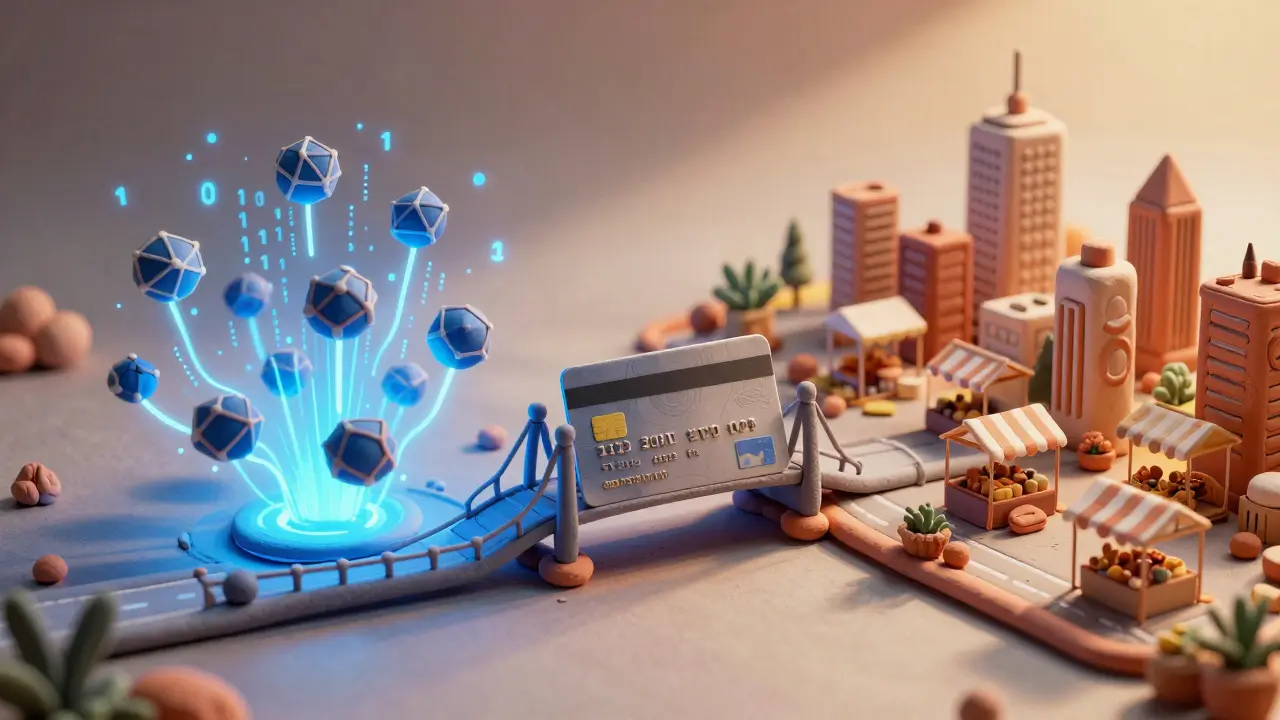
Most crypto coins just sit in a digital wallet, but ND7 is built for movement. The core "job" of this coin is to act as a medium of exchange. The most concrete way they do this is through crypto-to-fiat gateways. By partnering with card issuers and payment processors, Nexdol allows users to load their tokens onto digital or physical crypto cards. When you swipe the card at a store, the system converts the ND7 to local currency instantly.
Beyond shopping, the ecosystem supports several other practical uses:
- On-chain transactions: Sending value between users with minimal delay.
- Micropayments: The low cost of the BSC network makes it possible to send tiny amounts of money without the fee costing more than the payment.
- User Incentives: Rewarding people within the ecosystem for participation.
- Web3 Integration: Full support for MetaMask, meaning you can manage your funds directly through a browser extension without needing a specialized exchange account.
Tokenomics and Market Data
The financial blueprint of Nexdol is centered around a fixed supply. There are 10 billion ND7 tokens in total. This cap is intended to prevent the hyper-inflation that plagues some other utility tokens. The distribution is split between public sales, development funds, and liquidity provisioning to ensure the coin can be traded easily on exchanges.
Looking at the numbers, the circulating supply has historically been a small fraction of the total (around 0.009% in early 2025), with a price point hovering around $0.10. However, the market data for ND7 can be contradictory. While some platforms show a steady price, others have reported wildly different all-time highs, which is a common red flag in the volatile crypto world.
| Attribute | Value/Detail |
|---|---|
| Blockchain Network | BNB Smart Chain (BSC) |
| Token Standard | BEP-20 |
| Total Supply | 10,000,000,000 ND7 |
| Primary Wallet Support | MetaMask |
| Core Use Case | Real-world payments & DeFi bridging |
Trading and Accessibility
If you're looking to acquire ND7, you won't find it on every major exchange. It has been listed on smaller platforms like Tokpie. For those who prefer a non-custodial approach, the token can be traded on Decentralized Exchanges (DEXs) on the BSC network. Because it is an EVM-compatible asset, you can simply add the token contract address to your wallet and swap other BSC tokens for ND7.
However, a huge warning sign has emerged. By February 2026, some data aggregators like CoinLore noted that price data had stopped flowing and the coin appeared inactive. When a coin stops reporting data, it usually means one of three things: the project was abandoned, it was delisted from the exchange providing the data, or the team paused operations. This inconsistency makes the current liquidity of the coin questionable.

The Roadmap: What's Next?
The vision for Nexdol involves moving further away from being "just another coin" and toward becoming a financial tool. Their plans include expanding the list of supported exchanges to increase liquidity and building better fiat on-ramps (ways to turn your bank account money into crypto) and off-ramps (turning crypto back into cash).
They are also focusing on regional legal compliance. Since they want users to spend crypto at real stores, they have to navigate the complex laws of different countries regarding digital assets. The goal is to make the transition from a digital wallet to a physical purchase so seamless that the user doesn't even realize they are using blockchain technology.
Is Nexdol (ND7) a safe investment?
No cryptocurrency is "safe," but ND7 has specific risks. While it has a clear utility (payment cards), recent reports of inactivity on some tracking platforms suggest potential liquidity issues or a loss of development momentum. Always verify the current status on the official website before putting money in.
How can I spend ND7 in real stores?
You can spend ND7 by using integrated crypto-to-fiat card services. These cards act as a bridge, converting your ND7 tokens into the local currency (like USD or EUR) at the moment of purchase, allowing you to use the coin at any merchant that accepts those cards.
Which wallet is best for holding ND7?
Since ND7 is a BEP-20 token, MetaMask is the most recommended wallet. It allows you to keep control of your private keys and interact directly with the BNB Smart Chain ecosystem.
What is the difference between ND7 and other payment coins?
Unlike coins that rely on complex rewards or staking to drive value, ND7 focuses on a simple utility model. Its primary goal is the integration with physical payment hardware and fiat gateways to make crypto spendable in daily life.
Why is there conflicting price data for Nexdol?
Conflicting data often happens with low-cap tokens listed on multiple small exchanges. Some platforms might use a "last known price" while others might not receive updates if trading volume drops. This is why it's critical to check BscScan and official exchange order books for the most accurate current price.
Next Steps and Troubleshooting
If you already hold ND7 and are seeing "inactive" warnings on tracking sites, don't panic immediately. First, check your wallet (like MetaMask) to see if the tokens are still there. Then, visit the official project website or whitepaper to see if there have been any announcements regarding migration to a new contract or a change in exchange partners.
For those new to the project, the best path is to research the actual trading volume on current exchanges. If you find that the volume is extremely low, you may struggle to sell your tokens later-this is known as a "liquidity trap." Always ensure there is enough active trading for the amount you intend to invest.
Andrew Todd
April 26, 2026 AT 16:09This is just another scam coin from some random place. American tech is the only thing that actually works in this space. Everything else is just a copy of a copy and a waste of time for real investors. Just stick to the big ones or don't play at all.
Barbara Jones
April 28, 2026 AT 01:33i mean it sounds cool but those inactive reports are kind of scary... just be carefull with your money guys!!
Livvy Cooper
April 28, 2026 AT 08:56Honestly, why do we even need another payment coin. It is just lazy. Most of these projects do the same thing and then vanish. I bet this one is already dead and we are just reading a ghost story.
Rain Richardsson
April 29, 2026 AT 11:17The BEP-20 focus makes sense. Lower fees help.
debra hoskins
April 29, 2026 AT 16:42The notion that a mere digital token can seamlessly integrate into the mundane ritual of coffee purchasing is a quaint fantasy. The infrastructure is far too fragile for such ambitions. It's an elaborate mirage of utility.
Pramendra Singh
May 1, 2026 AT 05:57It is always good to see new projects trying to make crypto easier for everyone. Hopefully, the team can fix the data issues and move forward positively!
Amanda Macy
May 1, 2026 AT 18:05The duality of a fixed supply versus reported inactivity suggests a tension between the theoretical value and the actual market existence. We must wonder if utility can exist without a consistent pulse of data.
Chloe Fletcher
May 2, 2026 AT 11:26You guys can do it! 🚀 Just do your own research and stay safe! 🛡️ It's all about the process! 💪✨
Tony Phan
May 3, 2026 AT 10:23Bro, the liquidity trap is real! I've seen so many tokens with zero slippage tolerance and no market makers that just bleed out. If the API isn't pinging the aggregators, the alpha is gone. It's a total bloodbath when the order books are thin and you're just staring at a dead chart while your portfolio nukes. I can't even deal with the stress of these low-cap plays anymore because they just suck the life out of you and leave you holding the bag while the devs disappear into the void. It's just depressing to see another potential bridge to fiat turn into a ghost town. I'm literally shaking thinking about the times I got rugged by a "utility" project. The volatility is insane and the lack of transparency is just a nightmare for anyone trying to actually trade this stuff without losing their mind.
Mitali Rajvanshi
May 3, 2026 AT 11:17I agree that caution is the best approach here. Let's just see how it evolves over time.