What is StraitsX USD (XUSD) Crypto Coin? A Complete Guide to the MAS-Regulated Stablecoin
 Nov, 24 2025
Cross-Border Payment Cost Calculator
XUSD vs Traditional Banking
Compare the cost and time of sending money between ASEAN countries using XUSD versus traditional bank transfers (SWIFT).
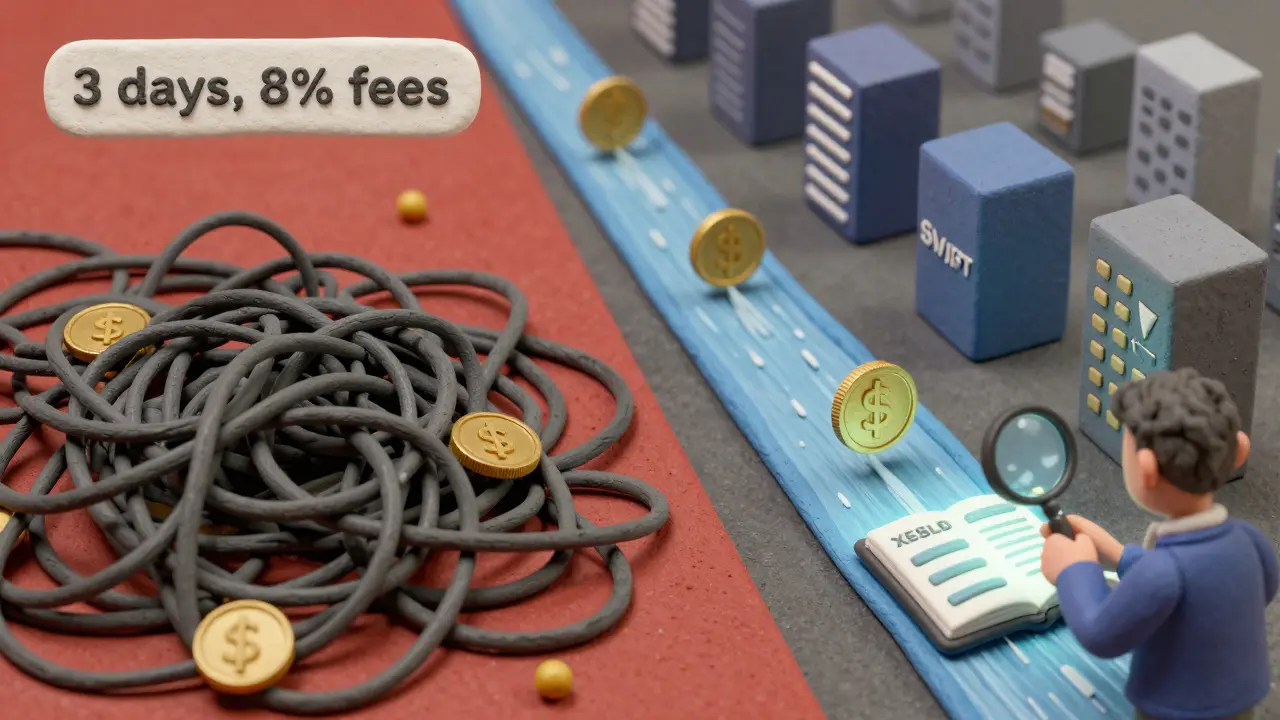
XUSD is designed specifically for ASEAN business payments with fees under 0.1% and settlement in seconds. Traditional bank transfers typically take 2-5 days with fees of 5-8%.
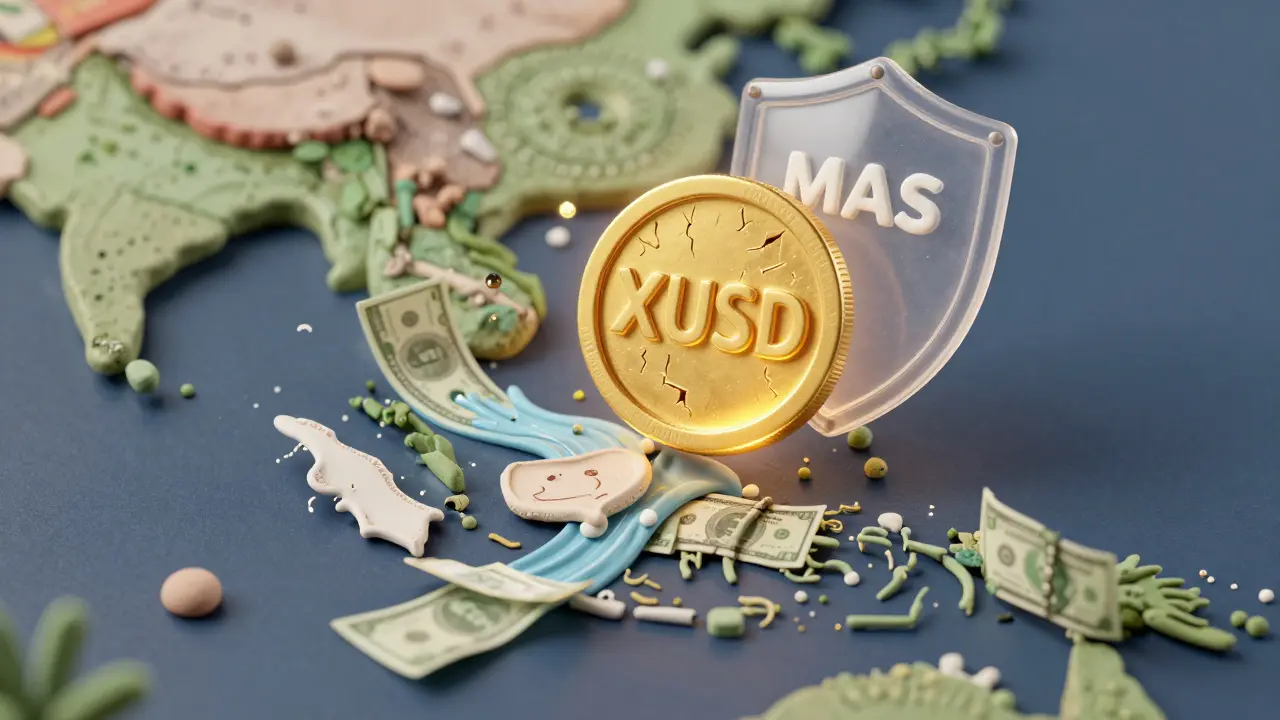
StraitsX USD (XUSD) is a digital currency designed to act like cash in the digital world - it’s worth exactly $1.00 USD, every time. Unlike Bitcoin or Ethereum, which swing wildly in price, XUSD doesn’t move much. It’s built to stay stable. That’s why it’s called a stablecoin. But what makes XUSD different from other stablecoins like USDT or USDC? The answer lies in where it’s from and who backs it.
Who Issues XUSD and Why Does It Matter?
StraitsX USD is issued by StraitsX, a Singapore-based fintech company. Not just any company - one that’s officially licensed and monitored by Singapore’s central bank, the Monetary Authority of Singapore (MAS). That’s a big deal. Most stablecoins operate in legal gray areas. Tether (USDT) has been fined by U.S. regulators. Circle (USDC) is under constant scrutiny in Washington. But XUSD was built from the start to follow Singapore’s strict financial rules.
StraitsX USD Issuance Pte. Ltd. holds a Major Payment Institution license from MAS. This means they must keep every XUSD token fully backed by real U.S. dollars held in regulated banks. No fancy algorithms. No risky collateral. Just plain old cash sitting in vaults. Every month, an independent auditor - one approved by the Institute of Singapore Chartered Accountants - checks those reserves and publishes the report. You can see it. It’s public. That level of transparency is rare.
How Does XUSD Actually Work?
Think of XUSD like a digital IOU. When you deposit $1,000 into StraitsX’s system, they create 1,000 XUSD tokens and send them to your wallet. When you want to cash out, you send the tokens back. They burn them - permanently destroy the digital record - and send you $1,000 in real USD. That’s the mint-and-burn mechanism. The supply of XUSD always matches the amount of USD in reserve. No more, no less.
It runs on two major blockchains: Ethereum (as an ERC-20 token) and BNB Smart Chain (as a BEP-20 token). That means you can send XUSD quickly and cheaply. On Ethereum, transactions settle in about 12 seconds. On BSC, it’s under 4 seconds. No mining. No staking. You can’t earn interest by holding it. It’s not designed for speculation. It’s designed for movement - fast, reliable, low-cost transfers.
Market Size and Real-World Usage
As of November 2024, XUSD has a market cap of $58.46 million and a circulating supply of 58,455,400 tokens. It trades at $0.9998 - nearly perfect peg. That’s impressive for a stablecoin launched just over a year ago. Its 24-hour trading volume is around $46 million, which sounds small next to USDT’s $50 billion, but it’s huge for a regional player.
Most XUSD usage isn’t from everyday crypto traders. It’s businesses. About 78% of transactions are B2B payments - companies in Singapore, Indonesia, and Thailand using XUSD to settle invoices across borders. One Singaporean logistics firm cut their payment processing time from 3 days to 15 seconds by switching to XUSD. That’s the real value.
It’s also integrated with Singapore’s PayNow system. You can now convert XUSD to Singapore dollars (SGD) instantly, right inside your digital wallet. That’s something no other USD-pegged stablecoin can do. It’s a direct bridge between digital money and real-world banking in Southeast Asia.

Where Can You Use XUSD?
You won’t find XUSD on Coinbase, Kraken, or Binance US. That’s intentional. StraitsX isn’t trying to compete with global giants. They’re focused on ASEAN - the 10 countries of Southeast Asia. You can buy XUSD on Bitget, Bybit, and a few other Asian exchanges. The on-ramp is simple: complete KYC (Know Your Customer) verification through StraitsX’s platform. It takes 1-2 business days. If you’re in Singapore, Malaysia, Indonesia, Thailand, or a few other approved countries, you’re in.
If you’re in the U.S., EU, or UK? You’re locked out. That’s not a glitch. It’s policy. StraitsX doesn’t have the licenses to serve those markets. And they’re not trying to get them. Their goal isn’t to be everywhere. It’s to be the most trusted stablecoin in ASEAN.
How Does XUSD Compare to USDT and USDC?
| Feature | XUSD | USDT | USDC |
|---|---|---|---|
| Issuer | StraitsX (Singapore) | Tether (Cayman Islands) | Circle (USA) |
| Regulation | MAS licensed | Faced CFTC fines | U.S. regulated, under scrutiny |
| Market Cap (Nov 2024) | $58.46M | $112B | $34B |
| Primary Market | ASEAN | Global | Global |
| Blockchains | Ethereum, BSC | Multiple (Ethereum, TRON, Solana) | Ethereum, Solana, Avalanche |
| Transparency | Monthly audits by ISCA | Partial reserve disclosures | Monthly attestations |
| Regional Banking Integration | Yes (PayNow, DBS) | No | No |
XUSD doesn’t try to be bigger. It tries to be better in its niche. USDT is the default for traders worldwide. USDC is the go-to for DeFi apps. XUSD is the tool for businesses moving money between Jakarta and Kuala Lumpur, or Bangkok and Manila. It’s not a replacement for the big players - it’s a complement built for a specific region’s needs.
What Are the Risks?
Even with MAS backing, XUSD isn’t risk-free. The biggest threat? Regulatory fragmentation. ASEAN countries don’t have one unified crypto rulebook. Indonesia might accept XUSD. Vietnam might ban it. Cambodia might ignore it. That makes adoption messy.
Another risk is competition from central bank digital currencies (CBDCs). Seven ASEAN countries are already testing their own digital versions of their national currencies. If Thailand launches a digital baht that’s faster and cheaper than XUSD, businesses might switch. That’s not a distant threat - it’s happening now.
And then there’s the reliance on Singapore. If MAS changes its stance - if it tightens rules or loses global trust - XUSD’s value could erode fast. It’s a single-point dependency. No other stablecoin has this level of centralization under one regulator.
Who Should Use XUSD?
If you’re a trader in New York or a DeFi user in Berlin, XUSD isn’t for you. You’ll be better off with USDC or even USDT.
If you’re a business owner in Singapore, Malaysia, or Indonesia who sends payments across borders? XUSD could save you time and money. No more waiting 3 days for bank transfers. No more high fees from Western Union or SWIFT.
If you’re a crypto user who values regulation over hype? XUSD gives you the stability of the U.S. dollar, with the trust of one of the world’s most respected financial regulators. That’s rare.
What’s Next for XUSD?
The roadmap is clear. In early 2025, XUSD will launch on Polygon and Solana - two faster, cheaper blockchains. That’ll make it even more attractive for small businesses and apps.
StraitsX plans to integrate with 12 more ASEAN banks by mid-2025. That means more people can convert local currency to XUSD directly through their banking apps. No need to go through a crypto exchange.
They’re also working on API tools for enterprise users - things like automated payroll in Thailand or supplier payments in Vietnam. This isn’t about speculation. It’s about building infrastructure for real commerce.
Experts predict XUSD could grow 5-7x by 2027. But even at its peak, it won’t touch USDT’s size. That’s not the goal. The goal is to become the default stablecoin for ASEAN trade - just like the U.S. dollar is the default for global trade.
Is XUSD safe to use?
Yes, if you’re in an approved country. XUSD is fully backed by USD reserves held in regulated banks, and its issuer is licensed by Singapore’s Monetary Authority of Singapore (MAS). Monthly audits by an independent accounting firm ensure transparency. Unlike some stablecoins that have faced legal trouble, XUSD was built to comply with strict financial regulations from day one.
Can I buy XUSD in the United States?
No. XUSD is not available on U.S.-based exchanges like Coinbase or Kraken. StraitsX has not obtained the necessary licenses to operate in the U.S. or the EU. If you’re based in the U.S., you cannot legally buy or hold XUSD through official channels. Attempting to access it through third-party platforms may violate local regulations.
How is XUSD different from USDC?
Both are USD-pegged and fully backed, but XUSD is focused exclusively on Southeast Asia and regulated by MAS, while USDC is a global stablecoin regulated by U.S. authorities. XUSD integrates with Singapore’s PayNow system and local banks, making it ideal for ASEAN cross-border payments. USDC works better in DeFi and on global exchanges. XUSD is regional; USDC is universal.
Can I earn interest on XUSD?
No. XUSD is not designed as a yield-bearing asset. It doesn’t offer staking, lending, or interest rewards. Its purpose is to be a stable store of value and medium of exchange - not an investment. If you’re looking to earn returns, you’d need to move XUSD into a DeFi protocol or lending platform, but that adds risk and isn’t part of the official XUSD system.
What happens if StraitsX goes bankrupt?
The USD reserves backing XUSD are held in segregated accounts at regulated financial institutions, separate from StraitsX’s operational funds. In the event of bankruptcy, those reserves should remain protected and available for redemption. However, legal processes could delay access. This is why MAS oversight matters - it adds a layer of accountability and oversight that private companies don’t always provide.
Is XUSD better than a bank transfer for ASEAN payments?
For cross-border business payments, yes. Traditional bank transfers between ASEAN countries can take 2-5 days and cost 5-8% in fees. XUSD settles in seconds, with fees under 0.1%. One logistics company in Malaysia saved $12,000 a month switching from SWIFT to XUSD. For individuals, it’s less useful unless you’re already in the crypto ecosystem.
Durgesh Mehta
December 5, 2025 AT 03:46Sarah Roberge
December 5, 2025 AT 04:53Jess Bothun-Berg
December 5, 2025 AT 22:16Katherine Alva
December 6, 2025 AT 18:18Mark Stoehr
December 8, 2025 AT 03:31Murray Dejarnette
December 9, 2025 AT 13:17Sarah Locke
December 11, 2025 AT 09:04Philip Mirchin
December 11, 2025 AT 14:03