What is thUSD (THUSD)? Threshold vs. Tharwa Stablecoins Explained
 Sep, 9 2026
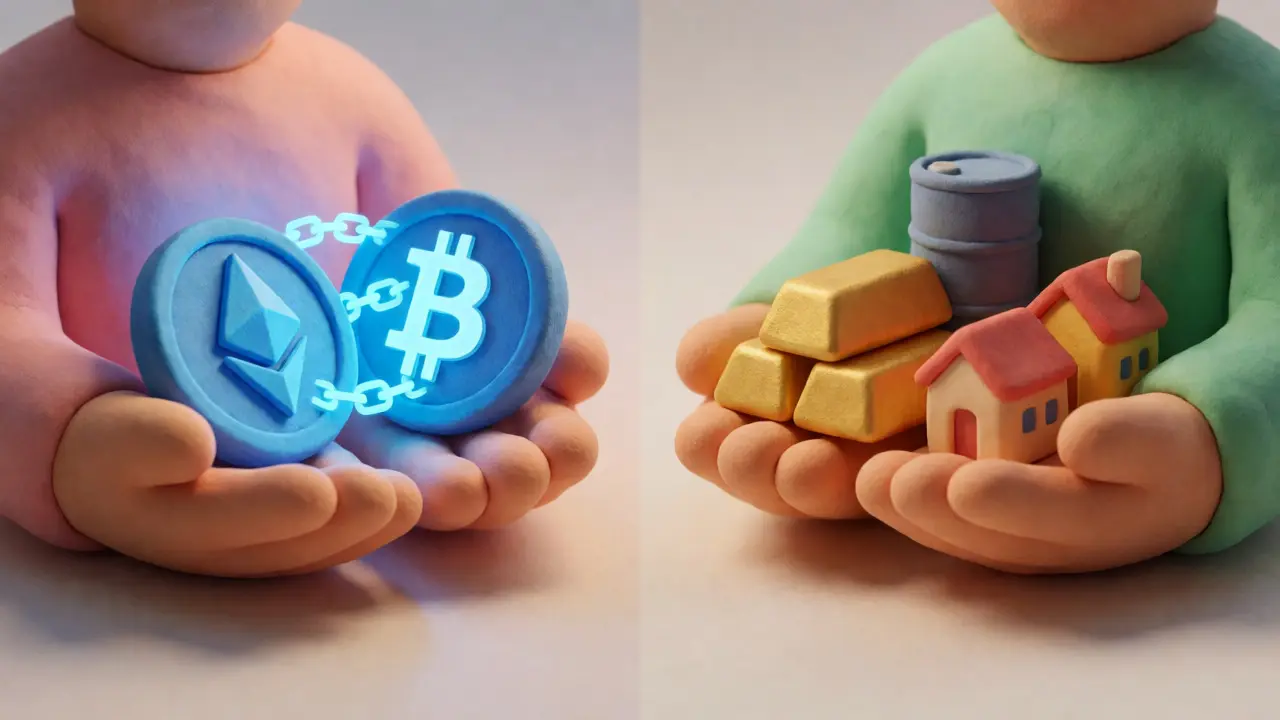
You might have seen thUSD or THUSD on a price tracker and assumed it was one thing. But here’s the twist: that ticker actually points to two completely different stablecoins with opposite philosophies. One is a decentralized borrowing tool backed by Ethereum and Bitcoin derivatives. The other is a yield-generating asset tied to gold, oil, and real estate. Confusing? Absolutely. But understanding the difference saves you from buying the wrong token for your portfolio.
This guide breaks down both versions of thUSD as of September 2026. We’ll look at how they work, what backs them, and why their liquidity looks so thin compared to giants like USDT or USDC. If you’re looking for a mainstream dollar substitute, neither of these fits the bill yet. But if you’re digging into niche DeFi mechanics or RWA (Real World Asset) experiments, this is where the action is.
The Ticker Trap: Why Two Coins Share One Name
Crypto naming conventions are messy. When you search for "thUSD," you hit two distinct projects that often get mixed up in aggregator data:
- Threshold USD (thUSD): A decentralized stablecoin issued by the Threshold Network, backed by ETH and tBTC.
- Tharwa USD (THUSD): Also known as Theo thUSD, this is an RWA-backed stablecoin generated through gold futures and diversified portfolios.
Most price aggregators list both under similar symbols, leading to false comparisons. For instance, CoinGecko might show a generic "THUSD" page stating tokens are unavailable to trade, while Bybit lists Tharwa USD at near-par value. This fragmentation means you must check the contract address and issuing protocol before investing. Never rely solely on the ticker symbol.
Threshold USD (thUSD): The Crypto-Native Borrowing Tool
Threshold USD isn’t designed for everyday payments. It’s a mechanism for leveraging your existing crypto holdings without selling them. Think of it as a collateralized debt position (CDP) system similar to MakerDAO’s DAI, but specifically tuned for the Threshold ecosystem.
The core mechanic is simple: you lock up tBTC (a trustless Bitcoin wrapper) and/or ETH as collateral. In return, the protocol mints thUSD, which stays pegged to the US dollar. The catch? You must maintain a minimum collateral ratio of 110%. If the value of your ETH or tBTC drops too low, your position faces liquidation.
Why use it? The loans are interest-free. Unlike traditional lending platforms that charge APR, Threshold lets you access dollar liquidity against your volatile assets for free, paying only gas fees and potential redemption costs. This makes it attractive for traders who want to stay long on BTC or ETH while holding stable dollars for short-term needs.
| Metric | Value | Note |
|---|---|---|
| Backing Assets | ETH, tBTC | Over-collateralized at ≥110% |
| Interest Rate | 0% | No interest on borrowed thUSD |
| Market Cap | ~$516,000 | Niche DeFi asset |
| Daily Volume | <$30 | Extremely low secondary market activity |
Liquidity is the elephant in the room. With daily trading volumes often under $30, you can’t easily sell large amounts of thUSD on open markets. Most users interact with it directly via smart contracts within the Threshold Network, redeeming it for tBTC at face value rather than trading it on exchanges. It’s a utility token for a specific community, not a global currency.
Tharwa USD (THUSD): The Real-World Asset Experiment
On the other side of the spectrum sits Tharwa USD (or Theo thUSD). This project bets on the growing trend of tokenizing real-world assets (RWAs). Instead of backing its dollar with bank deposits or crypto, Tharwa uses a structured investment strategy involving gold, UAE real estate, oil, and U.S. Treasury bills.
The pitch is compelling: traditional fiat stablecoins like USDC hold cash that earns little for holders. Crypto-backed stablecoins expose users to volatility. Tharwa claims to solve both by generating yield through a "Genesis Vault" facility. This vault reportedly has a $100 million capacity and uses AI-driven quantitative strategies to rebalance the underlying RWA portfolio. The goal? Keep thUSD pegged to $1.00 while passing some yield back to holders.
According to recent data, Tharwa USD trades at approximately $0.9997. Its circulating supply hovers around 168,000 tokens, giving it a tiny market cap of roughly $168,000. This micro-cap status highlights its experimental nature. While the concept of earning yield on a stablecoin is attractive, the execution relies heavily on the performance of off-chain commodities and real estate markets, introducing risks that pure digital assets don’t face.

Side-by-Side Comparison: Which thUSD is Right for You?
Choosing between these two depends entirely on your risk tolerance and technical knowledge. Here’s how they stack up against each other and a traditional incumbent like TrueUSD (TUSD).
| Feature | Threshold USD (thUSD) | Tharwa USD (THUSD) | TrueUSD (TUSD) |
|---|---|---|---|
| Collateral Type | Crypto (ETH, tBTC) | RWAs (Gold, Oil, Real Estate) | Fiat Cash (Bank Deposits) |
| Yield Potential | None (0% interest loan) | Variable (via Genesis Vault) | Minimal (issuer keeps yield) |
| Decentralization | High (Smart Contract based) | Low (Centralized Fund Management) | Medium (Regulated Issuer) |
| Liquidity | Very Low (DeFi native) | Very Low (Exchange limited) | High (Major CEXs/DEXs) |
| Main Use Case | Leverage/Borrowing | Yield Generation/RWA Exposure | Trading/Payments |
If you already hold ETH or tBTC and want dollar liquidity without selling, Threshold USD is the logical choice. It integrates seamlessly into DeFi protocols that accept tBTC. However, be prepared for illiquidity; exiting a large position might require interacting with the protocol’s redemption function rather than selling on an exchange.
If you’re interested in the RWA narrative and believe gold/oil markets will outperform cash yields, Tharwa USD offers exposure. But remember, you’re trusting a centralized entity to manage complex commodity futures correctly. Audits and transparency reports are critical here, and currently, public data on their exact performance metrics remains sparse.
Risks and Red Flags to Watch
Both coins share a major weakness: obscurity. Neither has achieved significant adoption outside their immediate communities. Daily trading volumes in the tens of dollars mean slippage is high. If you try to buy $1,000 worth of either token, you might move the price significantly or fail to fill the order entirely.
For Threshold USD, the primary risk is liquidation. If you borrow thUSD against ETH and the market crashes, your collateral gets sold automatically to repay the debt. Since the collateral ratio is tight (110%), even moderate volatility can trigger liquidations. Always monitor your health factor closely.
For Tharwa USD, the risks are more opaque. How exactly does the AI rebalancing work? What happens if the gold futures strategy loses money? Does the issuer hold enough reserves to honor redemptions during a run? Without frequent, detailed third-party attestations comparable to those for TUSD or USDC, you’re taking a leap of faith on their operational integrity.

How to Buy and Store thUSD
Accessing these tokens requires more effort than buying USDT.
- Threshold USD: Primarily accessed via the Threshold Network interface on Ethereum. You connect your wallet (like MetaMask), deposit ETH/tBTC, and mint thUSD. Some smaller DEXs may list pairs, but liquidity is poor.
- Tharwa USD: Listed on Bybit and Coinbase India. You can buy it directly with fiat or stablecoins on these platforms. Ensure you withdraw to a self-custody wallet if you plan to hold long-term, though check network compatibility first.
Storage is straightforward for both since they are typically ERC-20 tokens (or compatible standards). Standard wallets like MetaMask, Trust Wallet, or Ledger support them. Just verify the contract address before adding them to your dashboard to avoid fake tokens.
The Future Outlook
Are these coins going to replace USDC? Unlikely in the near term. They serve specialized niches. Threshold USD benefits from the growth of the Threshold Network and cross-chain interoperability. As tBTC gains traction, thUSD becomes a useful bridge asset. Tharwa USD rides the wave of institutional interest in RWAs. If they secure more partnerships and improve transparency, they could capture a slice of the yield-bearing stablecoin market.
For now, treat them as speculative tools for advanced users. Do not park your emergency fund here. Monitor their governance updates and reserve reports regularly. The crypto landscape changes fast, and today’s obscure experiment could become tomorrow’s standard-or vanish entirely.
Is thUSD the same as THUSD?
Not necessarily. While often used interchangeably in casual conversation, "thUSD" usually refers to the Threshold Network's crypto-backed stablecoin, while "THUSD" frequently denotes Tharwa/Theo's RWA-backed stablecoin. Always check the contract address and issuer to confirm which asset you are dealing with.
Can I earn interest on thUSD?
It depends on which version. Threshold USD (thUSD) itself does not pay interest to holders; it is a zero-interest loan product. Tharwa USD (THUSD) is designed to generate yield through its underlying RWA investments, potentially offering returns to holders, though specific rates vary based on market performance.
Why is the trading volume for thUSD so low?
Both variants are micro-cap stablecoins with limited exchange listings. Threshold USD is primarily used within its own DeFi protocol for borrowing, reducing the need for secondary market trading. Tharwa USD is newer and less widely adopted, resulting in thin order books on the few exchanges that list it.
Is thUSD safe to hold?
Safety varies by type. Threshold USD carries smart contract risk and liquidation risk due to over-collateralization requirements. Tharwa USD carries counterparty risk associated with managing physical assets like gold and real estate. Neither has the massive regulatory backing or audit history of top-tier stablecoins like USDC, so conduct thorough due diligence.
Where can I buy THUSD?
Tharwa USD (THUSD) is available on select centralized exchanges such as Bybit and Coinbase India. Threshold USD (thUSD) is best acquired by minting it directly through the Threshold Network platform using ETH or tBTC collateral, as exchange liquidity is minimal.
Matthew O'Neill
September 10, 2026 AT 14:29This entire premise is intellectually bankrupt. You are conflating two distinct asset classes under a lazy ticker convention, which is precisely why retail investors get wrecked in these micro-cap DeFi niches. Threshold USD (thUSD) is merely a CDP derivative, essentially a rebranded MakerDAO clone with inferior liquidity and no real utility outside its walled garden. Tharwa USD (THUSD), on the other hand, is a centralized nightmare masquerading as a decentralized solution. The 'AI-driven quantitative strategies' mentioned are nothing more than marketing fluff for opaque off-chain risk management.
Let us dissect the collateralization logic. For thUSD, a 110% collateral ratio is absurdly tight given current volatility regimes. It invites liquidation cascades that will wipe out leveraged positions instantly during minor drawdowns. This is not 'interest-free borrowing'; it is high-risk gambling disguised as financial engineering. The daily volume of under $30 is not a feature; it is a death sentence for exit liquidity. You cannot arbitrage this against USDC because you literally cannot sell enough to move the needle without crashing the price.
Tharwa’s reliance on gold futures and UAE real estate introduces counterparty risk that no smart contract audit can mitigate. If the custodian fails, or if the commodity markets decouple from the stablecoin peg due to basis risk, holders are left holding the bag. There is no proof of reserves comparable to Tether or Circle. We are talking about a $168k market cap. That is noise. That is dust. Anyone allocating significant capital here is suffering from confirmation bias regarding the RWA narrative. Stop treating these experimental tokens like blue chips. They are speculative instruments with near-zero institutional adoption. The fragmentation of the ticker symbol alone proves the lack of serious governance or standardization in this sector. Until we see transparent, frequent attestations and deep order books, these assets remain uninvestable for anyone with a fiduciary duty or basic risk assessment skills.
Saket Kulkarni
September 11, 2026 AT 16:20I appreciate the detailed breakdown provided in the post. It is indeed fascinating how different philosophies can converge under similar naming conventions. The distinction between crypto-native leverage tools and real-world asset backed instruments highlights the evolving nature of decentralized finance. While the liquidity concerns raised are valid, one must consider that early-stage projects often suffer from such limitations before achieving network effects. The philosophical question remains whether yield generation through traditional assets offers superior stability compared to pure algorithmic or collateralized models. I believe both approaches have merit depending on the investor's horizon and risk appetite. Thank you for clarifying the differences so thoroughly.
Eliza Stein-Dodd
September 12, 2026 AT 08:52Great post! 🧠 Just wanted to add that checking the contract address is non-negotiable here. 💯 Many people lose funds just by trusting the ticker. ⚠️ Also, remember that 'yield' on RWAs often comes with hidden fees or lock-ups. 📉 Don't let the shiny AI buzzwords distract you from the actual mechanics. 🔍 Always verify the source of truth before minting or buying. ✅
Kathy Siew
September 13, 2026 AT 03:43oh wow, another day another confusing stablecoin 😂 honestly i feel bad for people who buy these thinking they're safe. it's like trying to hold water in a sieve. 🥲 the whole 'ai driven rebalancing' thing sounds sus af tbh. where is the proof? 👀 if i cant see the bank statements, i dont trust it. also, 110% collat ratio?? lol good luck sleeping at night when eth drops 5%. 😴 you'll be liquidated before you can blink. keep your emergency funds in boring old usdc please. 🙏
Brittany Ross
September 13, 2026 AT 17:22This is such a helpful guide! 🌟 I was totally confused by the tickers before reading this. 😅 It makes sense now why the volumes are so low. 📉 I think I’ll stick to my regular stablecoins for now though. 💸 Thanks for breaking it down! ❤️