What is XPLA (CONX) Crypto? A Guide to the Rebranded Layer 1 Blockchain
 Aug, 5 2026
Have you noticed that the coin you bought as XPLA might now be listed under a completely different name? If you are scrolling through your portfolio or checking market data and seeing "CONX" instead of XPLA, you aren't alone in being confused. This isn't a scam, nor is it a new token replacing the old one overnight without warning. It is a strategic rebranding that reflects a major shift in how this blockchain platform sees its future.
To understand what XPLA actually is today, we have to look past the ticker symbol changes and dig into the technology, the ecosystem, and the ambitious pivot toward "cultural fintech." Whether you are holding the token, considering buying it, or just curious about why another Layer 1 blockchain decided to change its identity, here is everything you need to know about the project formerly known as XPLA.
The Big Shift: From XPLA to CONX
The most critical thing to grasp right away is that XPLA is now officially known as CONX. The acronym CONX stands for "Culture = Connect." This wasn't just a cosmetic tweak to the logo; it was a fundamental repositioning of the entire project's vision.
Originally launched as XPLA, the platform focused heavily on bridging Web2 and Web3 ecosystems, specifically targeting digital media and gaming. However, the team realized that limiting themselves to just gaming and content creation was too narrow for the long term. In late 2023, they announced the transition to CONX to represent a broader ambition: becoming a next-generation Layer 1 Cultural Fintech Mainnet.
This new direction aims to connect culture, finance, and technology into one trusted digital ecosystem. By adopting the CONX identity, the project signals its intent to integrate Real World Assets (RWA), Security Tokens (STO), and AI-generated content (AIGC). For investors, this means the underlying technology remains the same, but the narrative and development focus have expanded significantly beyond just blockchain gaming.
Under the Hood: Technology and Consensus
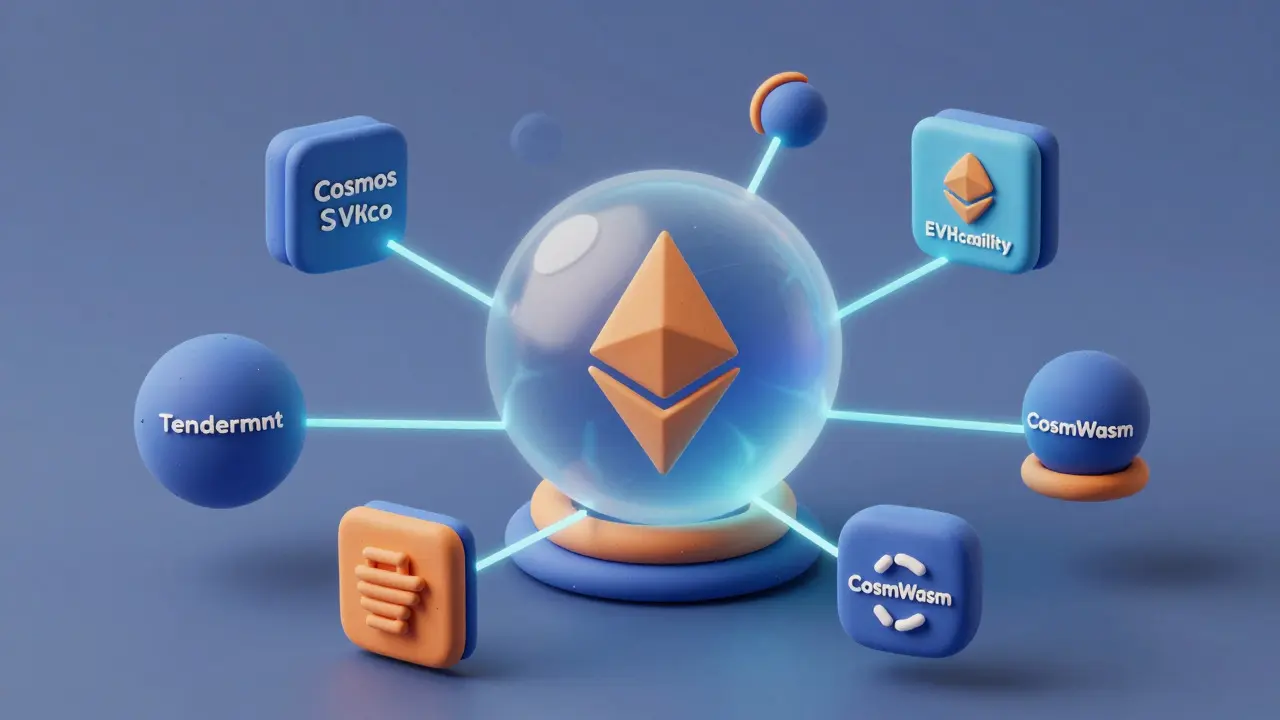
So, what powers this network? At its core, the blockchain operates using the Cosmos SDK, a popular framework for building independent blockchains. This choice gives the network significant flexibility and allows it to communicate easily with other chains within the Cosmos ecosystem.
The consensus mechanism is Tendermint BFT (Byzantine Fault Tolerant). If you are familiar with Proof-of-Stake (PoS) systems, this should feel familiar. Here is how it works in practice:
- Proposer Selection: Validators stake tokens to secure the network. One validator is chosen to propose a new block of transactions.
- Dual-Round Voting: Other validators vote on whether to accept or reject the proposed block. This happens in two rounds to ensure agreement.
- Finality: Once approved, the block is signed and added to the chain. Unlike some networks that rely on probabilistic finality, Tendermint offers instant finality, meaning once a transaction is confirmed, it is virtually irreversible.
This architecture provides high security and fast transaction speeds, which are essential for a platform handling gaming assets and financial tokens. The system also distributes transaction fees to validators as staking rewards, incentivizing them to keep the network running smoothly.
Developer Experience: EVM and CosmWasm
A blockchain is only as good as the applications built on it. To attract developers, the XPLA/CONX team made a crucial technical decision: compatibility.
The platform supports smart contracts written in Solidity through EVM (Ethereum Virtual Machine) compatibility. This is a game-changer for Ethereum developers. They can port their existing dApps to this network with minimal modifications. You don't need to rewrite your code from scratch; you just deploy it to a new environment.
Additionally, the network supports CosmWasm, which allows for more flexible smart contract logic tailored to the Cosmos ecosystem. This dual-support strategy lowers the barrier to entry. If you are a developer comfortable with React or Python, you might find the learning curve moderate, especially if you already know Ethereum standards. However, mastering the specific nuances of Tendermint-based development still requires some dedicated study.
| Feature | Detail |
|---|---|
| Consensus Mechanism | Tendermint BFT (Proof-of-Stake) |
| Development Framework | Cosmos SDK |
| Smart Contract Support | EVM (Solidity) and CosmWasm |
| Interoperability | Cosmos IBC (Inter-Blockchain Communication) |
| Max Token Supply | 2,000,000,000 XPLA |
The "Play to Own" Gaming Ecosystem
Before the rebranding to CONX, the project's flagship feature was its approach to blockchain gaming. The concept was dubbed "Play to Own," which differs slightly from the popular "Play-to-Earn" model. While Play-to-Earn often focuses on earning income through grinding, Play to Own emphasizes true ownership of digital assets and the value of player labor.
A prime example of this in action is the game Ace Fishing Crew. Built on the XPLA blockchain, this game allows players to earn in-game currencies like Pamos Point and Coral Point. These points can be used for upgrades within the game or exchanged for the native $XPLA token. This creates a closed-loop economy where gameplay has tangible economic value.
However, it is important to manage expectations. The gaming sector in crypto is highly competitive. While the technology supports these mechanics, user adoption depends on the quality of the games themselves. As of late 2023, the ecosystem had a few notable titles, but it lacked the massive user base seen on platforms like Axie Infinity during its peak. The shift to CONX suggests that gaming will remain a pillar, but not the sole focus, as the platform expands into broader cultural and financial assets.
Tokenomics and Market Performance
Let's talk numbers. The native token, still referred to as XPLA in many trading pairs despite the brand change, has a maximum supply of 2 billion tokens. The distribution is split among validators, contributors, backers, and growth supporters (including marketing and team allocations), with 1% kept in reserve.
Market performance has been volatile, which is standard for mid-cap cryptocurrencies. In March 2023, the token reached an all-time high of approximately $1.40. By late 2023, prices had corrected significantly, trading in the range of $0.017 to $0.04 depending on the exchange and time frame. This represents a drop of over 80% from its peak, reflecting broader market trends and specific challenges in maintaining liquidity for smaller-cap projects.
Trading volume has also been relatively low compared to top-tier Layer 1s like Ethereum or Solana. With daily volumes sometimes dipping below $100,000, liquidity can be thin. This means large buy or sell orders can impact the price more dramatically than on deeper markets. For traders, this volatility presents both risk and opportunity, but it requires careful position sizing.

Risks and Future Outlook
Is XPLA (now CONX) a safe bet? Like any cryptocurrency, it carries significant risks. The primary concerns include:
- Regulatory Uncertainty: As the platform moves into Security Tokens (STO) and Real World Assets (RWA), it enters a regulatory minefield. Compliance will be key to institutional adoption.
- Competition: The Layer 1 space is crowded. Competitors like Ethereum, Binance Smart Chain, and Solana have vastly larger market caps and developer communities.
- Adoption Challenges: Rebranding can alienate existing users who are attached to the original name. Gaining traction in the new "cultural fintech" niche requires successful execution and partnerships.
Despite these challenges, the roadmap includes exciting developments. The integration of AI-generated content (AIGC) positions the platform at the intersection of two booming industries: artificial intelligence and blockchain. If the team can successfully build tools that allow creators to tokenize AI-generated IP securely, it could carve out a unique niche.
Price predictions vary wildly. Some models suggest potential recovery to $0.80 by 2025 and higher in the long term, while others warn of continued stagnation. Remember, these are speculative forecasts based on historical patterns, not guarantees. Always do your own research before investing.
How to Get Started
If you want to interact with the network, you will need a compatible wallet. The XPLA Wallet is the native option, designed to hold XPLA tokens and interact with dApps on the chain. Alternatively, multi-chain wallets that support Cosmos-based assets may also work.
To participate in governance or earn staking rewards, you can delegate your tokens to validators. This helps secure the network and earns you passive income. Just remember to research validators' uptime and commission rates before delegating.
For developers, the official documentation portal provides guides on deploying smart contracts via EVM or CosmWasm. While the resources are adequate, beginners might find the learning curve steep without prior experience in blockchain development.
Why did XPLA change its name to CONX?
The rebranding to CONX (Culture = Connect) reflects a strategic expansion beyond just gaming and digital media. The project aims to become a comprehensive Cultural Fintech Mainnet, integrating real-world assets, security tokens, and AI-generated content into a single ecosystem.
Is XPLA the same token as CONX?
Yes, the underlying asset remains the same. The ticker symbol XPLA is still widely used on exchanges, even though the brand and project vision have evolved to CONX. You do not need to swap tokens; your holdings remain valid.
Can I use Ethereum wallets on the XPLA/CONX network?
Because the network supports EVM (Ethereum Virtual Machine) compatibility, many Ethereum-compatible wallets and development tools can interact with the chain. However, for native features and optimal experience, the XPLA Wallet or Cosmos-compatible wallets are recommended.
What is the maximum supply of XPLA tokens?
The maximum supply of XPLA tokens is capped at 2,000,000,000 (2 billion). This fixed supply helps control inflation and ensures scarcity as the ecosystem grows.
Is XPLA/CONX a good investment?
Like all cryptocurrencies, XPLA carries high risk due to market volatility and competition. Its success depends on executing its new fintech and AI-focused roadmap. Investors should consider its low liquidity and recent price declines before committing funds. Always conduct your own research.