Why dYdX Blocks Certain Countries Despite Being a Decentralized Exchange
 Apr, 10 2026
You've heard the pitch: decentralized finance (DeFi) is a borderless world where no single entity can tell you when or where to trade. But then you try to log into dYdX is a decentralized crypto derivatives exchange that allows users to trade perpetual contracts with high leverage and suddenly you're hit with a red warning banner. If it's truly decentralized, why is a specific list of countries banned? It feels like a contradiction, but the answer lies in the gap between how a protocol works and how a person actually interacts with it.
The Paradox of the Decentralized Frontend
To understand why dYdX blocks users from the US or UK, you have to distinguish between the smart contract and the frontend. The core logic of the exchange-the part that settles trades and manages margins-lives on the blockchain. In a perfect world, anyone with a private key could interact with those contracts directly.
However, most of us aren't writing raw code to execute trades. We use a website (the frontend) managed by dYdX Operations Services Ltd. (DOS). This is where the "decentralization" hits a wall. DOS is a legal entity that operates the user interface. Because they are a company, they must follow the laws of the jurisdictions where they operate. To avoid massive fines or jail time, they implement geographic blocking technology to keep users from restricted regions off their official website.
This creates a hybrid reality. While the dYdX protocol might be open, the dYdX website is a gated community. If you are in a restricted country, you aren't necessarily banned from the blockchain, but you are banned from the easiest way to use it.
Which Countries are Actually Restricted?
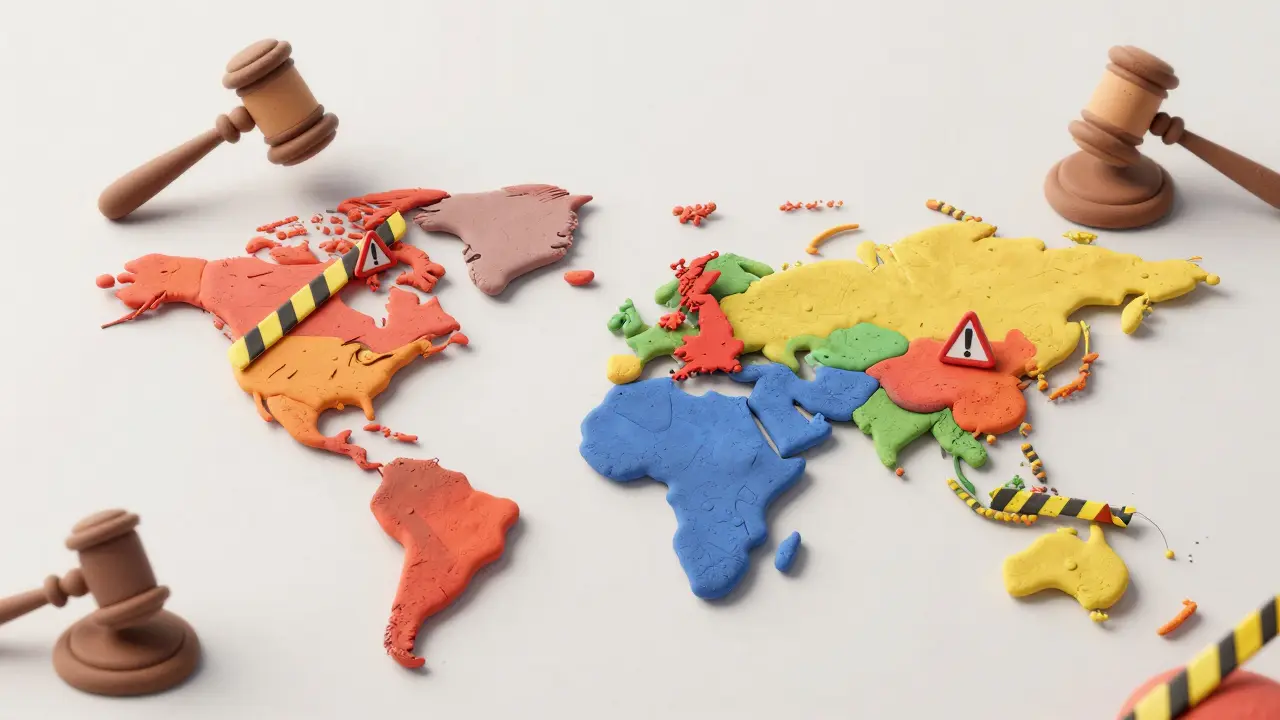
The list of blocked regions is extensive and largely mirrors the sanctions lists maintained by the Office of Foreign Assets Control (OFAC). If you're trying to trade from these areas, you'll likely find yourself locked out.
| Category | Example Restricted Jurisdictions | Primary Reason for Block |
|---|---|---|
| Major Markets | United States, United Kingdom, Canada | Strict Derivatives Regulations (CFTC/SEC) |
| Sanctioned Nations | Iran, North Korea, Cuba, Syria | International Sanctions/AML Laws |
| High-Risk Zones | Somalia, Yemen, South Sudan, Libya | CTF (Counter-Terrorism Financing) Protocols |
| Specific Territories | Crimea, Donetsk, Luhansk | U.S. Trade Restrictions |
Interestingly, the platform doesn't block everyone. Countries like China, Russia, and Japan often remain accessible. This suggests that dYdX uses a selective compliance strategy, prioritizing the avoidance of U.S. and EU legal hammers over a blanket ban on all regulated markets.
What Happens When You Get Flagged?
If the platform detects you are accessing the service from a restricted IP address, it doesn't just give you a "Page Not Found" error. It triggers a specific compliance workflow designed to wind down your activity without freezing your funds entirely. This starts with the dreaded close-only mode.
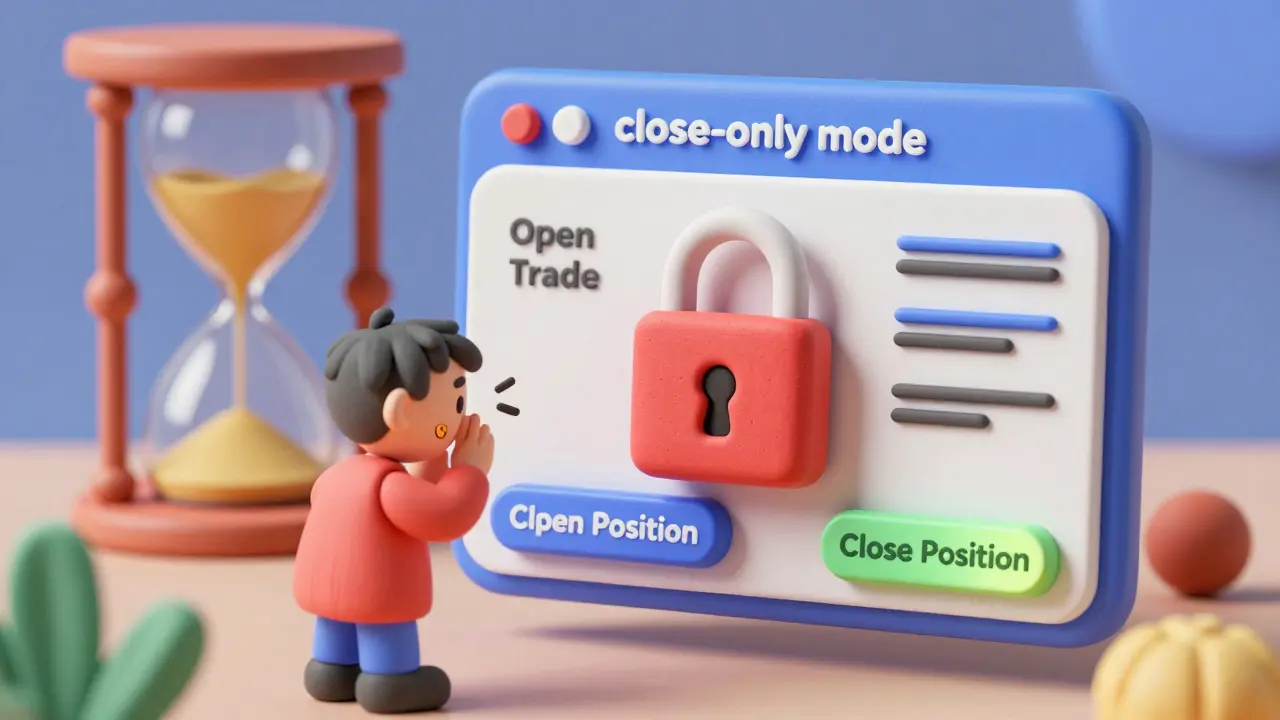
When your account enters close-only mode, your trading privileges are stripped. You can't open new positions, you can't deposit more collateral, and you can't transfer funds. Your only options are to cancel existing orders or reduce your current exposure. It's essentially a "grace period" for you to exit the market.
If you don't act and your wallet stays in this state for seven consecutive days, you move from "Close-Only" to "Blocked" status. At this point, the frontend becomes almost useless. You lose access to your subaccounts and trading history. The only thing you can really do through the interface is export your Secret Recovery Phrase so you can potentially manage your assets via other tools.
The Compliance Engine: AML and CTF
The drive behind these restrictions isn't just about company policy; it's about survival in a world of aggressive financial policing. dYdX must adhere to Anti-Money Laundering (AML) and Counter-Terrorism Financing (CTF) rules. These aren't just suggestions; they are mandates from agencies like the U.S. Department of Treasury.
The Bank Secrecy Act requires financial institutions to know who their customers are and where they are located. Since dYdX provides high-leverage derivatives-which are viewed as high-risk financial products-they are a prime target for regulators. By blocking users from the US and other restricted zones, they reduce their legal liability and avoid being classified as an unregistered securities exchange.
Decentralization vs. Reality
This situation exposes the biggest lie in some DeFi marketing: the idea that "code is law" and therefore immune to government interference. In reality, there is a massive difference between a decentralized protocol and a decentralized user experience.
The dYdX ecosystem involves several centralized pillars. You have dYdX Trading Inc based in New York and the dYdX Foundation in Switzerland. These entities provide the legal and financial structure needed to launch a token and grow a business. However, by existing, they create a "choke point" that regulators can squeeze.
If a platform is truly, 100% decentralized-meaning there is no company, no foundation, and no official website-it cannot be "restricted" because there is no one to send a cease-and-desist letter to. But because dYdX wants to provide a polished, easy-to-use interface for the masses, they've accepted the trade-off: better usability in exchange for centralized control over who can enter the door.
How to Navigate the Restrictions
If you find yourself in a restricted region, you have a few choices, though each comes with risks. Some users turn to VPNs to mask their IP addresses. While this might get you past the initial gate, many platforms are getting better at detecting VPN exit nodes and may trigger the close-only mode if they suspect a proxy is being used.
A more technical route is using alternative frontends. Since the dYdX protocol is open, other developers can build their own interfaces that don't implement the same geographic blocks. However, this requires a higher level of technical skill and carries the risk of interacting with a malicious interface that could steal your keys.
The safest bet is always to read the terms of service. The list of restricted countries isn't static; it changes as global geopolitical tensions shift and new regulations are passed. What's allowed today might be blocked tomorrow.
Why is dYdX restricting countries if it's a DEX?
While the trading protocol itself is decentralized on the blockchain, the website (frontend) you use to access it is operated by a centralized company (dYdX Operations Services Ltd.). This company must comply with local laws and international sanctions to avoid legal penalties, leading them to block users from restricted jurisdictions.
What is 'close-only mode' on dYdX?
Close-only mode is a restrictive state triggered when a user is found to be in a banned region. In this mode, you cannot open new trades or deposit funds. You can only close existing positions or withdraw your balance. If you remain in this mode for seven days, your account is fully blocked.
Are US citizens completely banned from dYdX?
Yes, the official dYdX frontends are restricted for residents and citizens of the United States to comply with CFTC and SEC regulations regarding derivatives trading.
Can I still get my funds if my account is blocked?
If you are in close-only mode, you can still withdraw funds. Once you move to "Blocked" status, the frontend prevents withdrawals, but because your funds are on the blockchain, you can use your Secret Recovery Phrase with a compatible wallet or alternative interface to recover your assets.
Does dYdX block China and Russia?
Surprisingly, dYdX has historically remained accessible in several countries that other platforms block, including China and Russia, though this can change based on updated compliance strategies.
7stargee Emmanuel Obani
April 11, 2026 AT 01:15Imagine believin this is actually decentralized lol. Just another corporate scam disguised as DeFi 🙄
Surender Kumar
April 11, 2026 AT 19:54it makes sense tho, companies gotta play it safe with the law. hope more alt frontends come out soon so it gets easier for evryone
Lela Singh
April 13, 2026 AT 18:33Total buzzkill! But honestly, using a custom frontend is a total game-changer for bypassing these clunky gates. Stay savvy!
Kelly Cantrell
April 15, 2026 AT 00:48Typical. They talk about freedom but the moment the US government sneezes, these companies fold immediately. It's all just a facade to collect our data and then lock us out when the alphabet agencies demand it. The whole 'decentralized' label is just a marketing trick to lure people into a false sense of security while they build a digital fence around our assets. They want us dependent on their 'official' portals so they can switch us off like a light bulb whenever the regime changes. Absolute joke.
Terrance Hausmann
April 16, 2026 AT 02:28I can see both sides here. It's a tough spot for the devs to be in because they want to scale and stay legal, but it definitely hurts the original ethos of crypto. We should try to be patient as the tech evolves toward more robust, truly headless interfaces that don't require a central company to host a website, although that's a long road ahead for the average user.
Will Dixon
April 17, 2026 AT 05:28just use a vpn man. its not that hard to get around the blockin if u just want to check ur positions
Carroll Foster
April 18, 2026 AT 22:26Oh, look at the absolute magic of "decentralization" in action! I love how we've reached the peak of the financial revolution only to find out it's just a fancy wrapper for the same old KYC/AML nightmare and geo-fencing. It's purely poetic that the "borderless" future is actually just a collection of IP-based ban-lists managed by a corporate entity in Switzerland. Truly a masterclass in cognitive dissonance for the DeFi space. I'm sure the SEC is just thrilled with this little loophole. Just peak efficiency right there!