Binance Regional Restrictions: What You Can and Can't Do in 2025
When you try to log into Binance, the world's largest cryptocurrency exchange by volume. Also known as Binance.com, it offers spot, futures, and staking—but only if you're in a region it's allowed to serve. You might get a blank screen, a blocked IP, or a message saying access is restricted. That’s not a glitch. It’s compliance. Binance can’t operate everywhere because governments have different rules about crypto. Some see it as financial freedom. Others see it as a threat to their control over money.
These regional restrictions, geographic limits placed on crypto platforms by local laws aren’t random. They follow legal pressure. In the U.S., Binance stopped serving retail users after the SEC sued it for operating as an unregistered exchange. In the UK, the FCA banned Binance from offering derivatives. In Germany, BaFin demands strict licensing that Binance hasn’t met. Even in places like Algeria and Iran, crypto trading is outright illegal—so Binance doesn’t even try to operate there. Meanwhile, in places like Singapore and the UAE, Binance has full licenses and local offices. The same platform, same app, same features—but your location decides what you can do.
It’s not just about where you live. It’s about how you connect. Using a VPN to bypass Binance’s geo-blocks might get you in, but it also violates their terms. Your account could be frozen. Your funds locked. And if regulators catch you, you could face fines or worse. Some users in restricted countries turn to peer-to-peer trading or local exchanges like MDEX or CashTelex, but those often lack security, liquidity, or oversight. Meanwhile, stablecoins like USDC and XUSD are still usable in some regions where Binance isn’t, offering a workaround for cross-border value transfer.
What you’ll find below are real cases of how these restrictions play out. You’ll see how Iran uses Bitcoin mining to sidestep sanctions, how Algeria made crypto possession illegal, and why exchanges like MEXC and MDEX are filling the gaps where Binance can’t reach. You’ll also learn how to spot fake Binance regional offers—because scammers love to prey on users locked out of the platform. This isn’t about bypassing rules. It’s about understanding them so you don’t get caught in the crossfire.
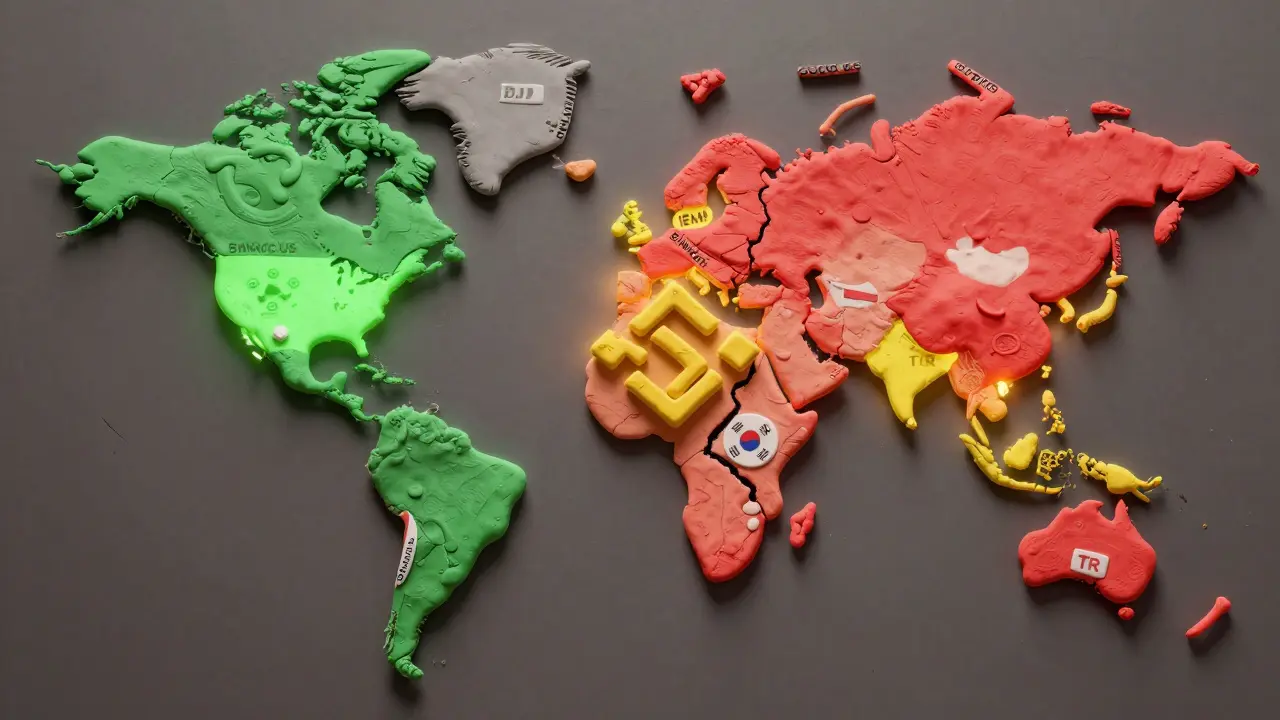
Crypto Exchange Availability by Region Worldwide: Where You Can and Can't Trade
Crypto exchange availability varies widely by country due to regulations. Binance is blocked in the U.S. but operates regional versions. Ukraine and Moldova lead adoption, while strict rules limit access in many nations.