Crypto Exchange Availability: Where You Can Trade and Why It Matters
When you hear crypto exchange availability, the ability to buy, sell, or trade digital assets on a platform that’s legally and technically accessible to you. Also known as crypto exchange access, it’s not just about whether a site exists—it’s about whether you can actually use it where you live. If you’re in the U.S., you can’t trade on MEXC. If you’re in Singapore, you might use StraitsX USD (XUSD), a stablecoin approved by the Monetary Authority of Singapore. But if you’re in Algeria, you can’t even own crypto legally. Exchange availability isn’t a technical glitch—it’s a legal, geographic, and regulatory puzzle.
That’s why some platforms like MEXC exchange, a global crypto exchange offering 3,000+ trading pairs and high leverage, popular with altcoin traders outside the U.S. and Canada are completely off-limits to Americans. Meanwhile, BSC DEX, a decentralized exchange running on Binance Smart Chain, offering low fees and fast trades without KYC lets users in countries with limited banking access trade tokens like MDX or CES without a traditional exchange. And then there are the invisible ones—like CashTelex—that show up in Google ads but have zero trading volume, no reviews, and no real users. These aren’t exchanges. They’re traps.
Exchange availability also shapes what coins you can hold. If you’re in Southeast Asia, you might use XUSD for payments because it’s regulated and fast. But if you’re in Europe, you can’t even access it. Privacy coins like Monero got delisted from most exchanges because of AML rules. Meme coins like SMOG or BAMP might have airdrops, but if they’re not listed on any major exchange, you can’t sell them. And if a token only trades on a sketchy DEX with $500 in liquidity, it doesn’t matter how much you own—you can’t cash out.
What you find below is a collection of real-world cases showing exactly how exchange availability impacts your crypto journey. You’ll see why some platforms vanish overnight, why certain tokens are only tradable in specific countries, and how scams exploit gaps in access. Some posts break down regulated exchanges like those in Germany or Taiwan. Others warn you about fake platforms pretending to offer airdrops or high yields. You’ll learn what to look for—and what to avoid—before you send your first dollar. This isn’t theory. It’s survival in a market where access isn’t guaranteed, and every platform has a hidden catch.
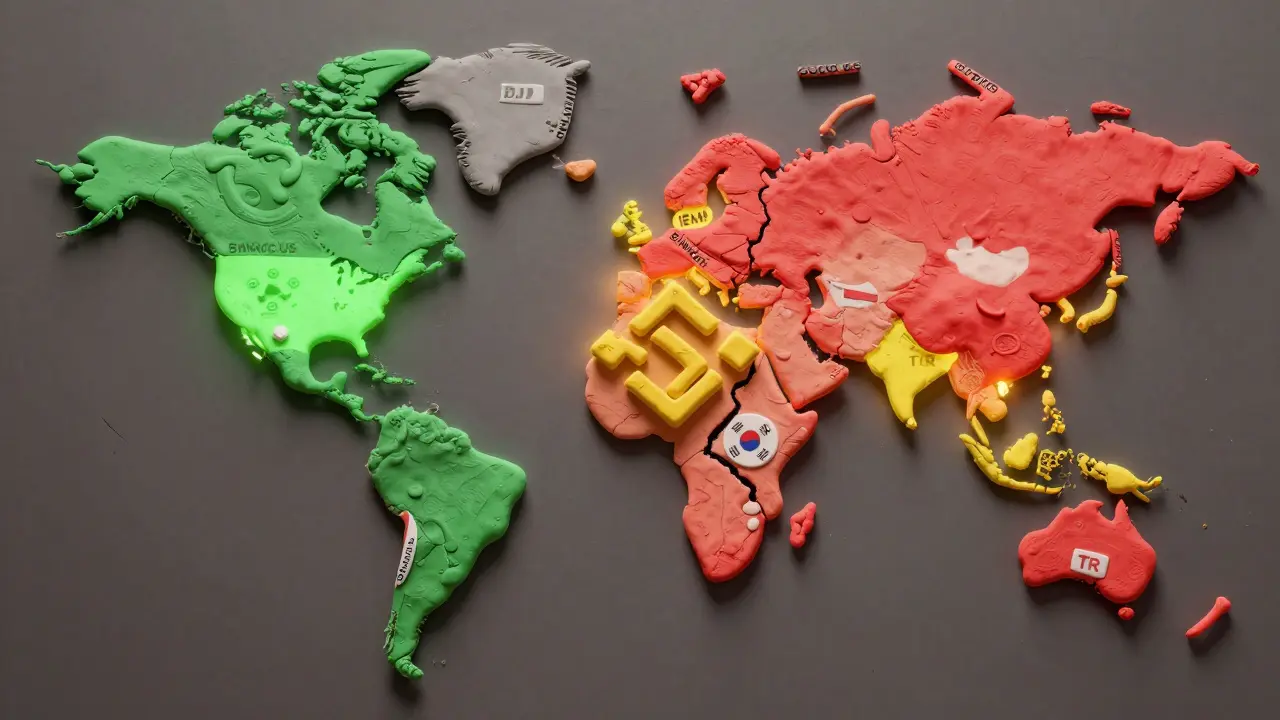
Crypto Exchange Availability by Region Worldwide: Where You Can and Can't Trade
Crypto exchange availability varies widely by country due to regulations. Binance is blocked in the U.S. but operates regional versions. Ukraine and Moldova lead adoption, while strict rules limit access in many nations.