Crypto Regulations by Country: What’s Legal, Banned, or Restricted in 2025
When you hear crypto regulations by country, the varying legal frameworks governments use to control or restrict cryptocurrency use, trading, and mining. Also known as cryptocurrency laws, these rules decide whether you can buy Bitcoin in your city, mine Ethereum at home, or even talk about crypto without getting fined. There’s no global rulebook—what’s legal in Germany is a crime in Algeria, and what’s allowed in Taiwan comes with tax traps you didn’t see coming.
Take privacy coins, digital currencies designed to hide transaction details like sender, receiver, and amount. Also known as anonymous cryptocurrencies, they’re under fire everywhere. Monero and Zcash got kicked off major exchanges because regulators fear they enable money laundering. In the U.S., the Treasury flagged Tornado Cash, a tool that mixes transactions, and even after sanctions were lifted, the developers are still being prosecuted. Meanwhile, in Algeria, just owning crypto is now a criminal offense under a 2018 law that became total prohibition by 2025. And in Iran? The government doesn’t ban crypto—they run state-backed mining farms to bypass sanctions and fund imports with Bitcoin.
Then there’s crypto exchange licensing, the official permission governments give platforms to operate legally. Also known as crypto licensing, it’s not optional in places like Germany. BaFin, Germany’s financial watchdog, demands strict AML checks, MiCAR compliance, and full tax reporting. If you run an exchange there without a license, you’re out of business—and possibly facing jail. Compare that to Taiwan, where traders must report profits over NT$40,000 per month and pay up to 20% income tax. Or Singapore, where StraitsX USD (XUSD), a MAS-regulated stablecoin, is built for businesses but blocked in the U.S. and EU. These aren’t just rules—they’re gatekeepers that decide which coins you can trade, which exchanges you can use, and whether you’re breaking the law just by holding a wallet.
Some countries don’t just regulate—they ignore. CashTelex? No reviews, no licenses, no trading volume. It’s not regulated because it doesn’t exist. Meanwhile, fake airdrops for BSC AMP or TRO are everywhere, preying on people who don’t know what’s real. The truth is, crypto regulations by country aren’t just about laws—they’re about survival. If you trade, mine, or hold crypto, you’re already playing by someone else’s rules. The question is: do you know which ones?
Below, you’ll find real breakdowns of what’s happening in Iran, Germany, Algeria, Taiwan, and more—no fluff, no guesses. Just what’s banned, what’s licensed, and what’s quietly disappearing from exchanges.
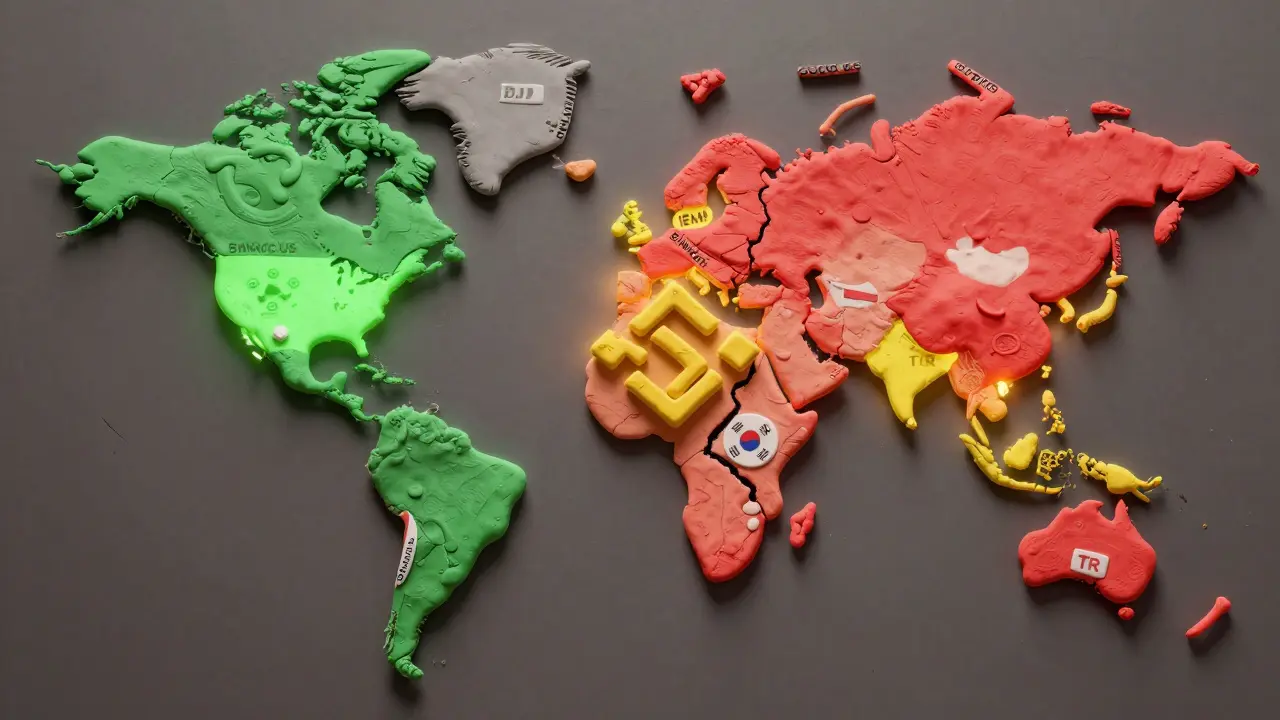
Crypto Exchange Availability by Region Worldwide: Where You Can and Can't Trade
Crypto exchange availability varies widely by country due to regulations. Binance is blocked in the U.S. but operates regional versions. Ukraine and Moldova lead adoption, while strict rules limit access in many nations.