Crypto Trading by Region: How Laws, Culture, and Markets Shape Your Strategy
When you trade crypto, you're not just betting on price moves—you're operating under the rules of your country. crypto trading by region, the way cryptocurrency activities are influenced by local laws, economic conditions, and cultural attitudes. This isn't theoretical—it affects whether you can use a stablecoin like StraitsX USD (XUSD), a MAS-regulated stablecoin built for payments in Southeast Asia, or if you're stuck avoiding platforms like CashTelex, an invisible exchange with no legitimacy or user trust. Even your taxes depend on where you live.
Some places treat crypto like money. Germany requires exchanges to get a BaFin license, a strict financial regulatory approval for crypto businesses, and enforces MiCAR rules to protect users. Others, like Algeria, made owning crypto illegal under their 2018 Financial Law—now even talking about it can get you in trouble. Then there’s Iran, where the government uses Bitcoin mining to bypass sanctions, turning excess power into digital cash that funds imports. These aren’t just headlines—they’re real barriers or opportunities you need to know before you trade.
Tax rules vary wildly. In Taiwan, you pay up to 20% on profits and must report if you trade over NT$40,000 a month. In the U.S., the IRS treats crypto as property, but in places like Singapore, there’s no capital gains tax. And don’t assume global exchanges will let you in—MEXC doesn’t serve U.S. or Canadian users, while XUSD isn’t available in the EU or America. Your location decides which wallets you can use, which tokens you can buy, and even which blockchains work best for you. Privacy coins like Monero got delisted everywhere because of AML rules, while stablecoins like USDC and DAI became essential for cross-border trading. Some regions even ban mixers like Tornado Cash, while others quietly allow them. The truth? There’s no global crypto market—only a patchwork of local rules.
What you’ll find below are real stories from people navigating this patchwork. From how a Nigerian trader uses BSC-based DEXs to avoid bank fees, to why a German investor needs to track every transaction for BaFin, to how an Iranian miner turns electricity into crypto cash—these aren’t abstract concepts. They’re daily realities shaped by geography. Whether you’re looking at airdrops in Southeast Asia, avoiding scams in Algeria, or choosing between USDT and XUSD for business payments, your region isn’t just background—it’s the rulebook. Let’s break it down.
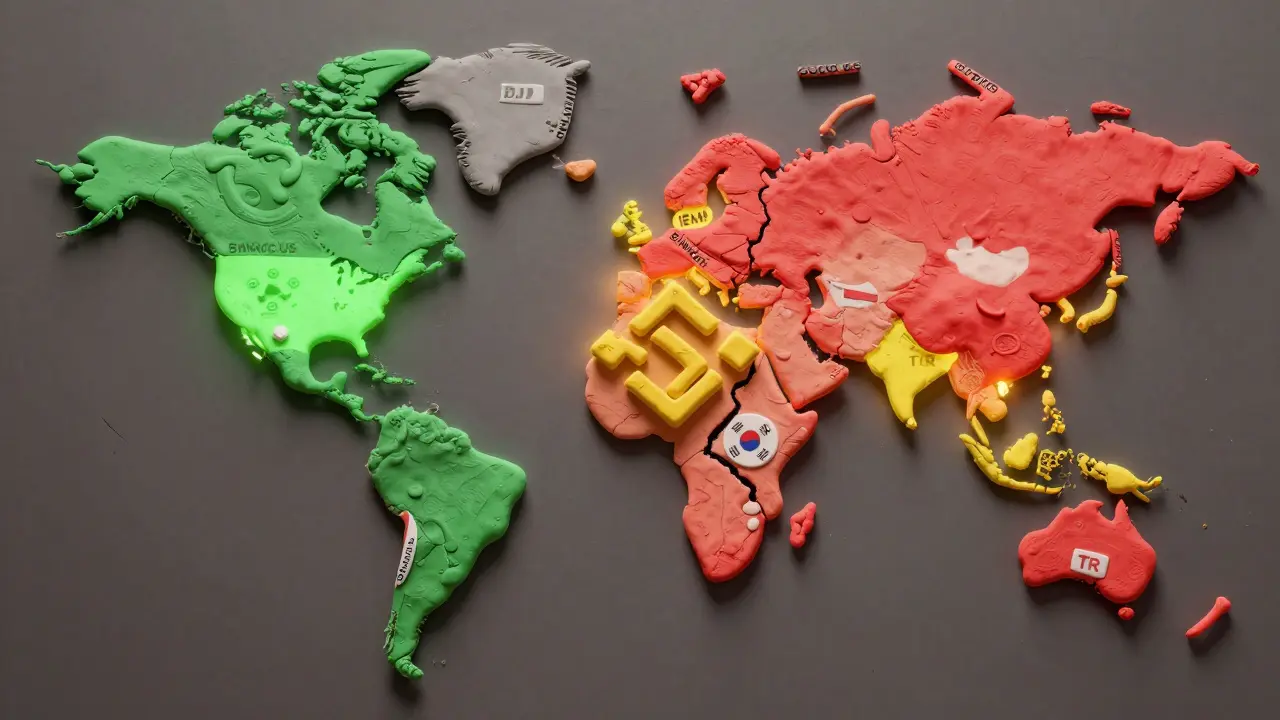
Crypto Exchange Availability by Region Worldwide: Where You Can and Can't Trade
Crypto exchange availability varies widely by country due to regulations. Binance is blocked in the U.S. but operates regional versions. Ukraine and Moldova lead adoption, while strict rules limit access in many nations.