OFAC Sanctions and Crypto: What You Need to Know About Blocked Assets and Compliance
When you hear OFAC sanctions, U.S. government restrictions that block transactions with certain individuals, entities, or countries. Also known as financial sanctions, these rules directly affect how crypto is traded, held, and developed around the world. The Office of Foreign Assets Control doesn’t just target banks—it targets wallets, exchanges, and even tokens tied to sanctioned regions or actors. If a crypto project has ties to Iran, Syria, North Korea, or any OFAC-designated party, it’s at risk of being delisted, frozen, or outright banned by major platforms.
This isn’t theoretical. Iran, a country under heavy U.S. financial restrictions. Also known as Islamic Republic of Iran, it uses Bitcoin mining to bypass sanctions, turning excess power into digital currency to fund imports. That’s why mining rigs in Iran are closely watched—and why exchanges like Binance have regional versions to avoid violating U.S. law. Meanwhile, privacy coins, cryptocurrencies designed to hide transaction details like sender, receiver, and amount. Also known as anonymous coins, they like Monero and Zcash are being pulled off exchanges not because they’re illegal, but because they make it harder to trace OFAC violations. Exchanges don’t want to risk fines, so they remove them instead of building compliance tools.
It’s not just about countries. Tokens tied to sanctioned entities—even if they’re just named after them—can get caught in the crossfire. That’s why you see so many fake airdrops for tokens like BSC AMP or TRO: scammers try to ride the hype of unverified projects that might be ignored by regulators… or flagged by them. And if you’re in Germany, Taiwan, or Algeria, you’re dealing with your own local rules layered on top of OFAC. Some places ban crypto entirely. Others require strict KYC. All of them have to check if a user or token is on the OFAC list before allowing a trade.
What does this mean for you? If you’re holding a token with zero trading volume, no exchange listings, or a vague whitepaper, ask: could this be linked to a sanctioned entity? Could it be delisted tomorrow? The answer might not be in the price chart—it’s in the legal fine print. The posts below show you real examples: how Iran uses crypto to evade sanctions, why privacy coins are vanishing from exchanges, and how regional laws like Algeria’s total ban or Germany’s licensing rules shape what you can and can’t do. You’ll also see how airdrops like APENFT or SOS survive—or die—when compliance becomes the deciding factor. This isn’t about speculation. It’s about survival in a world where your wallet could be blocked without warning.
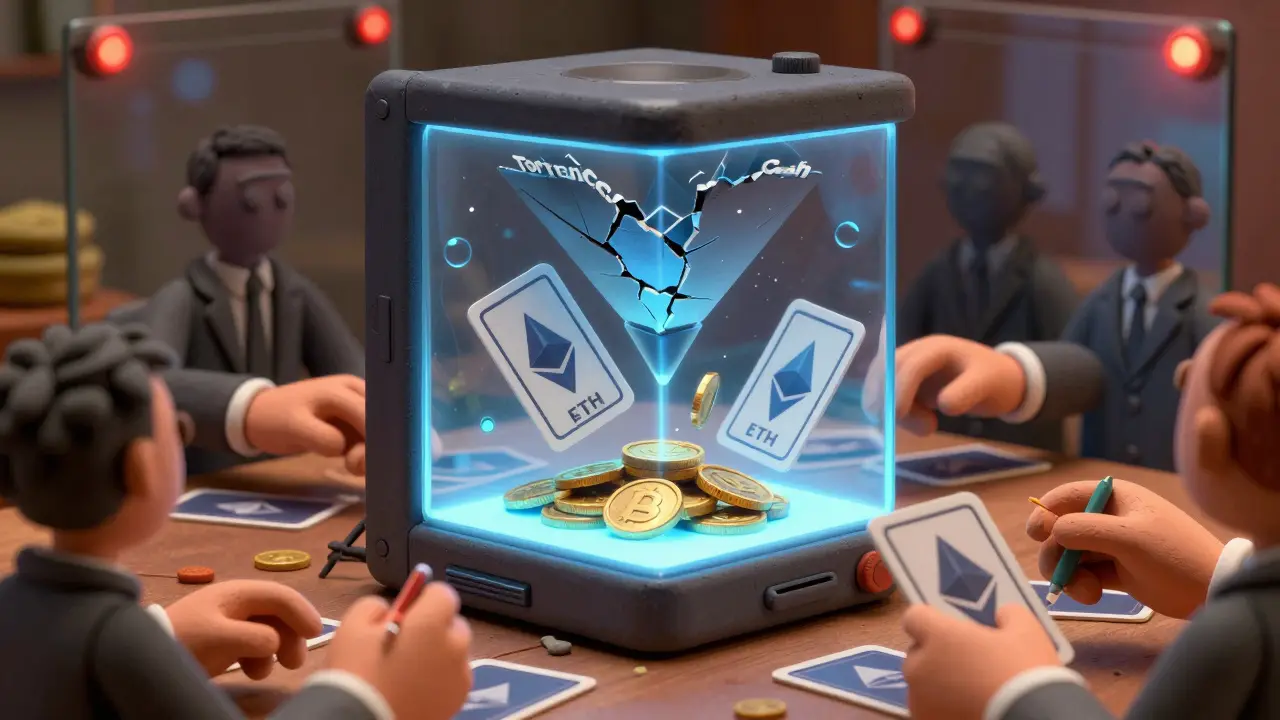
Crypto Mixers and Tornado Cash Sanctions Explained: What Happened and Why It Matters
Tornado Cash was a popular crypto mixer until U.S. regulators sanctioned it in 2022. After a landmark court ruling, the sanctions were lifted in 2025-but the developers are still being prosecuted. Here’s what really happened and what it means for privacy in crypto.