Smart Contracts: What They Are and How They Power Crypto Today
When you hear smart contracts, self-executing agreements coded directly onto a blockchain that run without human intervention. Also known as blockchain contracts, they’re the reason you can trade tokens, earn interest on crypto, or buy an NFT without calling a bank or lawyer. Think of them like digital vending machines: you put in the right input (like sending ETH), and they automatically spit out the result (like an NFT or a payout)—no middleman needed.
Most Ethereum, the leading blockchain platform for running smart contracts since 2015 is built around them. But they’re not just for Ethereum—DeFi, a whole ecosystem of financial apps that replace banks using blockchain lives on smart contracts. That’s how you lend, borrow, or farm yields without a central company holding your money. The same tech powers NFT marketplaces, tokenized assets, and even automated insurance payouts. But here’s the catch: if the code has a flaw, the money is gone forever. No customer service, no refunds. That’s why so many posts here warn about projects like NiHao or Sphynx Labs—because their smart contracts can be changed by the creators, making them risky or even scams.
Not all smart contracts are created equal. Some are open-source and audited by third parties. Others are hidden, untested, and locked with no way to fix bugs. That’s why understanding how they work matters—not just for trading, but for staying safe. You’ll find posts here breaking down real cases: how a faulty contract led to a $40 million loss, why some exchanges like SkullSwap are dangerous because their contracts aren’t verified, and how platforms like STON.fi and StellaSwap use clean, reliable code to keep users protected. You’ll also see how smart contracts tie into bigger trends—like energy trading, tokenized stocks, and even government asset seizures—because once something is on-chain, it’s hard to undo.
Whether you’re trading, investing, or just trying not to get ripped off, smart contracts are the invisible engine behind most crypto actions today. The good ones save time and money. The bad ones cost you everything. Below, you’ll find real-world examples of both—and the lessons you need to avoid becoming a statistic.

Blockchain Land Registry Systems: How Decentralized Ledgers Fix Property Fraud
Discover how blockchain land registry systems combat property fraud, cut costs by 99%, and reduce registration time from days to minutes. Learn about real-world successes in Georgia and Ghana.

Removing Middlemen with Blockchain: How Disintermediation Actually Works in 2026
Explore how blockchain technology removes middlemen through disintermediation. Learn about smart contracts, real-world savings in finance and supply chain, and the rise of new intermediaries.
dApp vs Traditional App: The Complete Comparison Guide for 2026
Discover the key differences between dApps and traditional apps. Compare architecture, security, costs, and user experience to decide which model fits your project in 2026.
Removing Intermediaries with Blockchain: How to Cut Costs and Speed Up Transactions
Learn how blockchain removes intermediaries to cut transaction costs by up to 80% and speed up settlements. Explore real-world examples, smart contracts, and implementation tips for businesses.
How Blockchain Transforms Financial Services: A Practical Guide for 2026
Discover how blockchain transforms financial services by cutting costs, speeding settlements, and enabling tokenization. Learn about R3 Corda, Hyperledger Fabric, and regulatory changes shaping 2026 adoption.

Real-World Supply Chain Blockchain Use Cases: From Food Safety to Ethical Mining
Explore how blockchain transforms supply chains. Learn real-world use cases from Walmart, Ford, and Maersk, covering traceability, smart contracts, and cold chain safety.
What Are Blockchain Oracles? A Clear Guide to How They Connect Smart Contracts to the Real World
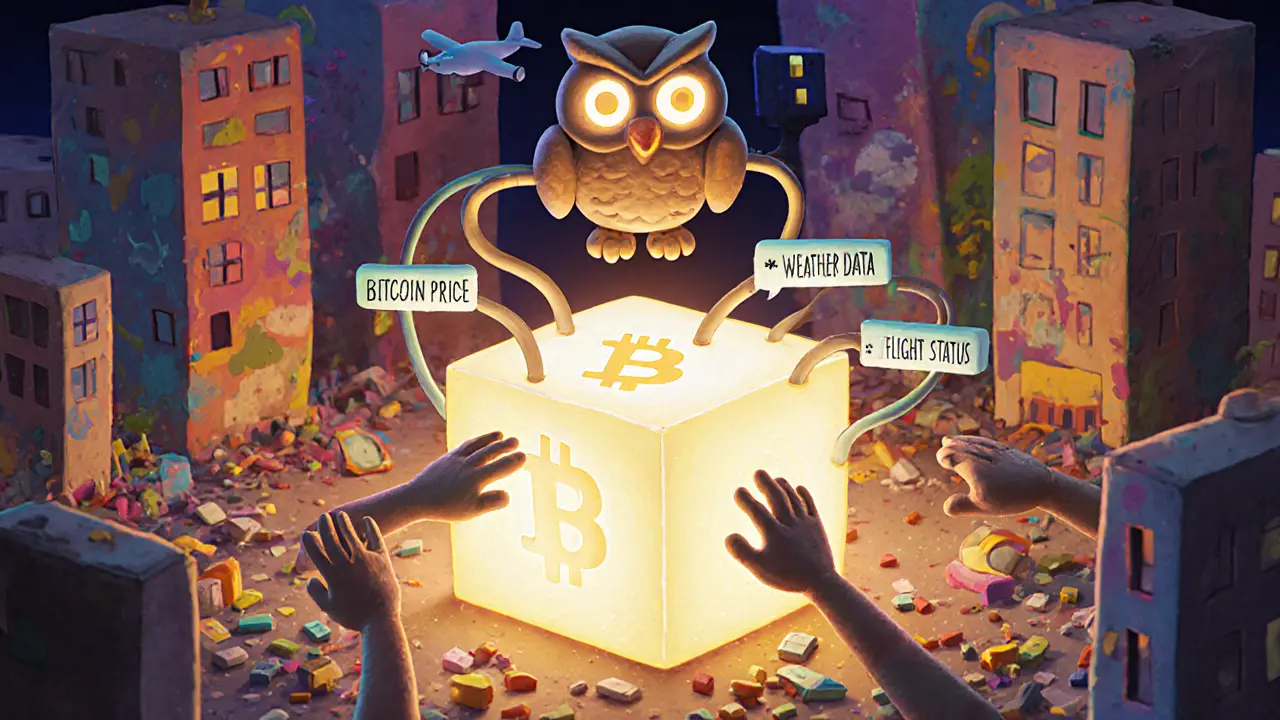
Blockchain oracles connect smart contracts to real-world data like prices, weather, and sensor readings. Without them, blockchains can't interact with external systems. Learn how they work, why they matter, and which networks are leading the space.