Blockchain Interoperability: How Chains Talk to Each Other and Why It Matters
When we talk about blockchain interoperability, the ability for different blockchains to communicate, share data, and transfer assets seamlessly. Also known as cross-chain communication, it’s what lets you move your ETH from one wallet to a Polygon-based game without needing a middleman exchange. Before this, each blockchain was its own island—Bitcoin couldn’t talk to Ethereum, and Polygon couldn’t send tokens to Solana. That isolation made DeFi, NFTs, and gaming feel fragmented. Now, interoperability is changing that.
Think of it like translating languages. Ethereum speaks one dialect, Solana another, and Polygon a third. Without interoperability, you’d need a human translator (like a centralized bridge) to move value between them. But modern interoperability tools—like LayerZero, Chainlink CCIP, and Polkadot’s parachains—act like automatic translators built into the blockchain itself. This isn’t just tech magic; it’s practical. If you hold an NFT on Ethereum and want to use it in a game on Polygon, interoperability makes that possible without selling and rebuying. It’s also why projects like Polygon, a scaling solution for Ethereum that connects to other chains and DeFi, decentralized finance protocols that rely on cross-chain liquidity are growing so fast. They don’t just run on one chain—they live across many.
But it’s not all smooth sailing. Bridges have been hacked. Tokens get stuck. Scammers create fake cross-chain airdrops to steal your keys. That’s why the posts below cover real cases—like how APENFT distributed tokens across TRON and Ethereum, or how Whalebit’s CES token works on Polygon but still needs bridges to reach other networks. You’ll also see warnings about shady platforms like CashTelex that pretend to enable interoperability but offer zero security. The goal isn’t just to connect chains—it’s to connect them safely.
What you’ll find here isn’t theory. It’s what’s actually happening: how sharding helps Ethereum scale so it can talk better to others, how stablecoins like USDC and XUSD move between chains for payments, and why privacy coins like Monero are harder to integrate because they hide transaction details. You’ll learn how to spot fake airdrops tied to cross-chain claims, and why some projects—like Smog or BSC AMP—use the buzz of interoperability to lure in users with nothing real to back it up.
Blockchain interoperability isn’t a feature. It’s the next stage of the crypto evolution. And if you’re holding tokens, using DeFi, or playing NFT games, you need to understand how chains connect—or risk getting left behind, locked out, or scammed.
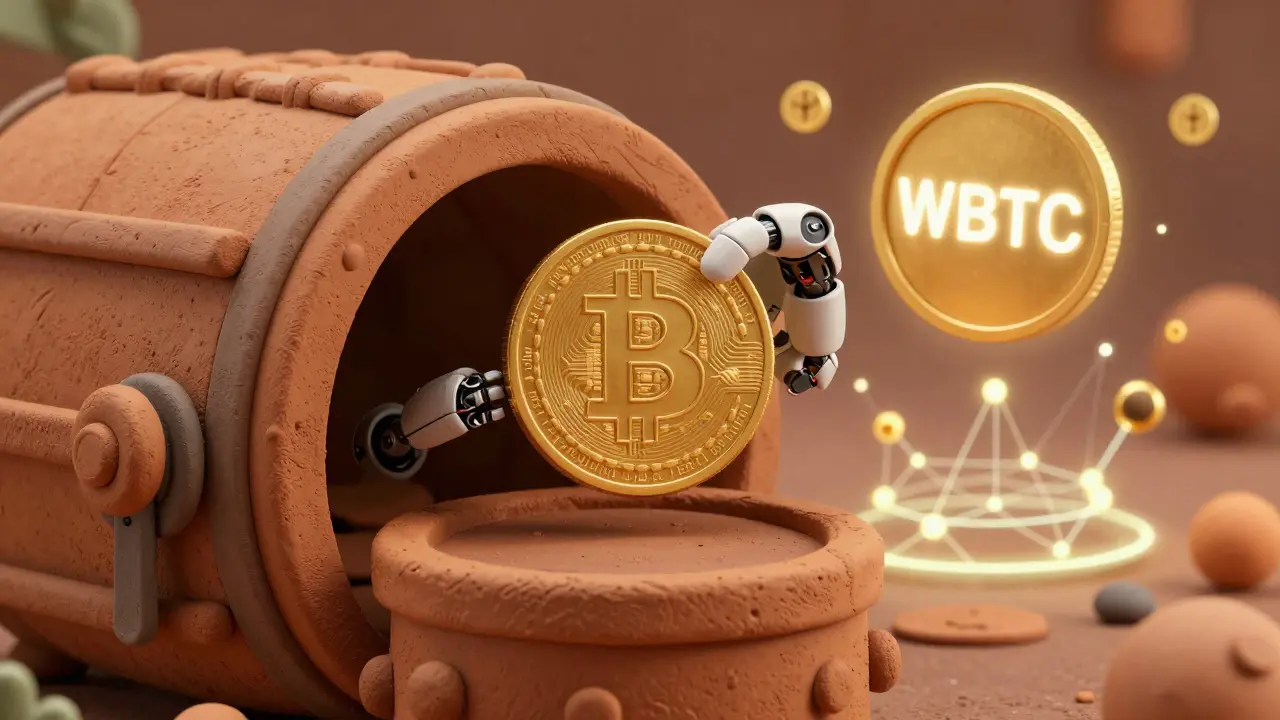
What Are Wrapped Tokens in Cryptocurrency? A Simple Breakdown
Wrapped tokens let you use Bitcoin and other cryptocurrencies on different blockchains like Ethereum. They’re 1:1 backed, enable DeFi yields, and power over $12 billion in locked value - but come with custodial risks.

How Wrapped Tokens Enable Cross-Chain Trading
Wrapped tokens like WBTC and wETH let Bitcoin and other assets move across blockchains, unlocking DeFi on Ethereum and beyond. They're essential for cross-chain trading but come with custody and security risks.